A small injury can happen during an ordinary walk, play session, car ride, or outdoor activity. A loose nail, a scraped paw, or a minor cut may not seem serious at first, but having suitable supplies nearby can make basic care more manageable while a pet owner decides what to do next. This is one reason many households keep a Pet First Aid Kit at home or take one when traveling with an animal.
Choosing one is not simply about counting the number of items inside a bag. The type of pet, common activities, storage conditions, and ease of access all affect whether the supplies are practical for everyday use. A household with a dog that regularly walks outdoors may have different needs from one with an indoor cat. A travel kit may also need a different arrangement from a kit kept in a bathroom cabinet.
The way supplies are organized matters as well. When an animal is restless or a situation is unexpected, searching through a crowded pouch can make basic care more difficult. A sensible selection therefore combines suitable contents with clear organization and a storage method that fits the owner's routine.
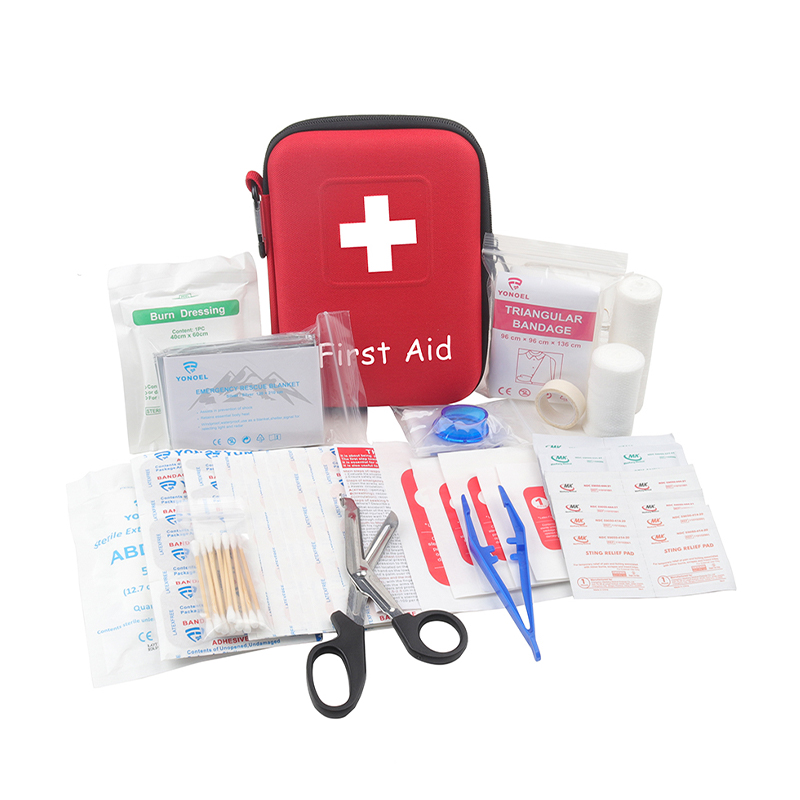
For home use, the contents should focus on simple situations that pet owners may reasonably encounter. Gauze, bandages, disposable gloves, cleaning materials, blunt-ended scissors, tweezers, and a thermometer are examples of supplies that can have practical uses. The exact contents can vary according to the animal and the advice of a veterinarian.
The purpose of keeping these supplies together is convenience rather than replacing professional veterinary care. A small wound may need cleaning and protection, while a deeper injury, persistent bleeding, breathing difficulty, suspected poisoning, or unusual behavior requires professional attention.
A useful way to assess the contents is to ask what each item is intended to do. If an item has no clear purpose for the household, it may simply take up space. On the other hand, supplies used regularly for grooming, outdoor activities, or minor wound care may deserve a clearly marked place.
| Supply type | Practical purpose |
|---|---|
| Gauze | Covering or protecting minor wounds |
| Bandages | Securing suitable wound coverings |
| Tweezers | Handling small visible objects |
| Gloves | Keeping hands protected during basic care |
| Scissors | Cutting bandage material when appropriate |
| Thermometer | Checking body temperature when advised |
| Cleaning supplies | Supporting basic wound cleaning |
It is also worth considering the size and behavior of the pet. Supplies intended for a small cat may not be convenient for a large dog, while a household with several animals may need a broader selection. Rather than choosing contents based only on the appearance of the kit, pet owners can match them to realistic situations at home.
Paw injuries deserve separate consideration because paws regularly come into contact with different surfaces. A dog may step on rough ground, small pieces of debris, or a sharp object during a walk. Cats that spend time outdoors can also return home with irritated or injured paws.
For these situations, wound coverings, gauze, cleaning materials, and tweezers can be useful to have nearby. However, the presence of an item does not mean it should automatically be used. If something is deeply embedded, the wound appears serious, or the animal reacts strongly to handling, professional veterinary advice is more appropriate.
Paw care also involves observation. A pet may lick one paw repeatedly, avoid putting weight on it, or behave differently after an outdoor activity. These signs can indicate that the problem deserves closer attention.
The packaging itself can be relevant. Paw-care supplies are easier to use when they are separated from less frequently needed items. A small internal pouch or clearly labeled compartment can keep gauze and bandaging materials together rather than mixing them with unrelated supplies.
Cats and dogs do not always respond to handling in the same way, and their daily activities can be quite different. A dog that spends a great deal of time outdoors may encounter more situations involving paws, plants, rough surfaces, or insects. An indoor cat may have a different range of concerns, particularly around household activities.
The selection process should therefore begin with the animal rather than the container. Consider where the pet spends time, how active it is, whether it travels frequently, and whether there are several animals in the household.
For cats, a compact arrangement may be useful because many owners prefer to keep supplies in an easily accessible but quiet location. For dogs, particularly active dogs, additional space for outdoor-related supplies may be practical.
| Consideration | Cats | Dogs |
|---|---|---|
| Typical activity | Indoor or mixed environments | Indoor, walking, outdoor activities |
| Handling | May resist restraint | May move or react differently |
| Common preparation focus | Compact storage and gentle handling | Outdoor care and paw protection |
| Travel needs | Carrier-friendly storage | Car or walking-trip storage |
| Household setup | Often individual storage | May need supplies for repeated outdoor use |
There is no single configuration that suits every animal. Even pets of the same species can have different routines. The useful approach is to select supplies according to actual circumstances rather than assuming that a standard arrangement will work for every household.
Travel changes the way supplies need to be stored. A kit kept at home can remain in one cabinet, while a travel kit may move between a vehicle, accommodation, and outdoor locations. It should therefore be easy to carry and simple to open.
For road trips, organization can matter as much as the contents. Gauze, bandages, gloves, and cleaning materials should not be buried beneath less frequently used items. A zippered case with separate sections can help keep small supplies together.
Storage conditions also deserve attention. A case should protect its contents from dirt, moisture, and unnecessary exposure during travel. Liquids and delicate supplies should be packed in a way that reduces the chance of leakage or damage.
Another practical consideration is the pet's behavior in the vehicle. A restless animal may make access difficult, so the emergency supplies should be stored somewhere reachable without interfering with safe travel. The kit should never become loose equipment inside the passenger area.
Road trips also make preparation more important. Before leaving, owners can check whether the supplies match the planned route and activities, whether commonly used items have been replaced, and whether the case can be carried without difficulty.
Hiking creates a different set of practical considerations because the animal is exposed to outdoor surfaces for a longer period. Paw irritation, small scrapes, insect contact, and minor cuts can occur during normal movement through trails or other outdoor areas.
The kit should remain compact enough to carry comfortably. A bulky case may be inconvenient when space is limited, while a very small pouch may leave no room for useful supplies. The right arrangement depends on the activity, the dog's size, and how long the outing is expected to last.
Before heading outdoors, it helps to place frequently needed items where they can be reached quickly. A separate compartment for wound-care supplies can prevent them from becoming mixed with other contents.
Owners should also consider environmental conditions. A case that is difficult to close securely may allow dirt or moisture to enter. A durable outer pouch with a secure closure can make storage easier during outdoor activities.
The purpose of carrying these supplies is preparation for basic situations, not self-treatment of serious injuries. If a dog suffers a significant wound, becomes unable to walk normally, shows unusual weakness, or develops other concerning symptoms, veterinary assistance should take priority.
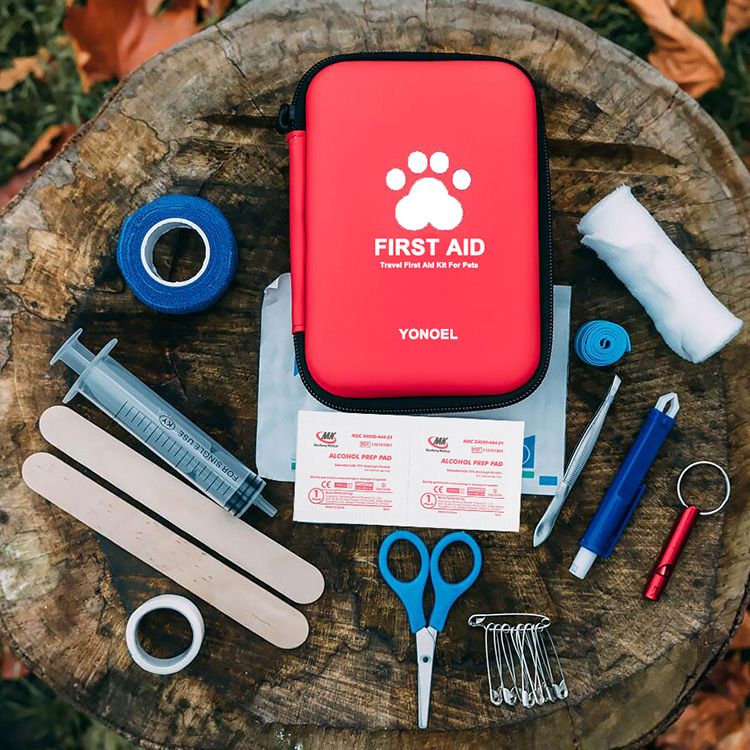
Good organization starts with frequency of use. Supplies that may be needed during minor wound care can be placed together, while less frequently used items can occupy another compartment. This creates a simple internal structure without requiring complicated labeling.
Transparent pouches or clearly marked sections can also help. When several small items look similar, separating them by purpose reduces unnecessary searching. A home kit may benefit from a drawer-style arrangement, while a travel kit can use compact compartments inside a zippered case.
It is useful to avoid filling every available space. An overcrowded case can make individual items harder to reach and can also make replacement more confusing. Some free space can make the kit easier to maintain.
A simple arrangement might look like this:
The organization should also reflect the people who may use the kit. If several family members care for the pet, a straightforward layout is easier for everyone to follow. Clear storage can be especially useful when the owner is dealing with an active or anxious animal.
A quick inspection before leaving home can prevent simple problems later. The case should close properly, commonly used supplies should still be present, and individual packages should remain intact. Any item that has been used should be replaced before the next outing.
It is also useful to consider the activity itself. A short neighborhood walk may not require the same preparation as a longer outdoor trip. A dog visiting a wooded area may need a different selection from a pet spending time in a controlled outdoor space.
Check the storage condition as well. Supplies exposed to moisture, dirt, or unsuitable temperatures may not remain in the condition intended by the manufacturer. Keeping the case clean and dry helps maintain an orderly setup.
Before leaving, owners can use a short checklist:
This preparation takes little effort but can make the contents easier to rely on when basic care is needed.
Human first aid supplies and pet care supplies may appear similar, but they should not automatically be treated as interchangeable. Animals have different body sizes, behaviors, and responses to handling. Some products intended for people may not be appropriate for animals, particularly when they involve medications or substances that pets could ingest.
For that reason, pet owners should not assume that a household human first aid box can replace supplies intended for animal care. The better approach is to keep animal-specific items clearly separated and follow veterinary guidance when medication or treatment decisions are involved.
The distinction also matters for organization. A human kit may be designed around household injuries, while a pet kit can be arranged around situations such as paw care, minor wounds, grooming-related incidents, and outdoor activities.
This does not mean every household needs a large collection of supplies. A practical setup is one that fits the pet's routine, can be stored safely, and allows commonly needed items to be located without unnecessary searching. The contents should also be checked periodically so that used or unsuitable supplies do not remain in the case.
Choosing a suitable Pet First Aid Kit is therefore closely connected to how a pet actually lives. Home routines, outdoor activities, travel arrangements, species, and storage preferences all influence what belongs inside and how it should be organized. The focus remains on sensible preparation for basic situations while recognizing when professional veterinary care is needed.
No. 52, Hulian West Street, Jiangbei Street, Dongyang City, Jinhua City, Zhejiang Province, China
Quick Links
Product Center
Contact Us
 PRIVACY

 English
 Deutsch
 Français
 русский
 Español