A first aid kit kept in a vehicle has a different job from one stored at home. It has to fit into a limited space, stay organized during everyday driving, and remain easy to reach when something goes wrong on the road. For buyers, that means the choice is not only about what goes inside the case. The case itself, the way supplies are arranged, and the intended vehicle all matter.
The same point applies when buying in bulk. A product that looks suitable in a sample may still need changes before it works for a particular vehicle or customer group. Case size, internal storage, packaging, labeling, and the combination of supplies all need to make sense together.
That is why supplier selection usually starts with the product itself. Once the intended use is clear, it becomes easier to discuss customization, purchasing requirements, and cost.
A vehicle first aid kit does not need to contain every type of medical supply. Its contents should relate to the situations drivers are reasonably likely to encounter while traveling.
Minor cuts and scrapes are obvious examples. Small burns, surface injuries, and situations where basic protection or cleaning is needed can also influence the contents. Dressings, adhesive supplies, cleansing products, gloves, and other basic items may therefore have a place in the configuration.
The way these items are arranged matters almost as much as the selection itself. Imagine opening a case at the side of the road and having to move several loose packages before locating a dressing. The contents may be appropriate, but the layout is not doing its job.
A practical configuration usually separates items according to their purpose. Frequently used supplies can be positioned where they are easy to see, while less frequently used items can occupy other sections of the case.
| Area to consider | Question worth asking |
|---|---|
| Wound care | Can commonly needed supplies be located without searching through the whole case? |
| Protection | Are gloves and other protective items kept in an easy-to-reach position? |
| Cleaning | Are cleansing supplies separated from other contents? |
| Organization | Can different types of supplies be identified at a glance? |
| Replenishment | Can individual items be replaced when they are used? |
The intended market should also be considered. A kit prepared for a family vehicle does not necessarily need the same arrangement as one intended for commercial use. Buyers can get a more suitable configuration by explaining the actual application before the contents are finalized.
Long-distance driving brings another set of practical concerns. A driver may spend hours away from home, travel through unfamiliar areas, or make stops where access to everyday supplies is limited.
In that situation, the kit needs to be convenient without becoming another bulky item in the vehicle. A case that fits neatly into a storage compartment can be easier to live with than one that is difficult to place or move.
Organization also becomes noticeable during travel. When the kit is opened after being stored in a vehicle for a while, supplies should still be easy to identify. Separate pockets or sections can help prevent small items from becoming mixed together.
The outside of the case deserves attention as well. Vehicle storage can expose a kit to dust, occasional moisture, repeated handling, and changes in surrounding conditions. The appropriate case construction depends on the intended application and where the product will normally be kept.
For travel-oriented products, buyers may also want to consider portability. A handle can make the case easier to move between vehicles, while a clear exterior label can help users identify it without opening the case.
There is no single storage arrangement that works equally well in every vehicle. A small passenger car may have limited space around the trunk or cabin, while a larger vehicle may have room for a more substantial case.
The same applies to users. A privately owned vehicle may have one regular driver. A company vehicle may be used by several people, which changes the importance of identification and easy access.
Customization can be quite practical. It may involve changing the dimensions of the case, rearranging the internal compartments, adjusting the carrying method, or modifying the selection of supplies. Packaging and labeling can also be adapted to suit the intended market.
Before asking for changes, buyers should describe the storage location and normal use of the kit. Where will it be kept? Who is likely to use it? Does the case need to be moved between vehicles? Will it be sold separately or provided as part of a vehicle package?
Those details give the supplier something concrete to work with. They also prevent customization from becoming a series of unnecessary changes that do not improve the actual product.
Making a vehicle kit smaller sounds simple until the contents have to fit inside it. Reduce the case too much and the supplies become crowded. Make the case larger and it may be difficult to store in the vehicle.
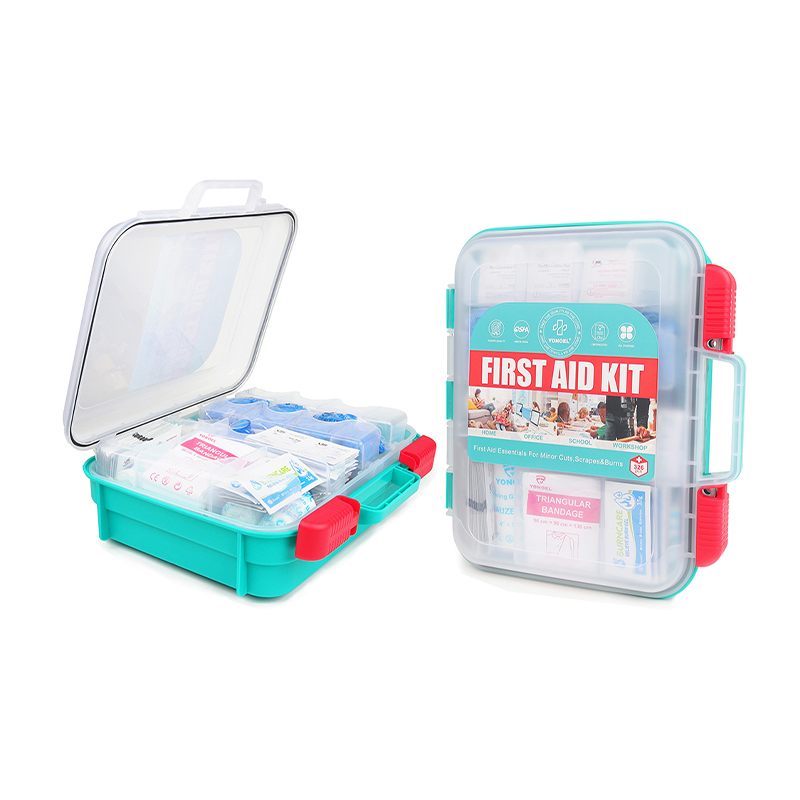
Internal layout is therefore worth considering at the same time as the external size. Mesh pockets, elastic loops, dividers, and separate compartments can each serve a different purpose. The right combination depends on what the kit contains.
A flat case may work well in a narrow storage compartment. Another vehicle may have enough room for a deeper case with more internal separation. Neither format is automatically appropriate; the storage location should guide the decision.
The opening mechanism is another small detail that can have a practical effect. A case that opens widely gives users a clearer view of the contents. A secure closure can help keep the contents together while the vehicle is moving.
The aim is not simply to make the smallest possible kit. It is to make sensible use of the available space while keeping the contents recognizable and accessible.
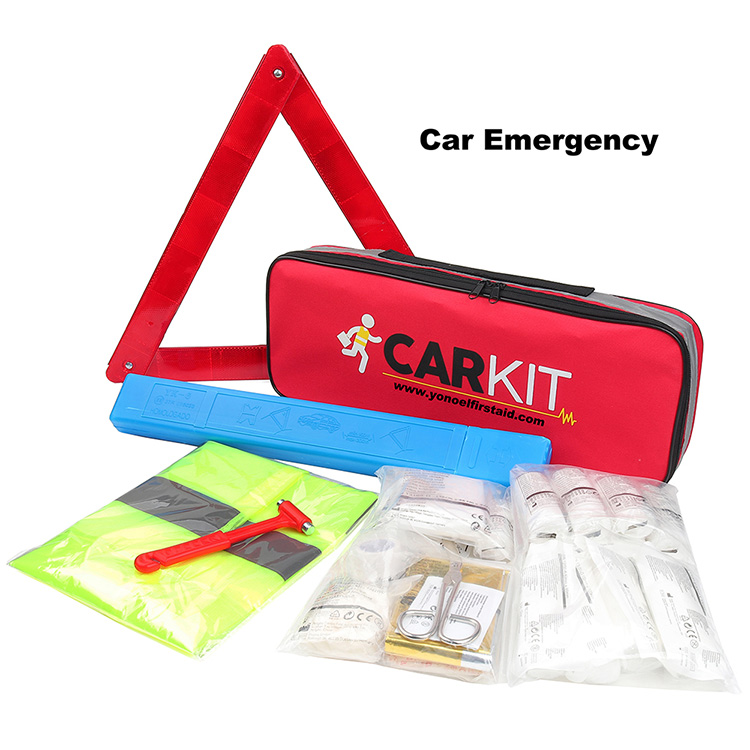
Once the product requirements have been worked out, the supplier needs to be evaluated against those requirements.
For bulk buyers, a sample is useful, but it is only one part of the process. Buyers also need to see whether product details can be discussed clearly and whether requested changes can be incorporated into the agreed configuration.
Communication is particularly important when the product contains several different components. A simple written list can prevent confusion about what is included, while a reference sample can help clarify the case, layout, and overall presentation.
The same principle applies to packaging. If the product will be sold individually, distributed through a vehicle program, or packed with other goods, the packaging requirements may be different.
| Purchasing point | What to check |
|---|---|
| Product contents | Can the agreed contents be clearly specified? |
| Case design | Can the required size and internal arrangement be confirmed? |
| Sample | Can changes be reviewed before the order is finalized? |
| Packaging | Can the packing format match the intended sales or distribution method? |
| Communication | Are product changes and requirements recorded clearly? |
| Repeat orders | Can later purchases refer back to the agreed configuration? |
A supplier does not necessarily need to handle every possible customization. More important is whether its available capabilities fit the product that the buyer is actually trying to source.
Before an order moves forward, a few straightforward questions can prevent unnecessary back-and-forth later.
The first area is the contents. Buyers should know exactly what is included and which components can be changed. If the kit is being developed for a particular market, assumptions about the contents should not be left unresolved.
The case is another point to confirm. Buyers may want to know whether the dimensions, internal pockets, closure, handle, or other construction details can be adjusted.
Packaging deserves its own discussion. A kit intended for retail shelves may have different requirements from one supplied directly to vehicle users. Label placement, inserts, outer packaging, and product identification can all be clarified before production.
A useful purchasing conversation might cover:
The point is not to create a complicated purchasing process. It is to make sure the finished product matches what was discussed.
Buying from an overseas supplier adds another layer to the process because product details have to travel across different languages, working habits, and business procedures.
A clear specification becomes especially useful here. Instead of relying on a short product description, buyers can prepare a contents list, case requirements, packaging notes, labeling instructions, and an approved sample where appropriate.
Terminology should also be handled carefully. A small difference in wording can sometimes create a different interpretation of a product component or packaging requirement. Written confirmation is useful when a detail is important to the finished order.
Packaging and shipment preparation should be discussed separately from the product itself. Buyers may need to confirm how individual kits are packed, how outer cartons are identified, and what information needs to accompany the goods.
Another practical point is keeping a reference for repeat purchases. If the same configuration is ordered again, an approved sample and written specification can make the comparison easier and reduce unnecessary changes.
Overseas sourcing does not have to be complicated, but it does benefit from clear communication. The more specific the product description, the less room there is for different interpretations.
The cost of a vehicle first aid kit is shaped by several parts of the product rather than by the case alone.
The contents are an obvious factor. Changing the number or type of supplies changes the overall configuration. The case can also affect the cost depending on its construction, material, internal organization, and closure.
Customization adds another consideration. A standard case and a specially arranged case may require different production work. Changes to internal pockets, labels, handles, or packaging can also alter the purchasing requirements.
Packaging should not be overlooked. Individual packaging, printed materials, inserts, or a particular packing arrangement can add work that is not visible when simply comparing the contents of two kits.
For this reason, buyers comparing supplier quotations should make sure they are comparing the same product requirements. Two kits can appear similar in photographs while differing in their internal contents, case construction, packaging, or customization.
A clearer specification makes cost comparisons easier. It also gives buyers a better basis for deciding which product features are necessary and which are simply optional changes.
The right sourcing decision ultimately comes down to fit. The contents should suit the intended roadside situations, the case should work within the vehicle, and the supplier should be able to communicate clearly about the product being ordered. When those points are considered together, buyers have a more practical basis for comparing available options and planning future purchases. For businesses looking at vehicle-oriented first aid products, manufacturing support may also be available through Dongyang City Yonoel Outdoor Products Co., Ltd. where its product capabilities match the buyer's requirements.
No. 52, Hulian West Street, Jiangbei Street, Dongyang City, Jinhua City, Zhejiang Province, China
Quick Links
Product Center
Contact Us
 PRIVACY

 English
 Deutsch
 Français
 русский
 Español