A roadside problem rarely arrives at a convenient time. A vehicle may stop working on the way to work, a tire may lose air during a long drive, or bad weather may make it difficult to continue safely. In some cases, help is nearby. In others, drivers may need to remain with the vehicle until assistance arrives.
A Car Emergency Survival Kit gives drivers a practical way to prepare for these situations before they happen. The purpose is not to fill the vehicle with equipment. It is to keep a useful selection of supplies together so that basic problems can be handled more calmly and unexpected delays are easier to manage.
The right contents depend on the vehicle, driving habits, local conditions, and the type of roads usually traveled. A person who mainly drives through a busy town may have different needs from someone who regularly travels long distances through quiet areas. Seasonal conditions can also change what makes sense to carry.
A useful emergency setup should begin with ordinary roadside problems rather than unusual situations. A flat tire, a weak battery, a vehicle that will not start, poor visibility, or an unexpected delay can all leave a driver temporarily unable to continue.
Some supplies are intended to help with the vehicle itself. Others are there for the people inside it. Keeping these two purposes separate makes it easier to decide what belongs in the kit.
| Roadside situation | Useful type of supply | Main purpose |
|---|---|---|
| Vehicle will not start | Starting and basic vehicle tools | Help deal with a starting problem |
| Tire problem | Tire-related tools | Support a temporary roadside response |
| Low visibility | Flashlight and warning items | Make the vehicle easier to see |
| Long delay | Water, food and warm clothing | Support personal comfort |
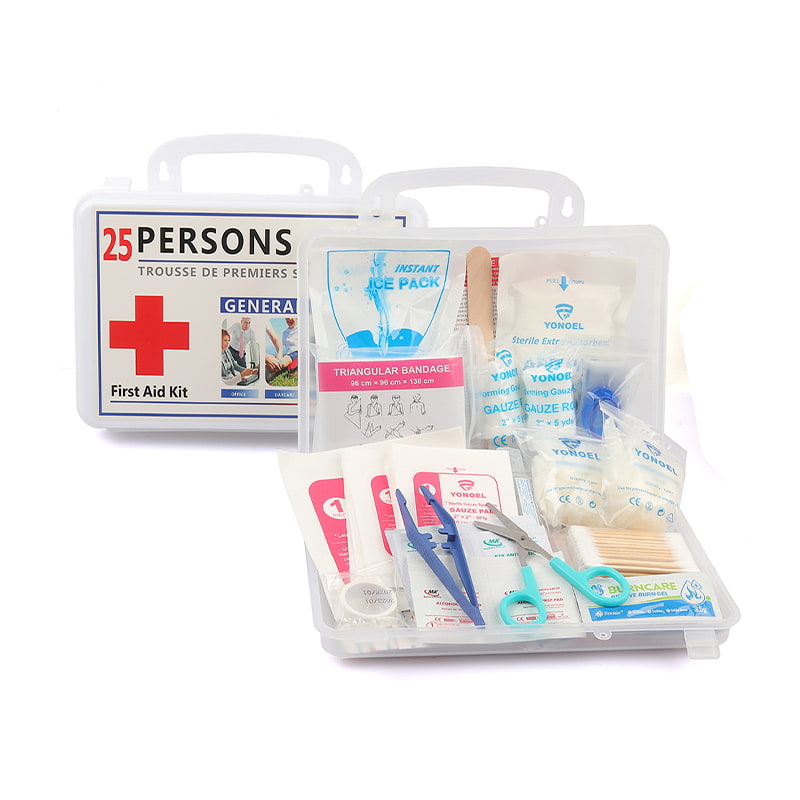
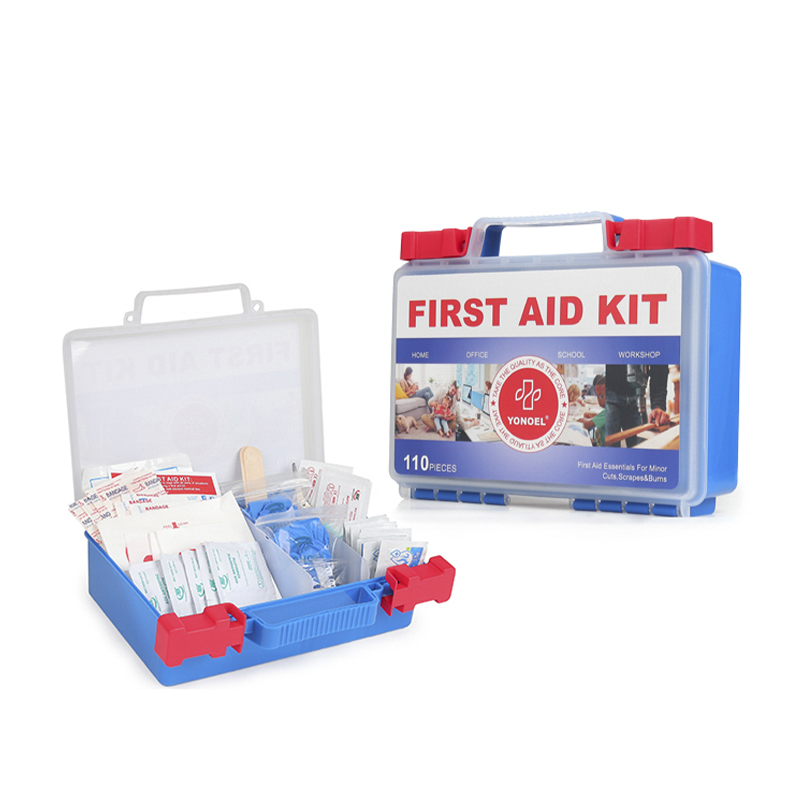
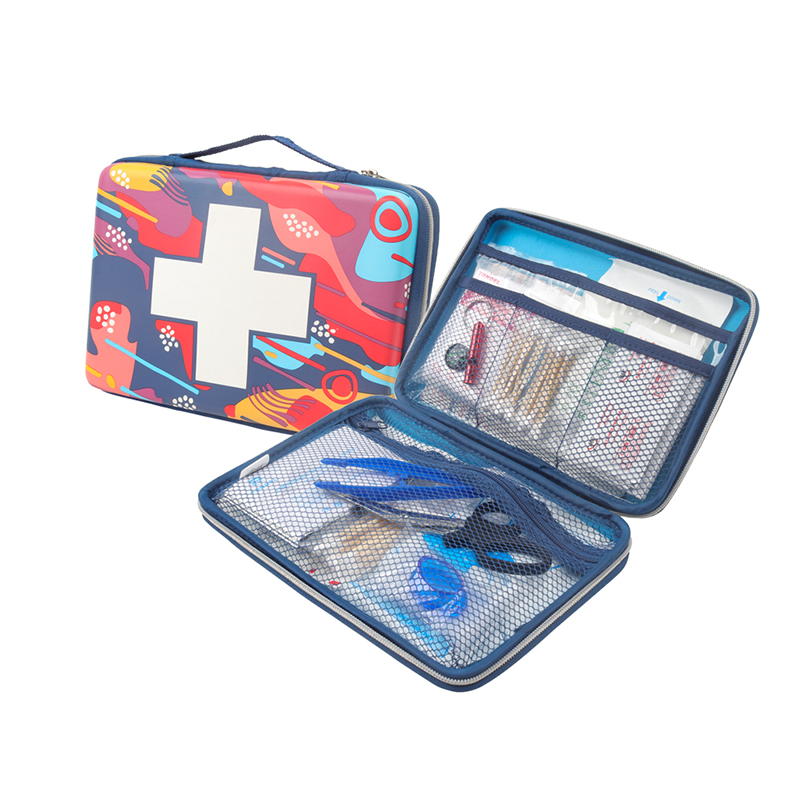
| Minor injury | Basic first aid supplies | Handle small injuries while waiting |
A flashlight is useful in more situations than a nighttime breakdown. It can help when checking a tire, looking under the hood, searching for a dropped item, or moving around the vehicle after dark. Gloves can also be practical when a driver needs to handle a dirty tire or inspect part of the vehicle.
Water and simple food serve a different purpose. They do not solve a mechanical problem, but they can become useful when a short roadside stop turns into a long wait. A blanket, extra layer of clothing, or rain protection can also make an unexpected delay easier to manage.
The key is to think in terms of situations. Instead of adding an item simply because it appears on a generic emergency list, consider whether it has a clear purpose in the vehicle and whether the driver would know how to use it.
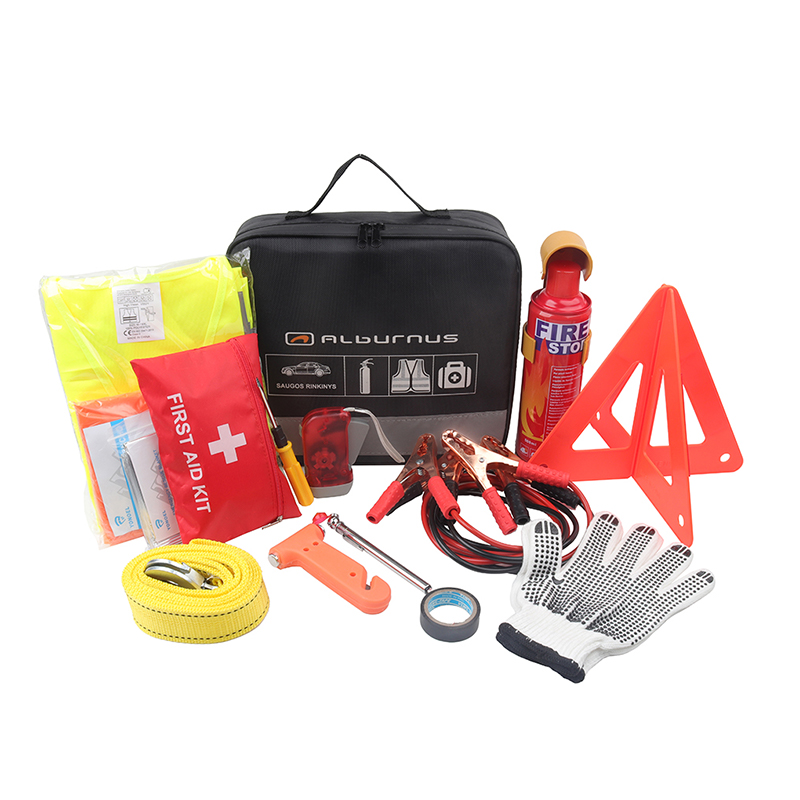
Battery and tire problems require different responses, so they should not be treated as one category. A vehicle with a dead battery may need a suitable way to restore power or obtain outside assistance. A tire problem may require inspection, inflation, or replacement depending on the condition of the tire.
A portable starting device can be useful for some battery-related situations, but drivers should know the correct procedure before an emergency occurs. Incorrect connections or careless handling can create additional problems. If there is uncertainty about the vehicle or equipment, waiting for qualified roadside assistance may be more appropriate.
Tire problems also require judgment. A small loss of air is different from a tire with visible damage. A tire inflator may help restore air pressure in an appropriate situation, while a damaged tire may require replacement or professional assistance. A tire pressure gauge can also help a driver check whether a tire has lost air rather than relying only on appearance.
Other useful items include work gloves, a flashlight, and a cloth. These are simple supplies, but they can make a roadside inspection less uncomfortable, particularly when conditions are poor.
The contents should also match the vehicle. Some vehicles have different tire arrangements, while others may not provide the same space for tools. Before adding equipment, it is sensible to check what is already supplied with the vehicle and avoid carrying unnecessary duplicates.
A breakdown becomes more difficult when it happens after dark or far from busy roads. The immediate concern is not always repairing the vehicle. Visibility and communication can become equally important.
A flashlight should be easy to reach rather than buried under luggage. An additional light source can also be useful if the main light stops working or needs fresh batteries. Reflective or highly visible warning items can help other road users notice a stationary vehicle, although they should only be used from a safe position.
A charged phone is another practical consideration. Keeping a portable power source with the emergency supplies can help when the vehicle cannot provide power. Before relying on any electronic device, however, it is worth checking that it is charged and compatible with the devices normally carried.
Remote driving also changes the importance of basic personal supplies. Water, a small amount of food, suitable clothing, and a basic first aid kit can become more useful when outside assistance may take longer to arrive.
Drivers should avoid unnecessary movement around an unfamiliar roadside location at night. If the vehicle is in a potentially dangerous position, remaining in a safe place and contacting roadside assistance may be more appropriate than attempting a repair.
Weather can change the needs of a roadside emergency. Heat can make a stopped vehicle uncomfortable, while cold conditions create different concerns. Heavy rain can reduce visibility and make roadside work unpleasant. Snow or ice can also make it harder to leave the vehicle safely.
For hot conditions, drinking water and protection from direct sunlight are practical considerations. A vehicle should not be treated as a safe storage place for every type of item, however. Heat can affect certain supplies, batteries, food, and other materials, so storage conditions should be considered when choosing what to carry.
Cold-weather driving calls for a different approach. Warm clothing, gloves, blankets, and suitable footwear can help if a driver needs to remain outside briefly or wait inside the vehicle. A flashlight is also useful because winter conditions often reduce visibility.
Rain calls for waterproof protection and careful handling of electrical equipment. Items that can be damaged by moisture should be kept in suitable containers. A small towel or absorbent cloth can also be useful for wiping wet surfaces.
| Weather condition | Useful preparation | Storage consideration |
|---|---|---|
| Hot conditions | Water and sun protection | Protect heat-sensitive supplies |
| Cold conditions | Warm clothing and blankets | Keep clothing dry |
| Heavy rain | Waterproof layers and protected equipment | Use water-resistant storage |
| Snow or ice | Warm layers and suitable footwear | Keep supplies accessible |
The important point is flexibility. A kit prepared for one season may not be suitable for another. Drivers who regularly travel through changing conditions should review their supplies rather than leaving the same contents untouched.
A vehicle problem may take only a short time to resolve, but drivers cannot always control how long they will wait. A tow service may need time to arrive, a repair may require outside help, or weather may prevent immediate travel.
During a delay, basic personal needs become more important. Drinking water should be easy to reach. Simple food can be useful when a driver has been on the road for several hours and the delay extends the trip. A blanket or spare layer can help maintain comfort when temperatures change.
A basic first aid kit also has a place in the vehicle. Small cuts, scrapes, or other minor injuries can happen during roadside work. The supplies should be kept clean, dry, and easy to access.
Personal requirements matter as well. Families may need supplies for children, while people traveling with pets may need water, food, or other familiar items for the animal. The contents should reflect who regularly uses the vehicle rather than following a fixed list.
It is also useful to keep important personal information accessible, such as emergency contacts and relevant vehicle details. The exact information needed will depend on the driver and vehicle.
A practical emergency setup does not need to occupy a large part of the vehicle. Space becomes especially important when a car is used for commuting, family travel, shopping, or carrying work equipment.
One way to reduce unnecessary items is to look for supplies that have more than one reasonable use. A flashlight, for example, can assist with visibility, vehicle inspection, and locating items after dark. Work gloves can protect the hands during several types of roadside tasks.
At the same time, multifunctional equipment should not replace items that have a clear safety purpose. If an item is difficult to operate or its different functions are poorly suited to the vehicle, carrying it may create more inconvenience than value.
Weight is another consideration. Heavy equipment can be difficult to move when the vehicle is full, and loose objects can become a problem if they are not secured. Emergency supplies should therefore be arranged so they remain stable while driving.
A simple storage bag or container can keep smaller items together. Frequently needed supplies should remain near the opening, while less frequently used items can be placed farther inside. This arrangement reduces the need to empty the entire container during a roadside problem.
Storage location matters because an emergency supply is only useful when it can be reached without unnecessary difficulty. A container buried beneath luggage may be technically available but inconvenient when the driver needs it quickly.
The trunk or rear storage area is suitable for many vehicles, particularly when the supplies are kept in a clearly marked and organized container. However, drivers should consider whether the trunk can still be opened if the vehicle is parked close to another object or if the rear area becomes difficult to access.
Small items that may be needed immediately can be stored separately. A flashlight, for example, should not be hidden beneath heavier equipment. The same applies to warning items and basic first aid supplies.
Loose equipment should be secured so it does not move around while driving. Containers with compartments can make organization easier, especially when different types of supplies need to remain together.
The storage location should also protect supplies from unnecessary moisture and heat. Some items may require more careful storage than others. Checking the condition of the storage area from time to time can prevent damaged packaging or misplaced equipment from becoming a problem later.
A roadside emergency setup should not be treated as something that is assembled once and then forgotten. Vehicle use changes, seasons change, and supplies can become damaged or unsuitable over time.
A simple inspection can begin with the items that are easiest to overlook. Check flashlights and their power sources, inspect first aid supplies, look at food and water, and make sure clothing remains dry and usable. Tools should also be checked for visible damage or corrosion.
The contents may need adjustment when the vehicle or driving routine changes. A driver who begins making longer trips may have different requirements from someone who mainly travels short distances. Family circumstances, weather conditions, and storage space can also affect what should remain in the vehicle.
It is useful to return each item to its designated place after checking it. A well-organized Car Emergency Survival Kit should be easy to inspect because every item has a known location.
The same approach applies after an actual roadside incident. Any supplies that were used should be replaced, damaged items should be removed, and equipment that performed poorly should be reconsidered. This keeps the emergency setup relevant to the situations the vehicle is likely to encounter.
No. 52, Hulian West Street, Jiangbei Street, Dongyang City, Jinhua City, Zhejiang Province, China
Quick Links
Product Center
Contact Us
 PRIVACY

 English
 Deutsch
 Français
 русский
 Español