A first aid bag rarely gets much attention until the moment someone actually needs to open it. That's usually when its design either helps or gets in the way. Whether it sits on a shelf in an office, rides along on a hiking trip, or waits inside a community center, the bag has one job: make emergency supplies easy to store, carry, and reach when time matters.
Getting that right takes more planning than most people assume. A First Aid Bag Manufacturer has to think through user habits, material behavior, storage conditions, and production realities long before a single stitch goes into the fabric. A bag built for a construction site won't necessarily work for someone packing for a weekend trail, and a version meant for travel probably won't suit a fixed storage cabinet in a school hallway.
Most development work starts with a simple question: how will this actually get used? Designers look at the environment, the way it will be carried, how the inside should be arranged, and what kind of protection the contents need. Every one of those answers shapes the final product, right down to how quickly someone can locate a bandage under pressure.
Buyers evaluating a manufacturing partner also need to look past surface appearance. Production methods, customization flexibility, material sourcing, and quality practices all determine whether a bag will genuinely fit its intended use. A thoughtful approach to design, materials, and manufacturing process tends to produce bags that hold up well and stay organized through repeated use — which is really what most buyers are trying to figure out before placing an order.
No two environments ask the same thing from a first aid bag. A version meant for a busy workplace usually needs to support quick organization and easy access, while something built for outdoor use tends to lean more on portability and weather resistance.
A First Aid Bag Manufacturer typically starts by figuring out where the bag will actually spend its time. That single detail influences almost everything that follows — size, shape, how it gets carried, and how the inside gets arranged.
In workplace settings, staff often need to identify supplies quickly during a busy shift, so designs tend to favor clear compartments and openings that don't require much fumbling. Outdoor versions shift priorities toward lighter construction and carrying setups that stay comfortable across longer distances, since users may be moving the bag between locations rather than leaving it in one spot.
| Application Area | Design Considerations |
|---|---|
| Workplace | Easy organization, stable storage, convenient access |
| Outdoor Activities | Portable structure, comfortable carrying, protective materials |
| Public Areas | Simple handling, clear arrangement, practical maintenance |
The surroundings also shape smaller design choices. A bag that stays mounted in one location can afford to prioritize storage capacity, while a portable one usually needs a carrying system that won't feel like a burden after a few minutes.
User behavior matters just as much as environment. People searching for supplies rarely want to dig through a cluttered space, so pocket placement, opening style, and visibility of stored items all get weighed carefully. Good design here isn't about piling on extra features — it's about matching the structure to how people actually behave when they reach for the bag.
Material choices quietly determine how well a bag holds up over time. The outer fabric, inner lining, zippers, and supporting components each play a role in how the product handles daily wear.
When narrowing down material options, manufacturers usually weigh things like resistance to wear, ease of cleaning, flexibility, and how much protection a given application calls for. A bag headed for outdoor conditions might need fabric that shrugs off moisture and temperature swings, while one meant for indoor storage may lean more toward easy upkeep and straightforward handling.
Fabric that resists abrasion holds up better under repeated use, water-resistant surfaces help protect contents when conditions shift unexpectedly, lighter materials make carrying less tiring, and surfaces that wipe clean easily support basic hygiene without extra effort.
A First Aid Bag Manufacturer also has to think about how these materials work together rather than in isolation. A tough outer shell doesn't count for much if the internal structure can't keep supplies organized. Stitching methods, supporting panels, and fabric choice all need to align for the bag to feel genuinely usable rather than just sturdy on paper.
Material selection also touches production flexibility. Buyers sometimes want particular colors, textures, or surface finishes depending on their application, and manufacturers need to balance those requests against what's practical to produce consistently.
There's also the question of storage life. First aid bags often sit unused for stretches of time before anyone opens them, so materials need to hold their shape and structure even without regular handling — not just perform well the day they're packed.
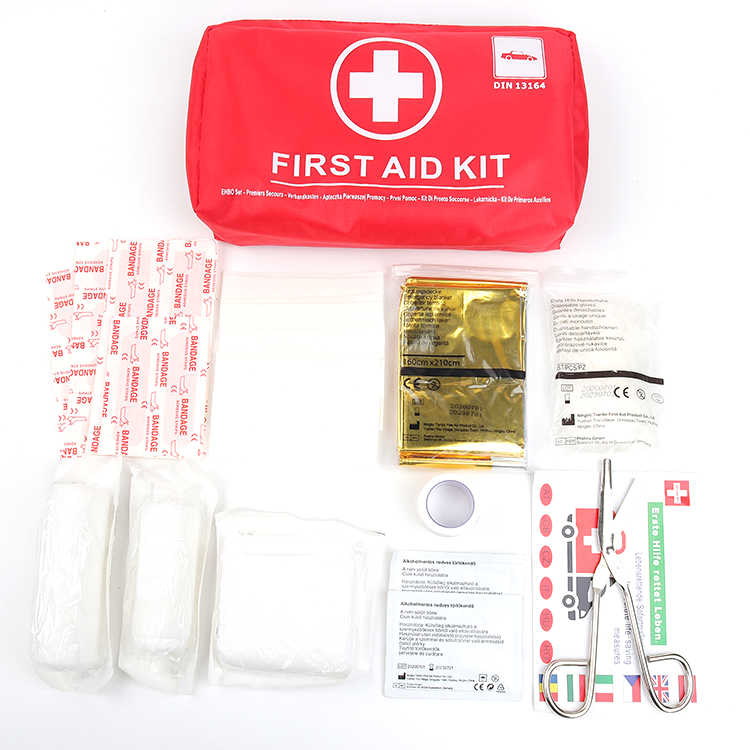
The inside of a first aid bag shapes how easily someone can manage its contents. A layout that's been thought through helps separate different categories of supplies instead of letting everything shift into one crowded space.
Manufacturers generally build internal sections around common storage habits — separate areas for different supply types, elastic loops that keep smaller items from sliding around, clear panels that make identification faster, and flexible spaces that can adjust to different item sizes.
More compartments don't automatically mean better organization, though. Too many small sections can actually slow someone down instead of helping. The better approach tends to be a layout that's easy to scan at a glance rather than one packed with unnecessary subdivisions.
Opening style plays a role here too. A wider opening lets someone see contents more clearly right away, while secure closures help keep everything in place during transport or storage. A First Aid Bag Manufacturer often adjusts these internal details based on direct feedback from buyers, since a workplace setup rarely mirrors what an outdoor group or community organization actually needs.
At its core, internal design reflects how closely product structure connects to daily use. A layout that's been planned with real habits in mind tends to make supply management feel far less like a chore.
A first aid bag can look simple from the outside, but the details that make it reliable — stitching strength, material bonding, zipper function, overall build — aren't always obvious at a glance. That's where consistent quality checks throughout production start to matter.
Manufacturers typically review each stage of the process rather than waiting until the end to catch problems. Catching an issue early, before it's built into dozens of finished units, tends to save far more trouble than fixing it afterward.
| Production Stage | Quality Focus |
|---|---|
| Material preparation | Checking fabric and accessory conditions |
| Cutting process | Maintaining correct shapes and dimensions |
| Sewing process | Ensuring stable connections between parts |
| Final inspection | Reviewing appearance and functionality |
Each of these stages feeds into the next. Accurate cutting means parts fit together the way they're supposed to, and steady stitching keeps different sections of the bag connected under regular stress. A First Aid Bag Manufacturer also pays close attention to smaller components — zippers, straps, handles, internal holders — since these are the parts users interact with constantly, even if they rarely get a second thought until something goes wrong.
Quality management isn't only about spotting flaws after the fact. It also involves refining the process itself, adjusting methods over time to reduce the chance of recurring issues. For buyers, understanding how a supplier handles this stage offers a fairly clear window into whether that supplier has genuine production experience — and a transparent process usually makes it easier for both sides to communicate expectations clearly.
Different industries rarely want the exact same bag. A company in manufacturing, a group running outdoor programs, a school, or a public facility team will likely have different expectations shaped by their own working conditions.
Customization gives buyers room to adjust the product around those specific needs. A First Aid Bag Manufacturer can typically offer flexibility around size and shape, fabric choice, color, pocket layout, carrying method, and packaging — the details that make a bag feel purpose-built rather than generic.
The point of customization isn't just changing how a bag looks. It's about shaping the structure around how it will actually get used. A group storing supplies in a fixed cabinet has different priorities than a team hauling equipment across changing terrain, and those differences show up in transportation method, storage habits, and internal layout.
Communication carries a lot of weight in this process. Buyers usually need to share details about their environment, storage approach, and design preferences so the manufacturer can weigh what's realistically achievable within production constraints. When that exchange happens clearly, customization tends to produce a bag that fits neatly into a buyer's existing management system — something staff or volunteers can pick up and use without extra training or guesswork. A workable custom project really depends on that back-and-forth between buyer and manufacturer staying clear from the start.
Structure shapes almost everything about how a bag performs day to day — how it's stored, how it travels, and how quickly someone can get to what's inside.
Workplace settings usually put organization near the top of the list. Employees need to recognize stored items fast, so structure tends to favor clear sections and straightforward management over anything decorative. Outdoor use shifts the priorities elsewhere — comfort, portability, and protection from shifting weather conditions tend to matter more once someone is moving the bag between locations rather than leaving it in place.
A handful of structural elements tend to carry the most weight: the outer shape and carrying setup, how the interior is arranged, the type of closure used, and whatever support features help during transport. Together, these decide whether a bag feels manageable or clunky once it's actually in someone's hands.
A First Aid Bag Manufacturer has to weigh how differently each environment treats these elements. A bag mounted inside a facility faces a very different set of demands than one thrown into a vehicle for travel or carried during outdoor fieldwork. Structure also shapes how efficiently supplies get organized — when internal space is planned with intention, users can sort items by how often they're needed, their size, or their category, rather than everything landing in one undivided space. That connection between physical structure and actual use is really what separates a workable bag from one that just looks the part.
Before committing to a custom order, buyers benefit from gathering their thoughts and communicating expectations clearly upfront. That groundwork helps both sides land on a shared understanding before production even begins.
A good starting point is simply asking where and how the bag will be used. That single answer tends to narrow down material choices, structural priorities, and feature requirements fairly quickly.
From there, it helps to think through a few more questions: What kind of environment will the bag face regularly? What storage arrangement makes sense for the supplies involved? Which materials suit that particular setting? What customization details actually matter versus what's just nice to have? How should the finished product be packaged for delivery?
Clear answers to these questions give a First Aid Bag Manufacturer something concrete to work from. Without that context, it becomes harder to land on a design that actually reflects real usage rather than a generic template.
It's also worth discussing production logistics directly — how samples get reviewed, what modification options exist along the way, and what quality benchmarks apply. These conversations tend to smooth out the cooperation process considerably. Choosing a manufacturing partner really comes down to more than comparing how finished bags look in photos; production experience, responsiveness, and familiarity with different applications all factor into whether the partnership actually works well in practice.
Bulk orders raise the stakes a bit, since any design gaps or communication issues tend to multiply across a larger quantity. Choosing a manufacturing partner for this kind of order calls for a closer look at a handful of factors — product requirements, communication style, production management, and how well customization gets handled.
A reasonable starting point is checking whether the manufacturer actually understands the application in question. Different industries carry different expectations, and prior experience across varied product types tends to translate into more realistic, workable suggestions.
Worth evaluating along the way: how the manufacturer approaches product development, how well they understand material behavior, how production gets managed day to day, how clearly they communicate around customization requests, and what their inspection process actually looks like in practice.
A First Aid Bag Manufacturer should be able to walk through how designs come together and how production requirements get handled at each stage. That kind of clarity gives buyers a fairly reliable read on whether the supplier can genuinely support what they're trying to build.
Long-term factors deserve attention too. Steady communication, clear production procedures, and a responsive team all shape how smoothly future orders go once the relationship moves past a first run. Bulk purchasing rarely stops at simply receiving finished bags — it involves coordinating design decisions, production timing, inspection, and delivery preparation across the whole process. When companies take the time to evaluate potential suppliers on these practical grounds rather than surface appearance alone, they tend to end up with a partner that actually fits how their organization plans to use the product going forward.
No. 52, Hulian West Street, Jiangbei Street, Dongyang City, Jinhua City, Zhejiang Province, China
Quick Links
Product Center
Contact Us
 PRIVACY

 English
 Deutsch
 Français
 русский
 Español