An outdoor survival kit is a compact, portable collection of tools and supplies carried by hikers, campers, hunters, anglers, or anyone spending time in remote or wilderness areas. Its main purpose is to provide the basic means to stay alive, stay comfortable, and get help when normal plans go wrong—whether that means a sudden storm, getting lost, an injury, or simply being delayed far from roads or towns. These kits are not full camping gear; they focus on short-term self-reliance, usually for one to three days until you can reach safety or rescue arrives.
The contents are chosen to cover the core human survival needs in priority order: shelter from weather exposure, safe drinking water, fire for warmth and signaling, food or energy to maintain strength, first aid for injuries, navigation to find your way, and signaling to attract rescuers. A typical kit packs these into a small pouch, bag, or case that fits in a backpack pocket, attaches to a belt, or rides in a vehicle glove box. The design emphasizes light weight, durability, and quick access so the kit is actually carried and usable when needed instead of left behind.
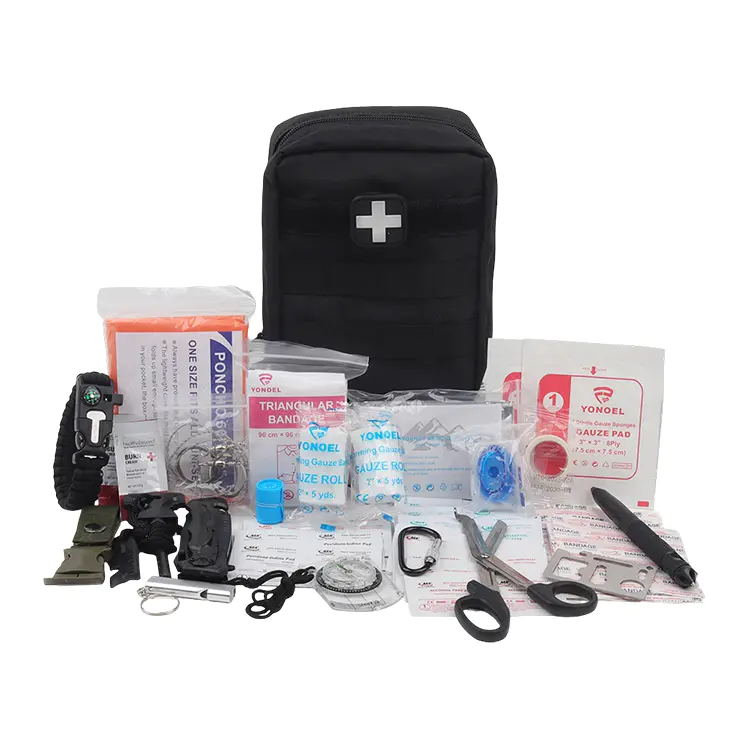
The shelter function protects the body from environmental threats that can kill faster than hunger or thirst. Emergency blankets (mylar sheets) reflect body heat back to the user, preventing hypothermia on cold nights or when wet. A small tarp or emergency poncho blocks rain, wind, or snow, and can be set up as a lean-to, ground sheet, or overhead cover.
These items also serve as insulation from cold ground or as a rain catcher to collect water. In hot, sunny conditions, the same tarp provides shade to reduce heat exhaustion. Insect netting or head nets guard against bites in buggy areas, lowering the risk of infection or disease. Shelter components are lightweight, pack flat, and deploy quickly—even with cold or injured hands—so they remain practical in real emergencies.
Water is a top priority because dehydration weakens physical strength and clear thinking very quickly. Purification tablets or chemical drops kill bacteria, viruses, and protozoa in streams, lakes, or puddles, making them safe to drink after a wait time. Filter straws or small portable filters let you drink directly from the source by straining out contaminants mechanically, providing instant safe water without delay.
Collapsible bottles or soft bladders store the treated water for later use. Some kits include a metal cup for boiling over a fire, which kills pathogens reliably when fuel is available. These tools prevent waterborne illnesses and keep energy and judgment intact. The function is to make natural water sources usable, extending the time you can survive without outside help.
Fire serves multiple survival functions: it provides warmth to prevent hypothermia, dries wet clothing, boils water for safety, cooks food for better nutrition and morale, and creates smoke or light for signaling rescuers. Reliable kits include several ignition methods: waterproof matches in sealed containers, ferro rods that produce hot sparks even when wet, and disposable lighters as a quick backup.
Tinder packs (cotton balls with petroleum jelly or commercial fire-starters) catch flames easily and burn long enough to ignite kindling. A small metal cup or foil pouch heats water or rehydrates meals. Fire tools must work one-handed if needed and in wind, rain, or cold conditions. The warmth function alone can turn a dangerous cold night into a manageable one, while the signaling and cooking aspects add extra layers of utility.
Food supplies in a survival kit provide calories and nutrients when regular meals are unavailable, preventing weakness, confusion, and low morale. High-calorie energy bars, gels, or trail mix deliver quick carbohydrates for immediate energy and some protein or fat for longer-lasting fuel. Nuts offer healthy fats, dried fruit adds natural sugars and vitamins, and some kits include powdered drink mixes to improve hydration and taste.
These items are chosen because they pack densely, resist crushing or spoilage in heat or cold, and require no cooking. The function is to maintain blood sugar levels, reduce fatigue, and keep mental sharpness during delays or unexpected overnights. Quantities usually cover one to three extra days for solo use, more for groups. Rotating stock every few months keeps everything fresh and ready.
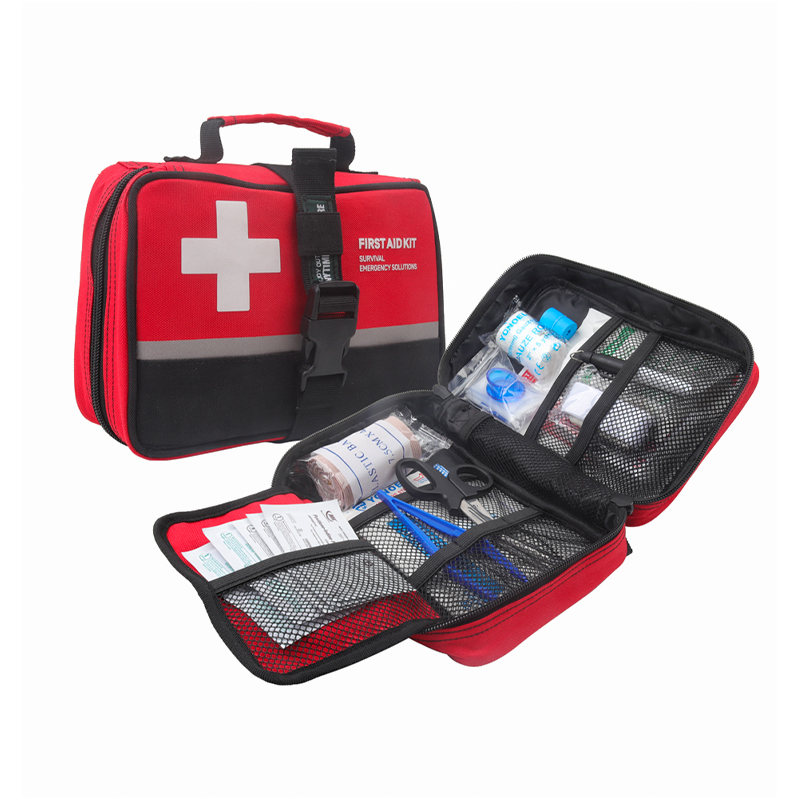
First aid supplies treat common outdoor injuries before they worsen. Adhesive bandages and gauze pads cover cuts, scrapes, or blisters. Antiseptic wipes clean wounds to prevent infection. Pain relievers ease headaches, muscle strains, or joint pain. Tweezers remove splinters, thorns, or ticks, and gloves protect the responder during treatment.
Blister pads or moleskin prevent hot spots from turning into open sores on long walks. These items stop minor problems from becoming serious when medical help is hours or days away. Kits organize first aid in a separate waterproof pouch so items stay dry and easy to locate quickly. The function is to provide immediate care that buys time and reduces complications until professional treatment is available.
Navigation tools keep you from getting lost or help you find your way back. A baseplate compass points north reliably without batteries and pairs with a printed topographic map showing trails, elevation, water sources, and landmarks. These analog tools remain functional when phones lose power or signals drop.
In low visibility like fog or darkness, they prevent walking in circles. The function is to maintain direction and orientation, reducing panic and conserving energy that would be wasted on wrong turns. Kits include durable, simple designs that work even under stress or with wet hands.
Signaling devices increase the chances of being found quickly. A loud pea-less whistle carries sound much farther than shouting and works when wet or frozen. A signal mirror reflects sunlight in precise flashes visible from miles away, especially effective during daylight hours. Bright fabric strips, reflective tape, or orange flagging marks your location on the ground for aircraft or search teams.
Small flashlights or headlamps with red modes help you see at night while preserving night vision and staying discreet if needed. These tools are small but powerful—sound and light travel far and draw attention when you cannot move. The function is to shorten rescue time by making your position obvious to searchers.
Before looking at any kit, think about the kind of trips you actually take. Day hikes on marked trails need far less than multi-day backpacking in remote mountains. Solo trips require more self-reliance, while group outings let you share weight and supplies. Consider the environment too: desert areas demand extra water storage and sun protection, while forested or coastal zones need insect repellents and waterproof storage.
Season plays a big role. Summer kits focus on hydration and lightweight shelter; winter versions need insulation and fire starters that work in cold, wet conditions. Trip length matters—short outings can get by with minimal items, but anything over one night usually calls for food rations and more robust first aid. Your experience level also guides the decision. Beginners often prefer ready-made kits with clear instructions; experienced users tend to build or customize their own to remove extras and add personal items. Taking time to list your most common activities and locations helps avoid buying a kit that's either too heavy or missing key pieces.
A solid survival kit always covers the same basic human needs: shelter, water, fire, food, first aid, navigation, and signaling. Shelter items usually include an emergency blanket or bivvy sack to block wind and retain body heat, plus a small tarp or poncho for rain protection. Water comes next—purification tablets, a small filter straw, or a collapsible bottle let you safely drink from streams or puddles.
Fire starters are essential for warmth, cooking, and signaling. Waterproof matches, ferro rods, or lighters with tinder packs cover wet conditions. Food typically means high-calorie energy bars or freeze-dried meals that pack small and last long. First aid covers bandages, antiseptics, pain relievers, tweezers, and blister treatment. Navigation includes a compass and paper map (GPS backups are nice but batteries die). Signaling uses a loud whistle, small mirror, and bright fabric for visibility. These seven categories form the foundation—any kit missing one or more of them isn't complete for real backcountry use.
Shelter keeps you alive when temperatures drop or storms roll in. Most kits include a mylar emergency blanket that folds tiny but reflects body heat back to you. Better versions have a bivvy sack or lightweight tube tent that blocks wind and rain more effectively. A small tarp or poncho doubles as ground cover or rain protection and weighs almost nothing.
Insect netting or head nets appear in kits for buggy regions. Sun protection items like lip balm or a wide-brim hat cover desert and high-altitude trips. These pieces prevent exposure-related problems like hypothermia or heat exhaustion. Lightweight and packable designs matter most—bulky shelters defeat the purpose when you're already carrying water and food. A reliable shelter component should deploy quickly and work in wind or wet weather without needing advanced setup skills.
Clean water becomes the highest priority after the first few hours in the backcountry. Purification tablets or drops treat questionable water quickly and take up almost no space. Filter straws or small pump filters remove bacteria and protozoa without chemicals. Collapsible water bottles or bladders store treated water for later.
Some kits include a metal cup or pot for boiling if fire is available. Carrying capacity usually starts at one to two liters for day use, more for overnight trips. Choose purification methods that match the water sources you expect—tablets work for clear streams, filters handle murky ponds. Weight and speed of treatment matter; tablets need wait time, filters work instantly but clog over time. A good kit gives you at least two ways to make water safe.
Fire provides warmth, light, a way to boil water, and a signal for rescuers. Reliable kits include multiple ignition sources: waterproof matches in a sealed container, ferro rods that spark even when wet, and disposable lighters as backup. Tinder packs—cotton balls with petroleum jelly or commercial fire-starters—get flames going fast in damp conditions.
A small metal cup or foil pouch lets you heat water or rehydrate meals. Fire starters should work one-handed if you're injured. Kits avoid bulky stoves unless the trip is long and cooking is planned. Focus on items that ignite reliably in wind, rain, or cold—these make the difference between a cold night and a manageable one.
Getting found or staying found prevents most survival problems. A quality compass and printed topographic map remain essential because they never need batteries. Some kits add a small GPS unit or phone charger as backup, but the core stays analog.
Signaling includes a pea-less whistle that works when wet, a signal mirror for daytime reflection, and bright fabric strips for ground-to-air visibility. Headlamps or small flashlights with red modes preserve night vision. These tools need to be simple, durable, and easy to use under stress. Place them in an outside pocket for instant access.
First aid in survival kits goes beyond basic bandages. Blister prevention and treatment matter on long hikes. Antiseptic wipes clean wounds, adhesive bandages cover cuts, and pain relievers handle headaches or strains. Tweezers remove splinters or ticks, gloves protect during treatment.
Personal medications—antihistamines for allergies, anti-diarrheal for water issues—should be included if relevant. Kits organize medical items in a separate waterproof pouch. Quantities depend on group size and trip length; solo kits can be minimal, group kits need extras. Focus on items that address the most likely injuries for your activities.
A compact multi-tool saves weight by combining pliers, knife, screwdriver, and scissors in one device. It handles gear repairs, food prep, or small medical tasks. Duct tape rolls (wrapped around a pencil) fix tears in shelters or packs. Paracord serves for lashing, repairs, or snares.
Sewing kits mend clothing or packs. These small additions turn a basic kit into something that keeps you moving when equipment fails. Choose tools with real metal construction—cheap plastic versions break under load.
Food keeps energy up when rescue takes longer than expected. High-calorie energy bars or gels pack dense nutrition in small space. Some kits include freeze-dried meals or powdered drink mixes for morale and hydration.
Quantities usually cover one to three extra days for solo use, more for groups. Avoid heavy cans; focus on lightweight, no-cook options. Rotate stock periodically to keep it fresh.
Size and weight directly affect whether the kit gets carried or left behind. Day-hike pouches weigh under a pound and fit in a pocket. Weekend camping bags run two to four pounds and attach to packs. Backcountry kits can reach six to ten pounds but include more food and shelter.
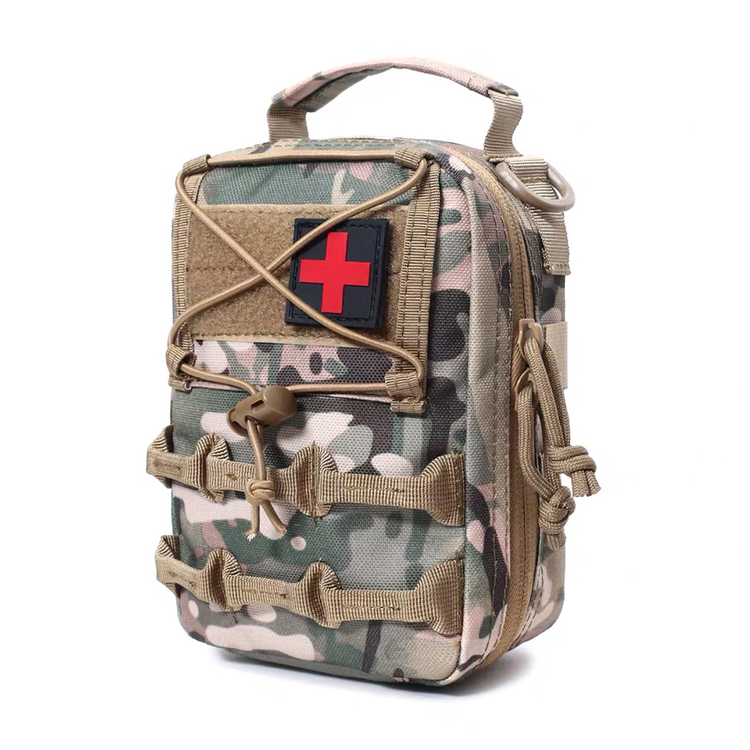
Test the loaded weight on a short walk. If it feels burdensome, remove non-essentials. Straps, clips, or MOLLE webbing let you attach the kit securely. The right size stays with you instead of staying in the car.
Budget affects kit choices without forcing compromises on safety. Entry-level kits cover the basics affordably. Mid-range versions add quality tools like better filters or multi-tools. Higher budgets bring durable cases and extras like solar chargers.
Value comes from sturdy materials and useful contents, not just quantity. Pre-made kits save assembly time; custom builds remove filler items. Compare contents lists to price to find the best balance.
Keep kits ready by checking them before each season. Replace expired food, tablets, or batteries. Inspect containers for tears or zipper issues. Store in cool, dry places away from direct sun.
Create a simple checklist taped inside the lid. These habits ensure the kit works when needed instead of failing from neglect.
Outdoor survival kits with these features offer practical support for a wide range of adventures. They help manage risks without adding excessive weight or complexity.
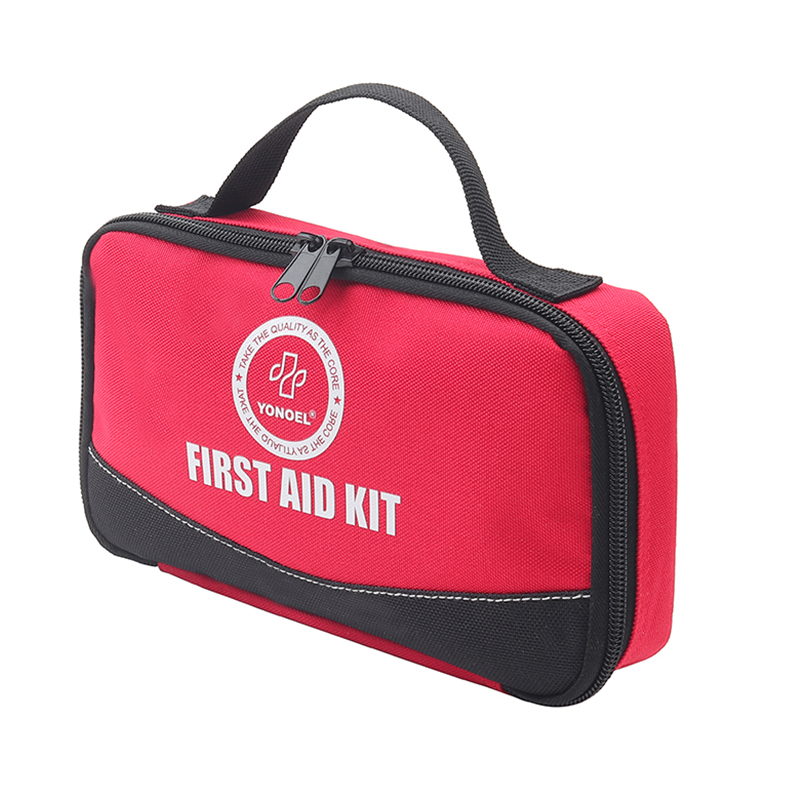
Factories such as Yonoel produce outdoor survival kits designed for real-world use in hiking and camping. Yonoel focuses on durable materials, logical organization, and essential supplies that fit typical backcountry needs.
Yonoel offers compact to medium-sized options with weather-resistant construction and clear layouts for quick access. This provides dependable kits for outdoor enthusiasts who want reliable gear without unnecessary extras.
.jpg)
No. 52, Hulian West Street, Jiangbei Street, Dongyang City, Jinhua City, Zhejiang Province, China
Quick Links
Product Center
Contact Us
 PRIVACY

 English
 Deutsch
 Français
 русский
 Español