Choosing a supplier for a combat-style medical kit is less about a simple product check and more about fit, consistency, and practical use. Buyers usually want a kit that can be carried with ease, opened quickly, and adapted to different working conditions without adding clutter. For a manufacturer, that means the real discussion starts with use case, structure, materials, and the way the supplier handles communication from the first inquiry onward.
A dependable Combat Military First Aid Kit Supplier does more than assemble items into a pouch. The supplier should understand how the kit will be stored, how it will be opened under pressure, and how small design choices can shape daily use. Some buyers want a compact setup for patrol bags or field packs. Others need a more modular format that can be attached, moved, or adjusted with minimal effort. The right supplier should be able to respond to those differences without turning every request into a long and confusing process.
When buyers compare options, they often focus on visible details first. Stitching, fabric feel, pocket layout, fastening method, and the ease of access all matter. Yet the less visible side is just as important. A supplier's planning process, sample control, communication habits, and ability to keep production steady often tell buyers more than the outer appearance of a kit alone. A smart buying process brings these points together instead of treating them as separate issues.
| Buyer Concern | What to Look for in a Supplier |
|---|---|
| Use in different settings | Flexible kit layouts and clear structure choices |
| Easy access | A pouch design that opens in a direct and organized way |
| Carrying comfort | Materials and fastening details that stay practical in use |
| Product consistency | Clear sample control and stable production habits |
| Custom needs | A supplier that can adjust layout, color, and packaging |
Before placing an order, buyers should be clear about the intended use of the kit. A field team, an outdoor group, and a safety-focused distributor may all want different layouts even if they are looking at similar products. The buyer does not need to define every detail at once, but the core purpose should be clear. That purpose shapes the size, internal structure, and the way the kit will be packed.
A good first step is to identify the expected carrying method. Some kits are made for bags, some for belts, and some for fixed storage. If the carrying method is not clear, the final design may look suitable on paper but feel awkward in daily use. Buyers should also think about whether the contents will remain the same or change over time. A fixed layout can be useful in some cases, while a more flexible format may work better in others.
Working with a Combat Military First Aid Kit Supplier becomes easier when the buyer can explain the use case in simple language. The supplier can then suggest a layout that fits the purpose without overcomplicating the product. Clear input at the start often saves time later, especially when the order is meant for a specific market or user group.
The selection process should begin with the structure of the kit itself. Buyers usually benefit from a pouch that opens in a clear sequence, keeps items visible, and reduces searching time. Internal pockets, elastic loops, and divider choices all affect how easy the kit is to use. A well-arranged layout is often more useful than a crowded one.
Material choice should also be reviewed with care. Buyers may prefer fabrics that feel stable, hold shape well, and stay suitable for frequent handling. The outer layer, lining, fasteners, and seams all contribute to the final result. None of these parts works alone. A supplier that understands how they interact can offer a cleaner product plan.
Communication style is another useful indicator. If a supplier answers product questions clearly, shares sample details without delay, and explains adjustment options in a direct way, that usually points to a more organized process. Buyers do not need vague promises. They need steady information and a practical approach.
| Feature Area | Practical Question to Ask |
|---|---|
| Structure | Does the layout make items easy to reach? |
| Material | Does the fabric suit regular handling? |
| Closure | Does the opening method stay smooth and controlled? |
| Flexibility | Can the layout be adjusted for different needs? |
| Service | Are sample requests and updates handled clearly? |
Material choices often shape the reputation of the final product. A kit used in active, mobile, or outdoor settings needs a shell that can handle repeated movement. Buyers usually look for a fabric that resists wear, keeps a clean shape, and supports practical stitching. The material should not feel delicate or unstable under normal handling.
Design matters just as much. A pouch with a strong outer build but a confusing interior may still frustrate users. Good design supports fast access, organized storage, and an orderly return of items after use. That means the internal structure should match the expected contents instead of forcing the buyer to adapt the contents to a rigid layout.
A Combat Military First Aid Kit Supplier should be able to explain why a certain material or layout was chosen. That explanation does not need to be technical in tone. It only needs to be clear enough for the buyer to see how the design supports real use. Buyers often respond well to straightforward reasoning: where the kit will be used, how it will be carried, and what type of access is expected.
Different applications call for different internal arrangements. A kit for mobile use may need a compact profile and quick opening. A kit for organized storage may allow more room and a fuller layout. The supplier's role is to match the build to the use, not to force one pattern into every order.
The first question is usually how the end user will interact with the kit. If the kit must be opened fast, the compartments should be simple and visible. If the kit will stay in a fixed location, the layout can be more expansive. These choices shape the value of the product more than decorative details do.
A flexible Combat Military First Aid Kit Supplier will ask about use conditions before proposing a layout. That helps avoid kits that look suitable but do not feel natural when carried or opened. Buyers benefit from suppliers that treat application as a design input, not as a secondary note.
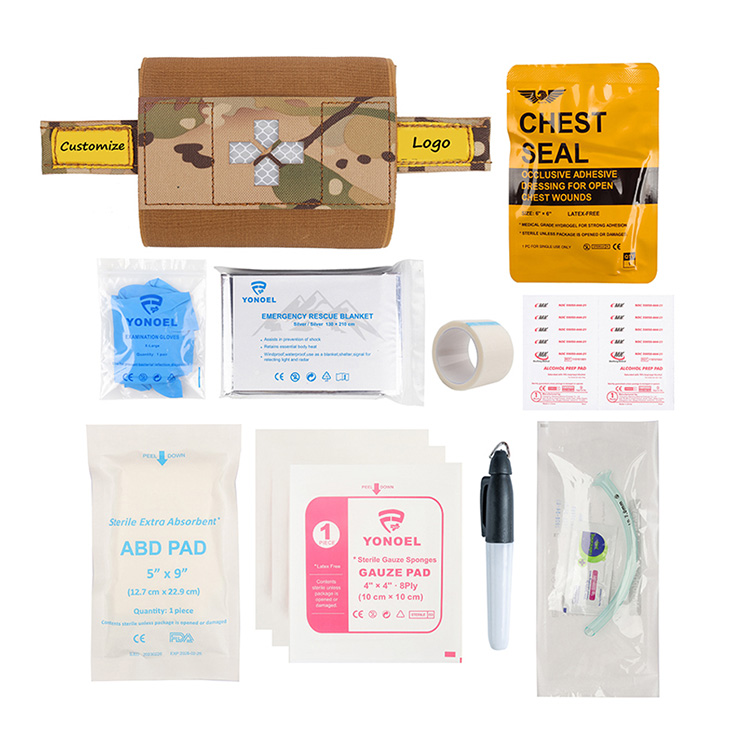
Customization is often where a supplier proves whether the process is well organized. Some buyers want changes in exterior color. Others want a different layout, different packaging, or a private label approach. A manufacturer should be able to handle these requests in a way that is orderly and easy to follow.
The most useful custom choices are usually the ones that support function first. That may include pocket arrangement, closure style, inner organization, or the visual identity of the pouch. Buyers should avoid overloading the design with unnecessary changes that make the product harder to use. A practical custom plan stays focused on the buyer's market and the way the kit will be handled.
A Combat Military First Aid Kit Supplier with factory control can often adjust the product more smoothly than a reseller. That matters because buyers usually want direct communication, sample clarity, and stable production habits. When those parts are handled well, customization becomes a controlled process rather than a guessing game.
Quality control should start before the final assembly stage. Material inspection, stitching review, and fit checks all matter. A buyer does not need a long technical report to judge quality. Clear proof that the supplier checks the product at several points is often enough to build confidence.
The outer appearance can hide small problems, so internal review is just as important. Buyers should ask how the supplier handles seam strength, pocket alignment, fastener function, and packaging accuracy. The more consistent the checks, the easier it is to keep the final product uniform across orders.
A careful Combat Military First Aid Kit Supplier usually has a routine for comparing samples with finished goods. That routine does not need to be complex. It only needs to be consistent. A stable review process gives buyers a clearer picture of what will arrive in each shipment.
Good questions prevent confusion later. Buyers should ask how the product will be packed, how the layout can be changed, and what information is needed to prepare a sample. They should also ask how the supplier handles revisions, since early changes are often easier than late ones.
It also helps to ask about order flow in practical language. Who confirms the sample? Who checks the final version? How are updates shared during production? These are simple questions, but they reveal whether the supplier works with structure or with guesswork.
A clear Combat Military First Aid Kit Supplier should answer without creating more uncertainty. Buyers are not looking for long explanations. They are looking for specific, useful replies that help them move from idea to order with less friction.
| Question | Why It Matters |
|---|---|
| Can the layout be changed? | It shows whether the product can fit the buyer's use case |
| How is a sample confirmed? | It helps avoid confusion before production begins |
| What is checked during production? | It shows how the supplier handles consistency |
| Can packaging be adjusted? | It matters for retail, storage, and shipment use |
| How are changes handled? | It shows how flexible the supplier is during the process |
Long-term cooperation depends on clarity and rhythm. Buyers usually work more smoothly with suppliers that keep records, respond clearly, and maintain steady communication across repeated orders. That matters more than a single impressive sample, because real cooperation depends on how the supplier handles change over time.
A useful habit is to keep feedback concrete. Instead of saying a product needs to be "better," buyers can explain what should change in the layout, packaging, or handling feel. Specific feedback helps the supplier adjust without repeated guesswork. This also makes future orders easier to manage.
Trust is built through repeated consistency. If a Combat Military First Aid Kit Supplier can keep the product aligned with agreed requirements, answer questions in a clear way, and support practical adjustments when needed, the relationship becomes easier to sustain. Buyers usually value a supplier that stays organized and direct more than one that uses broad claims.
Long-term work also benefits from simple order records and clear approval steps. When each stage is easy to follow, buyers can review earlier choices and keep the product direction steady. That kind of cooperation supports a cleaner purchasing process and a more reliable product line.
No. 52, Hulian West Street, Jiangbei Street, Dongyang City, Jinhua City, Zhejiang Province, China
Quick Links
Product Center
Contact Us
 PRIVACY

 English
 Deutsch
 Français
 русский
 Español