When people think about emergency preparation, attention usually goes straight to what's actually inside a medical kit. What often gets overlooked, though, is that the design and production process behind the kit also shapes how it gets stored, carried, and used across different situations. Putting together a genuinely functional emergency bag isn't as simple as tossing supplies into whatever container's available. It takes real planning around materials, structure, internal arrangement, and how the kit's actually meant to be used.
A Trauma First Aid Kit Factory typically has to think through how users are going to interact with the product once it's out in the field. A workplace setting might call for a different layout than an outdoor activity setup, while a vehicle kit probably needs a compact shape that fits into limited storage space without much fuss. These differences shape how manufacturers approach design, pick materials, and organize internal sections from the ground up.
From fabric selection all the way through final assembly, every step along the way can affect how usable an emergency kit ends up being. The outer bag needs to shield the contents inside, while the internal organization should help people locate supplies without too much digging around. For buyers, getting a handle on these manufacturing considerations can make conversations with suppliers a lot clearer, and help steer them toward products that genuinely fit their intended use.
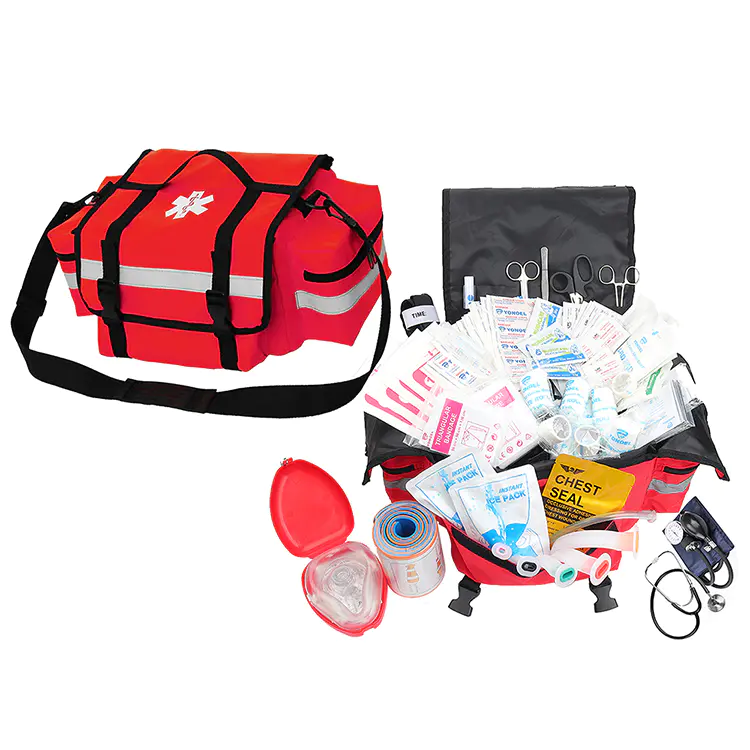
Different emergency scenarios come with different expectations for how a medical storage solution should behave. A kit built for outdoor use might need to account for portability and exposure to shifting weather conditions. A workplace kit tends to lean more toward organized storage and convenient placement near where people actually work. Because these needs vary so much, manufacturers generally start product development by thinking through where and how the kit's actually going to get used.
A Trauma First Aid Kit Factory often works through several factors before settling on a design:
The outer shape of the bag, how it opens, and how the inside gets laid out all tie back to these considerations. A portable kit, for example, might lean on a compact structure with easy-carry features built in, while something meant to stay put might include more internal sections for tidier storage.
| Design Consideration | Why It Matters |
|---|---|
| Bag structure | Helps protect stored items and maintain organization |
| Internal sections | Makes different supplies easier to separate |
| Carrying style | Supports different movement situations |
| Opening method | Allows quicker access when needed |
Design here really isn't just about how the bag looks sitting on a shelf. The balance between protection, storage, and easy access plays a genuinely important role in how the whole product feels in actual use.
The materials that go into an emergency bag shape how it performs day to day. Manufacturers typically weigh fabric strength, surface protection, how easy something is to clean, and overall weight when picking what to use.
Common bag materials tend to include textile fabrics with varying textures and finishes. Some get chosen because they're lightweight and flexible enough for easy carrying, while others get picked because they offer a bit more protection for whatever's stored inside.
Other parts matter too, honestly just as much. Zippers, handles, stitched seams, and inner lining materials all feed into the bag's overall structure. A weak connection point somewhere can cause trouble during carrying, so these smaller details tend to get real attention during production.
Material selection usually comes down to balancing a handful of needs at once:
A Trauma First Aid Kit Factory generally has to look at how all these materials work together, rather than fixating on any single component in isolation. What the finished product ends up being like really comes from the combination of fabric, hardware, and the manufacturing methods applied along the way.
The manufacturing process runs through several connected stages. Before production even starts, materials and design requirements need to get confirmed. From there, workers prep fabrics, put components together, and build out the internal structure piece by piece.
A fairly typical production flow might include:
Each stage feeds into how consistent the finished product turns out. Accurate cutting, for instance, helps keep the intended shape intact, while careful stitching supports the overall structure so it holds up over time.
| Production Stage | Main Focus |
|---|---|
| Material preparation | Checking fabric and accessory conditions |
| Assembly process | Creating the external bag structure |
| Internal arrangement | Installing storage sections |
| Final inspection | Checking appearance and function |
A facility handling this kind of work also needs to coordinate these different steps carefully, since the outer bag and its internal contents really need to work together as one system. A nicely designed outer case can't fully support real-world use if the internal arrangement inside ends up hard to manage.
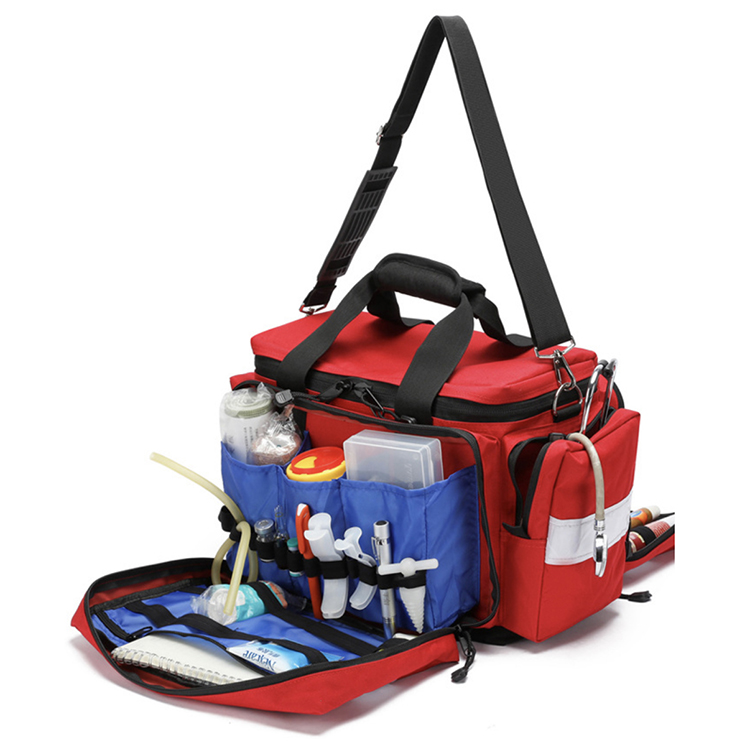
How the inside of an emergency kit gets laid out really shapes how people actually interact with it. When supplies get jumbled together without much structure, tracking down one specific item can turn into a genuine hassle at exactly the wrong moment. That's a big part of why internal organization gets so much attention during product development.
Manufacturers often build out different storage zones using things like:
These features help keep items sitting roughly where people expect to find them. They also give users room to rearrange contents based on their own habits or whatever the application actually calls for.
A genuinely practical internal design has to weigh both storage capacity and visibility together. Too many small sections can make things feel needlessly complicated, while too few can make managing the contents a lot less convenient than it should be.
The real goal with internal design is landing on a workable arrangement where different supplies stay reasonably distinct, without piling on unnecessary complexity to the overall structure.
Different customers tend to need different internal setups depending on what they're actually doing with the kit. A construction company, an outdoor organization, a vehicle supplier, or a retail distributor can all have fairly different expectations for how their emergency kits should be put together.
Customization tends to touch on a handful of areas:
A Trauma First Aid Kit Factory generally talks through the intended application with buyers before production actually gets underway. The whole point is landing on a configuration that genuinely fits the environment the kit's headed for.
An outdoor-focused kit, for instance, might lean toward portability and a tighter storage footprint, while something built for industrial settings might call for a different organizational approach altogether. The contents and the structure really need to work in tandem, rather than getting picked separately without much thought to how they'll actually fit together.
Customization here isn't only about adding or pulling items from a list. It also involves thinking through how the bag's design relates to whatever the user's actually dealing with day to day.
The environment a kit's headed for really shapes what it needs to deliver. A kit sitting in a workplace might need clear organization and a storage spot that's genuinely convenient to reach. An outdoor kit probably needs a structure that holds up during movement. A vehicle kit tends to need a size and shape that actually fits into tight, limited spaces without getting in the way.
These different applications line up fairly well against a few design factors:
| Application | Common Design Focus |
|---|---|
| Workplace | Easy placement and organized storage |
| Outdoor activities | Portability and environmental adaptation |
| Vehicle use | Space management and convenient access |
For workplace settings, visibility and where the kit actually sits tend to matter a lot. For outdoor activities, people usually care more about how comfortable it is to carry and how well it holds up against whatever conditions come up outside.
A Trauma First Aid Kit Factory has to weigh these differences carefully when working through product options. One single design approach rarely fits every environment equally well, so thinking in terms of actual application tends to become a genuinely important part of how manufacturing decisions get made.
For buyers, picking a manufacturing partner really involves more than just glancing at how a product looks in photos. Getting a sense of production capability, how communication actually flows, and what customization options are realistically on the table can help set up smoother cooperation down the line.
Before placing an order, buyers might want to think through:
Clear communication matters a lot here, since custom products tend to involve a lot of small, interconnected details. Buyers should come prepared with information about intended use, preferred structure, and whatever product features they're hoping for.
A solid working relationship really depends on both sides genuinely understanding what the product needs to do. The manufacturing side needs a clear picture of the application, while buyers need some understanding of which production choices actually shape the end result.
Quality control really threads through every stage of production, rather than showing up only once a product's already finished. Material checking, how assembly gets managed, and final inspection all feed into the broader manufacturing process from start to finish.
A facility working in this space might focus attention on areas such as:
These steps help cut down on production issues and keep things reasonably consistent from one batch to the next.
For buyers, asking directly about quality management practices can offer a clearer window into how the manufacturing process actually runs. A Trauma First Aid Kit Factory that pays close attention to these production details tends to communicate more clearly about how products get developed and maintained over time.
The relationship between design, materials, assembly, and inspection really shapes what the final emergency kit turns out to be. Getting a handle on how these pieces connect can help buyers make more informed choices when picking products suited to their own particular applications.
No. 52, Hulian West Street, Jiangbei Street, Dongyang City, Jinhua City, Zhejiang Province, China
Quick Links
Product Center
Contact Us
 PRIVACY

 English
 Deutsch
 Français
 русский
 Español