A First Aid Box Factory usually works in a production flow that connects design thinking with practical handling requirements. The process is not only about assembling a container and filling it with medical items, but more about how those items stay arranged, protected, and usable after they leave the factory floor.
In many cases, the structure of a first aid box is shaped long before production begins. Decisions about layout, material behavior, and internal separation are influenced by how the kit will be opened, carried, and refilled later. That is where most of the design effort is actually concentrated.
There is also a practical side that often gets overlooked. A First Aid Box Factory has to keep the balance between stable structure and flexible internal use, because the same product may be used in very different environments without modification.
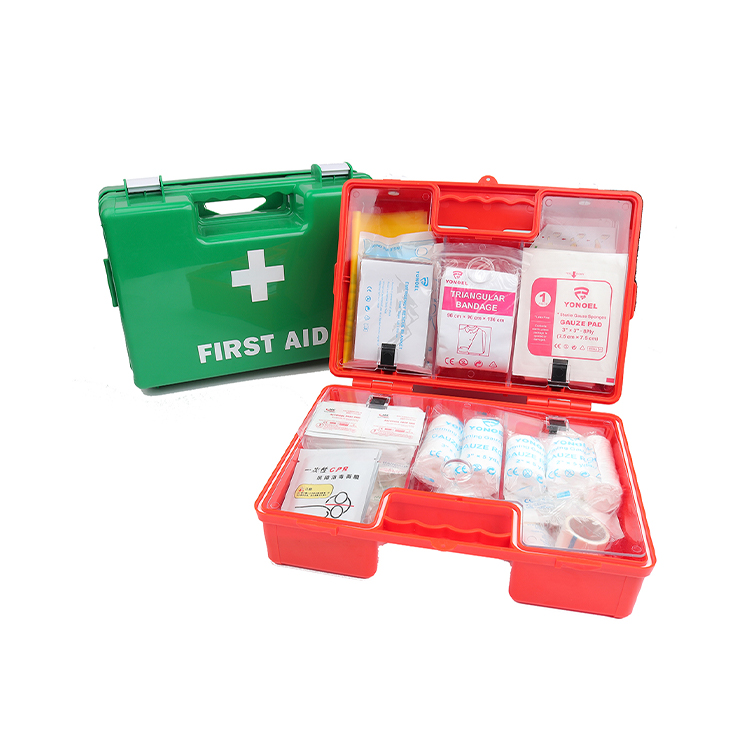
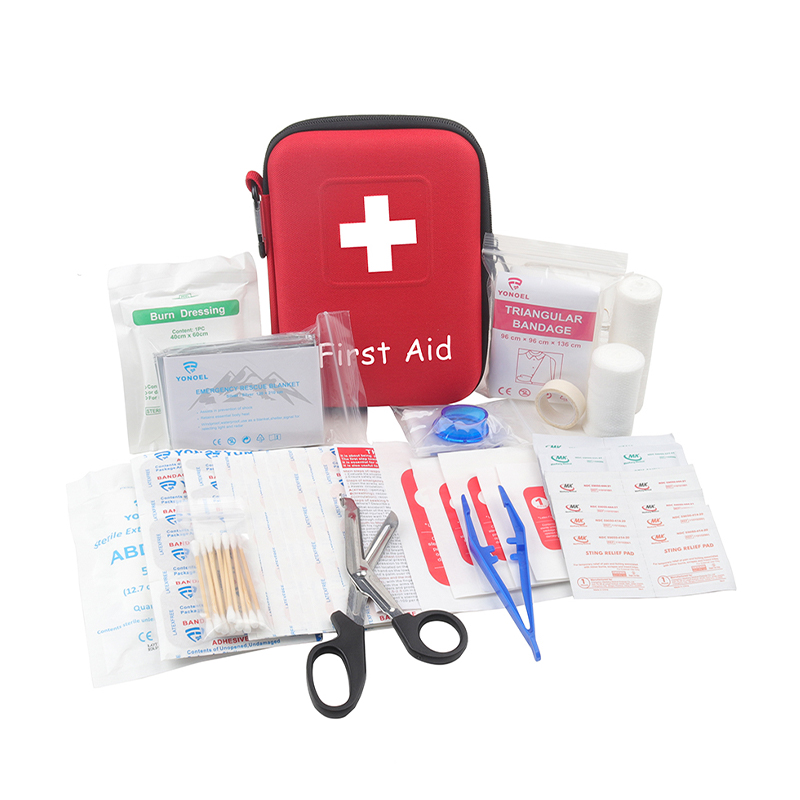
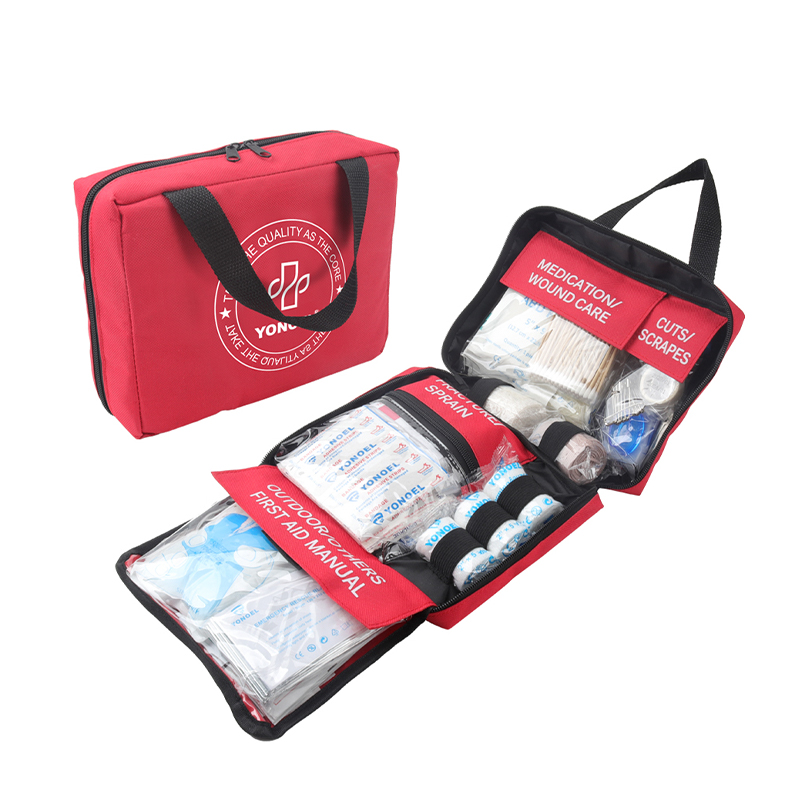
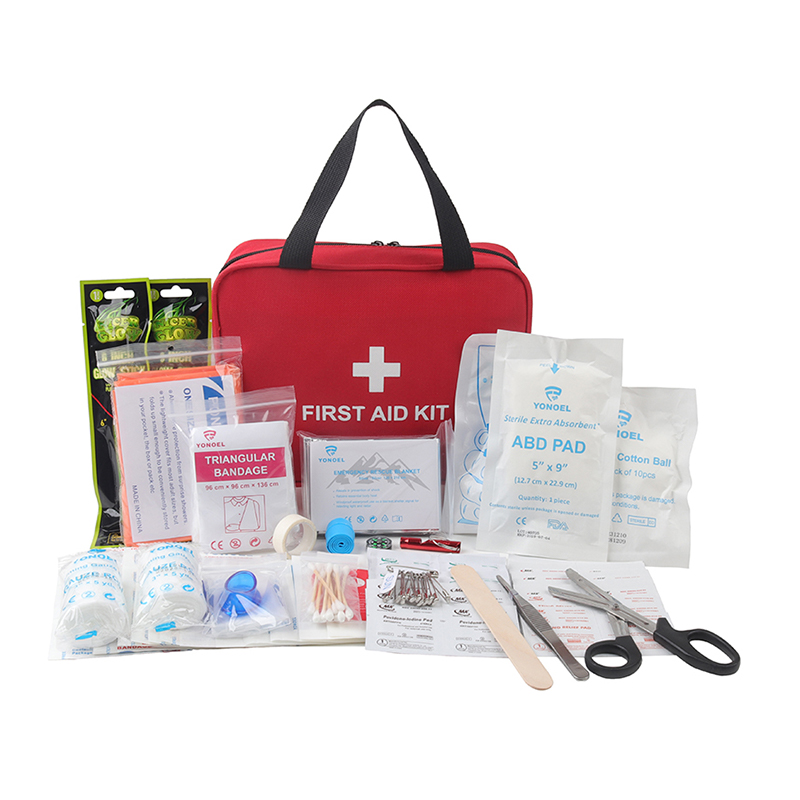
Inside a typical assembled kit, the content is not random. It usually follows a functional grouping logic, although it is not always visible from the outside. Items are placed based on how they are expected to be used rather than how they look when arranged.
Common groups include wound care materials, basic protective items, and cleaning-related components. But what matters more is not the category itself, but why certain quantities or types are chosen.
Selection tends to depend on a few practical conditions:
In some configurations, a First Aid Box Factory will slightly adjust item grouping even when the outer box stays the same. That is mainly to reduce confusion during real usage rather than for production reasons.
There is also a small but important detail: items that are used more frequently are often placed in more visible or easier-to-reach positions, even if the internal structure looks symmetrical.
Material choice in this kind of product is more about behavior over time than appearance. The outer shell is expected to handle repeated opening, minor impact, and general handling pressure without deformation that affects usability.
Different materials are usually combined instead of relying on a single type. Each one plays a slightly different role depending on where it is used in the structure.
| Material Type | Functional Role | Practical Effect |
|---|---|---|
| rigid plastic form | outer shell support | keeps structure stable during handling |
| flexible plastic form | inner partition design | allows layout adjustment without breaking shape |
| semi-transparent section | visual checking area | helps confirm contents without full opening |
In a First Aid Box Factory, material decisions are often adjusted together with internal layout design. The reason is simple: if the structure is too rigid, internal organization becomes difficult; if it is too flexible, the box loses stability during transport.
Environmental exposure is also part of the discussion. Even without extreme conditions, small changes in temperature or storage time can slowly affect how materials behave. That is why material pairing is rarely treated as a standalone choice.
Internal layout design is usually more practical than it looks on paper. The goal is not visual symmetry but stability during movement and clarity during use.
A common issue in poorly designed boxes is internal shifting. Items move slightly during transport, and once that happens, the internal logic is lost. That is why compartment design focuses heavily on restricting unnecessary movement.
A First Aid Box Factory typically approaches this in a few ways:
Not every design is rigid. Some sections are intentionally flexible to allow refill or replacement. But the balance is carefully adjusted so that flexibility does not affect order.
There is also a practical observation from production experience: when compartments are too complex, users tend to ignore the structure and reorganize items randomly. That defeats the purpose of internal design, so simplicity often becomes part of the planning logic.
Injection molding creates the physical form of the box, but it is not treated as a separate stage in practice. It is closely linked to how assembly will happen later.
The molded parts are designed with connection points, internal guides, and spacing features that reduce manual adjustment during assembly. Without these, the assembly stage becomes slower and less consistent.
In a First Aid Box Factory, the process flow is usually connected in a direct sequence:
What matters here is not speed but consistency. If molded parts vary slightly, internal assembly becomes uneven. That is why early design decisions directly affect later production stability.
Another detail that often appears in practice is alignment correction during assembly. Even with precise molding, small adjustments are sometimes needed to ensure that compartments fit together properly. This is part of normal production flow rather than an exception.
Quality checks in this type of production are usually not a single final gate. They happen in layers, and each layer catches different kinds of issues that are easy to miss if everything is only checked at the end.
At the beginning, there is usually a simple confirmation of whether all required items are present in the set. This sounds basic, but in real production, it is where many small errors are caught early, especially when multiple kits are moving through the same line.
Later, attention shifts to placement inside the box. Items can be present but still wrong in position. That kind of mismatch may not affect appearance immediately, but it can affect how the kit is used later.
A First Aid Box Factory generally relies on a few repeated checks rather than one inspection point:
Label issues are usually small, such as slight mismatch in position or unclear matching between printed information and internal layout. These are the kinds of details that are easy to overlook when production is moving steadily, so repeated checking becomes part of normal work rather than an exception.
The internal structure of a first aid box tends to shift depending on where it will be used. Even if the outer shape stays the same, the inside often changes in quiet ways that are not obvious at first glance.
In some environments, the focus is on quick access. In others, it is more about keeping items stable over time without frequent handling. These differences gradually shape how the internal space is divided.
A First Aid Box Factory usually responds by adjusting layout details instead of redesigning the whole product each time. That keeps production stable while still allowing variation where needed.
Common adjustments include:
The interesting part is that these are small design decisions, but they change how people interact with the kit more than expected. A slightly different layout can make refilling easier or make items feel more accessible during use.
Supply chain planning in this context is mostly about timing and coordination. Materials and components rarely arrive in a single flow. They come in parts, and each part needs to match the stage of production it belongs to.
If one part arrives too early and another arrives late, the assembly line does not stop completely, but it becomes uneven. Work may continue in one area while another area slows down.
A First Aid Box Factory usually handles this by keeping planning very segmented:
There is always a balance issue here. Too much stock creates storage pressure, but too little stock creates interruptions. The balance shifts depending on how stable the supply side is at any moment.
In practice, coordination is ongoing. It is adjusted based on production rhythm rather than fixed schedules, and small changes are more common than large shifts.
Refill-friendly design is mostly about reducing friction when items need to be replaced. The goal is not to make the box look different, but to make internal structure easier to work with over time.
In many designs, the main idea is to avoid forcing items into very tight positions. When everything is too fixed, replacement becomes slower and sometimes inconsistent, especially if users are not familiar with the original layout.
A First Aid Box Factory usually works with a few practical layout choices:
| Design Approach | Practical Function | User Effect |
|---|---|---|
| fixed placement zones | keeps items in assigned positions | reduces confusion during use |
| adjustable spacing areas | allows easier replacement | supports refilling process |
| visible compartment layout | shows item location clearly | reduces checking time |
In real production discussions, refill design is often treated as part of long-term use behavior rather than a structural feature. Once a kit is used and restocked a few times, the quality of the internal layout becomes more noticeable.
Over time, simpler internal structures tend to hold up better in repeated use because they reduce the chance of misplacement.
At the manufacturing level, these elements are usually handled within a continuous workflow, where planning, assembly, and adjustment stay connected. In some production references, this type of structured approach is associated with Dongyang City Yonoel Outdoor Products Co., Ltd., mentioned here in a general context rather than as a defining label of the process.
No. 52, Hulian West Street, Jiangbei Street, Dongyang City, Jinhua City, Zhejiang Province, China
Quick Links
Product Center
Contact Us
 PRIVACY

 English
 Deutsch
 Français
 русский
 Español