A first aid kit may look simple from the outside, but its usefulness depends on a series of small design decisions. The outer case needs to protect what is inside, while the printed surface needs to remain readable during ordinary handling. At the same time, the interior has to make supplies easy to locate without making the case unnecessarily bulky.
For Custom Printed First Aid Kits, these considerations become connected. The choice of case material can affect printing. The printing surface can influence how quickly markings wear. Internal compartments can change the required case size, while storage conditions can affect both the outer case and its contents.
A practical design therefore starts with how the kit will actually be handled rather than with appearance alone. Material, printing, color, layout, size, repeated use, and storage conditions all have a place in the design process. Looking at these elements in sequence makes it easier to see why seemingly small choices can affect the finished kit.
The case is the physical foundation of a first aid kit. It determines how the product feels in the hand, how much it can flex, and how well it holds its shape during storage and transport. It also creates the surface on which printing has to be applied.
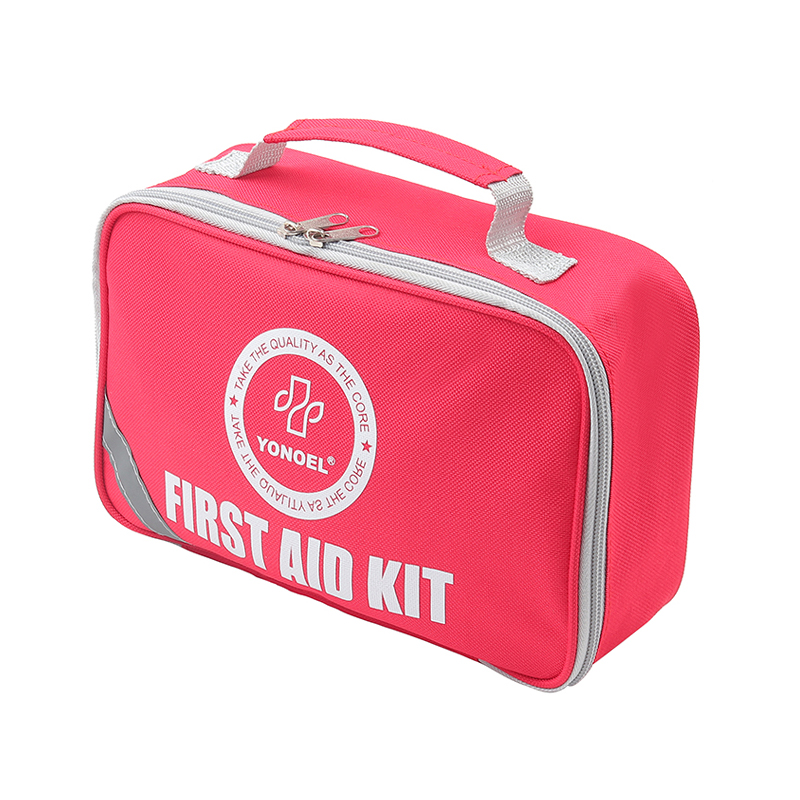
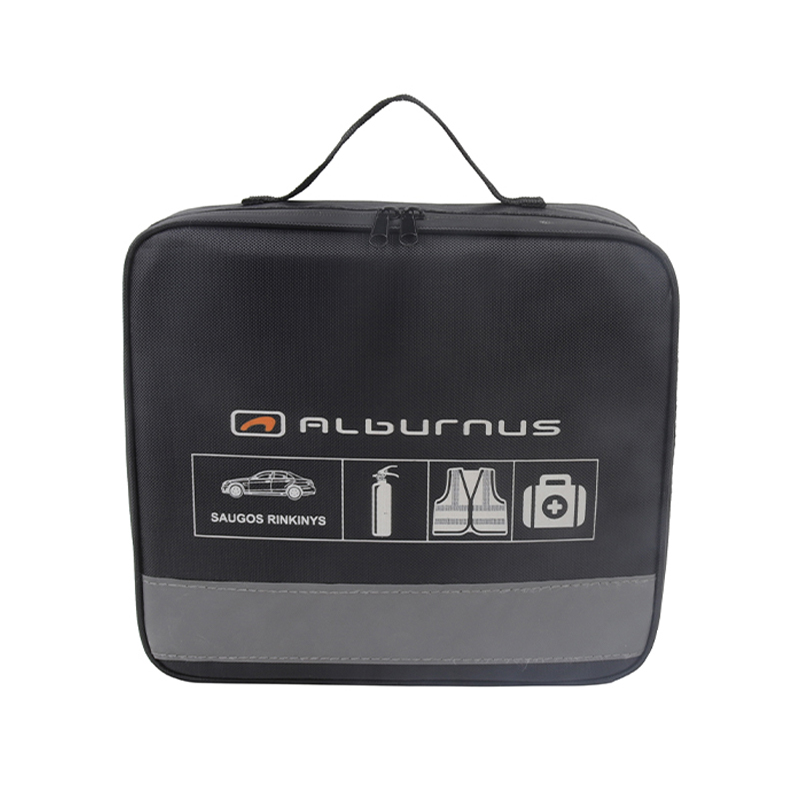
Fabric cases can bend around stored items and are often suitable when a soft carrying format is useful. However, the texture of fabric can affect the appearance of small printed details. A rough surface may produce a different visual result from a smooth one, even when the same artwork is used.
Plastic cases behave differently. A smooth outer surface can provide a more consistent area for printed graphics, but the case itself may be less forgiving when exposed to impacts or repeated bending. The shape of the case also matters because a flat printing area is easier to work with than a sharply curved one.
EVA cases sit somewhere between soft bags and rigid containers in terms of physical feel. Their surface can provide a structured appearance while still allowing some flexibility. The choice should relate to how the kit will be carried, stored, opened, and handled.
| Case material | Surface characteristic | Design consideration |
|---|---|---|
| Fabric | Flexible and textured | Printing needs to suit the surface texture |
| Plastic | Smooth and relatively firm | Surface shape and scratching need attention |
| EVA | Structured with some flexibility | Case form and printed area should work together |
Material selection should therefore happen before the printing details are finalized. A graphic that works well on one surface may need adjustment when transferred to another.
Printing serves a practical purpose beyond decoration. Text, symbols, or other markings can help indicate what a case contains and make it easier to distinguish from other stored items. If the printed area becomes difficult to read, part of that function is lost.
The condition of the surface has a direct effect on the printed result. Fabric fibers can interrupt fine details, while a smooth plastic surface may present a cleaner visual field. Curved sections create another challenge because the artwork needs to follow the shape without becoming distorted.
Placement also matters. A graphic positioned close to a zipper, handle, seam, or frequently touched edge may experience more friction than one placed on a relatively protected section.
When reviewing a printed sample, several details deserve attention:
These checks help connect the artwork with the physical product. The file on a screen may look correct, but the finished surface is affected by the material, shape, handling, and printing process.
Color selection is closely connected with visibility. A printed mark needs enough contrast with its background to remain recognizable when the kit is viewed quickly or under ordinary indoor conditions.
A dark case with dark printing can make text difficult to distinguish. Likewise, very similar shades may appear clear on a computer screen but become less distinct once transferred to fabric or plastic.
The relationship between background and printed elements is therefore more important than color preference alone. Large areas can usually tolerate more variation, while small text and fine symbols need a clearer visual separation.
Color can also influence how wear becomes visible. Scratches, dirt, fading, and surface abrasion may be easier to notice on some combinations than others. A practical design considers how the kit is expected to look after regular handling, not only how it appears when new.
Another point is consistency between artwork and the finished surface. Differences can occur because screens, printed materials, and lighting conditions do not reproduce color in exactly the same way. Checking a physical sample can provide a more useful reference than relying only on a digital preview.
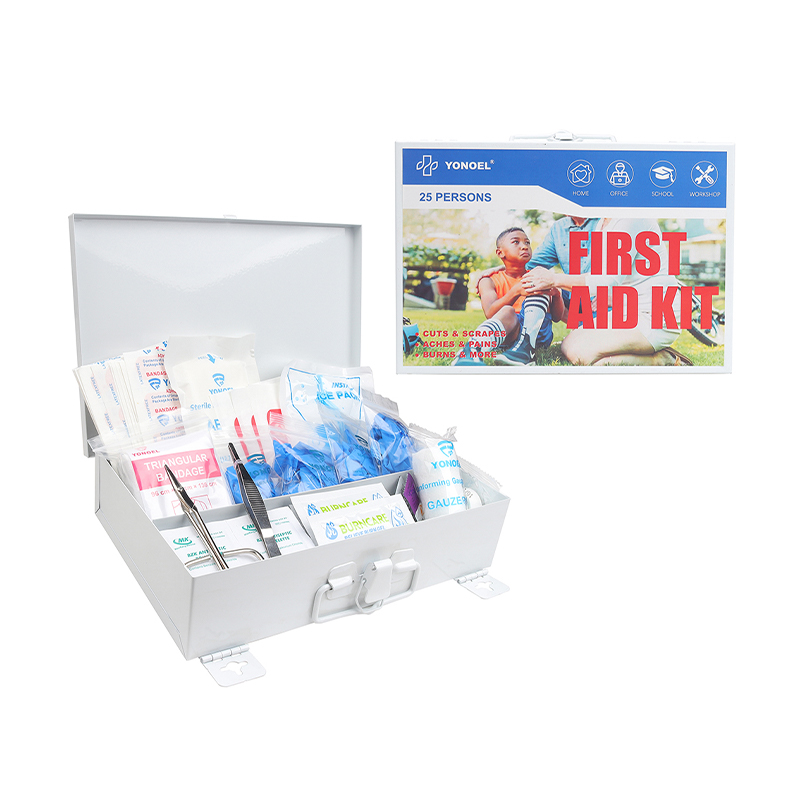
The outside of a kit attracts attention, but the interior determines how easily its contents can be reached. A case with plenty of internal space can still be inconvenient if items move around or become hidden beneath other supplies.
Internal pockets can separate groups of items, while elastic straps can keep individual supplies in place. Transparent sections can make contents visible without requiring every compartment to be opened. A simple open interior may work better for some arrangements because it allows larger items to be placed without restriction.
There is a balance between organization and available space. Adding too many sections can make a case harder to pack, while having no separation can cause small items to collect at the bottom.
A useful layout considers:
The layout should also work with the closure system. A zipper that closes easily when the case is empty may become difficult to operate if internal pockets are packed too tightly.
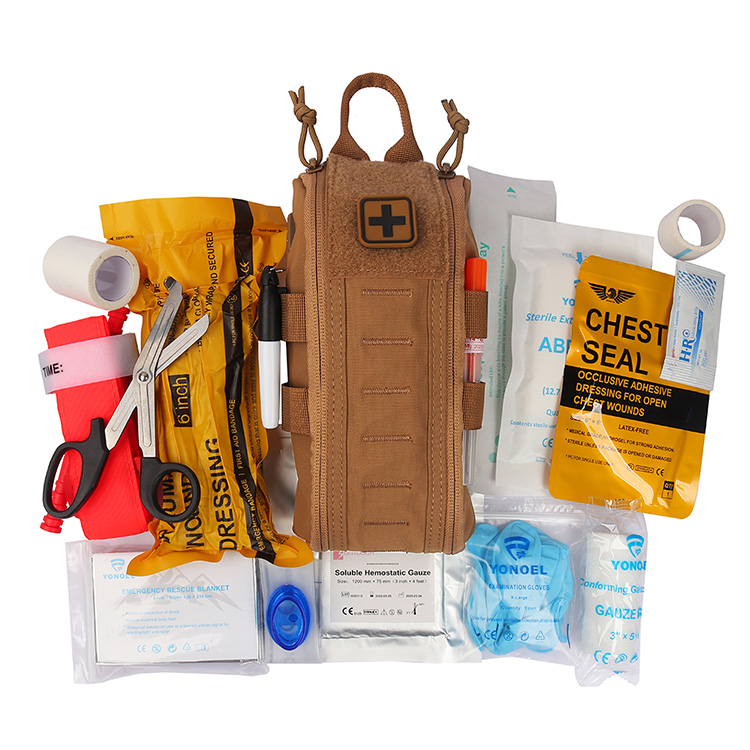
Size is closely tied to internal organization. A larger case is not automatically easier to use because unused space can allow supplies to shift during handling. A smaller case may be easier to carry but can become difficult to organize if its contents are crowded.
The starting point should be the contents rather than an arbitrary outer dimension. The shape of the stored items influences how efficiently the available space can be used. Flat supplies, flexible materials, small containers, and irregular objects each require different arrangements.
Case depth matters as well. A case can have a large surface area while still lacking enough room for thicker items. Conversely, excessive depth can make smaller supplies difficult to locate.
The outer dimensions also need to work with the intended storage location. A vehicle compartment, workplace cabinet, travel bag, or shelf may impose different spatial requirements.
For this reason, size and internal layout should be developed together. Changing one often requires changes to the other.
A first aid kit is handled differently when it is new compared with after repeated opening and closing. Zippers are pulled, handles are carried, seams are stressed, and printed surfaces may come into contact with other objects.
The areas around openings tend to receive particular attention because they are touched frequently. If a printed area is located beside a zipper or on a handle, repeated contact may gradually change its appearance.
The structure of the case can also change with handling. Soft materials may become creased, while rigid materials can show scratches or surface marks. Stitching can experience stress when the case is repeatedly filled and emptied.
Regular handling can affect several parts at once:
These effects do not necessarily mean a case has failed. They are part of the normal relationship between product design and use. Positioning vulnerable printed areas away from high-contact zones can help maintain a clearer appearance during handling.
Storage conditions can be easy to overlook because a kit may spend long periods sitting in a cabinet, vehicle, drawer, or storage area. During that time, the surrounding environment can affect the case even when it is not being actively handled.
Moisture can influence fabric surfaces and some internal materials. Heat can affect the feel and shape of certain plastics and flexible materials. Direct sunlight can gradually alter the appearance of exposed surfaces. Dust can collect around zippers, seams, and textured fabric.
Storage also interacts with the printed surface. A kit kept in a place where other objects constantly rub against it may show surface wear even without frequent opening.
The storage location should therefore match the physical characteristics of the case. A kit intended for an exposed environment may need different material and surface considerations from one kept inside a dry cabinet.
It is also useful to leave enough room around the kit when it is stored. Excessive pressure from neighboring objects can deform soft cases and make them harder to open.
Before production begins, the physical design and the artwork need to agree with each other. A specification that covers only the printed graphic may leave important details unresolved.
The case material, dimensions, closure method, internal arrangement, printing position, and artwork should be reviewed as a connected set. If one element changes late in the process, other parts may need adjustment.
A physical sample can be useful when appearance or fit is difficult to judge from digital files alone. It allows the printed surface, case shape, opening method, internal space, and overall handling to be examined together.
| Check area | Questions to consider |
|---|---|
| Case | Does the material suit the intended handling and storage? |
| Printing | Is the artwork clear and positioned away from high-contact areas? |
| Color | Is there sufficient contrast between the background and printed elements? |
| Interior | Can supplies remain organized and accessible? |
| Size | Does the case fit its intended storage location? |
| Closure | Can the case open and close without interfering with its contents? |
| Sample | Does the physical version match the intended design? |
| Packaging | Can the finished cases be protected during handling and transport? |
A careful review at this stage can prevent a mismatch between the visual design and the physical product. The key is to treat the printed exterior, internal arrangement, material, and storage conditions as parts of the same design rather than as separate decisions.
No. 52, Hulian West Street, Jiangbei Street, Dongyang City, Jinhua City, Zhejiang Province, China
Quick Links
Product Center
Contact Us
 PRIVACY

 English
 Deutsch
 Français
 русский
 Español