Most people have opened a first-aid kit at some point and thought, "It's just bandages and tape, right?" When you put a proper DIN 13164 vehicle kit next to a typical home or travel kit, the difference is obvious the moment you unzip both bags. One is ruthlessly focused, the other tries to cover every possible situation. One is legally required in half of Europe, the other is whatever the shop decided to throw in. This article is about why those differences exist, what they mean in real life, and which one actually belongs in your car.
When packing for a road trip or stocking up on household essentials, first aid kits often make the list. But not all kits are created equal, and the differences can be more than just cosmetic. In Europe, the DIN 13164 standard has become synonymous with vehicle safety, while regular first aid kits serve a broader, more general purpose. At first glance, both might seem like collections of bandages and antiseptics, but dig deeper, and the distinctions reveal themselves in design, contents, legal implications, and real-world application.
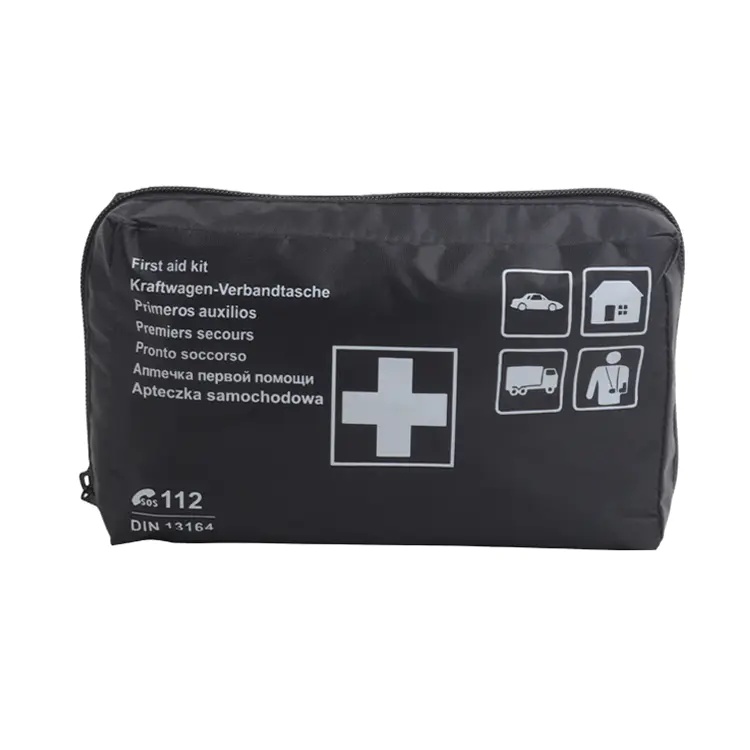
The DIN 13164 kit is a product of German precision engineering, tailored specifically for motor vehicles. It’s compact, standardized, and focused on the unique challenges of roadside emergencies. A regular first aid kit, on the other hand, is a more versatile catch-all, often found in homes, offices, or backpacks, with a wider range of items to handle everyday mishaps. Understanding why these two differ matters because choosing the wrong one could mean the difference between
The DIN 13164 kit was never meant to be a general-purpose box. It was created in Germany in the early nineties because doctors kept seeing the same problem: after a crash, people were bleeding heavily and going into shock while waiting for an ambulance, and nobody in the car had anything useful. The German standards institute brought trauma surgeons, paramedics and the police together and said, "Give us the absolute minimum that will actually keep someone alive for twenty minutes." That list became DIN 13164. It has been tweaked a few times since (most recently in 2022 when masks were added), but the philosophy has never changed: small, cheap, foolproof, no training required, and exactly the same in every single car on the road.
Regular first-aid kits never had that kind of brief. They grew out of home medicine chests, workplace regulations, scout camps and outdoor shops. Manufacturers add whatever they think will sell – painkillers, burn gel, eye-wash, insect-sting wipes, a thermometer, sometimes even a space blanket or a CPR mask. There is no single authority saying "this must be in and this must stay out", so two kits bought from the same shelf can look completely different.
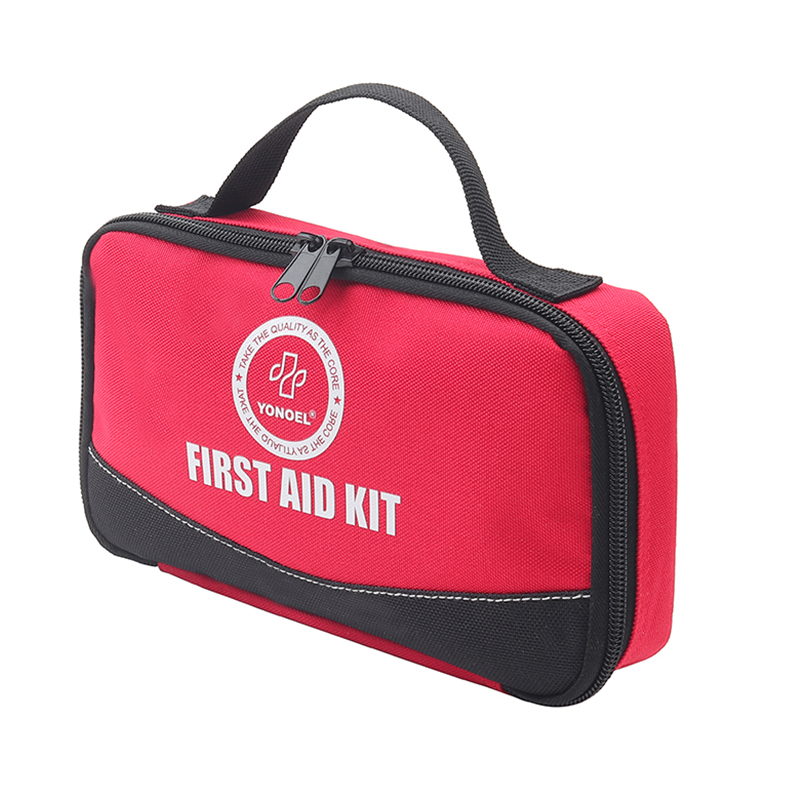
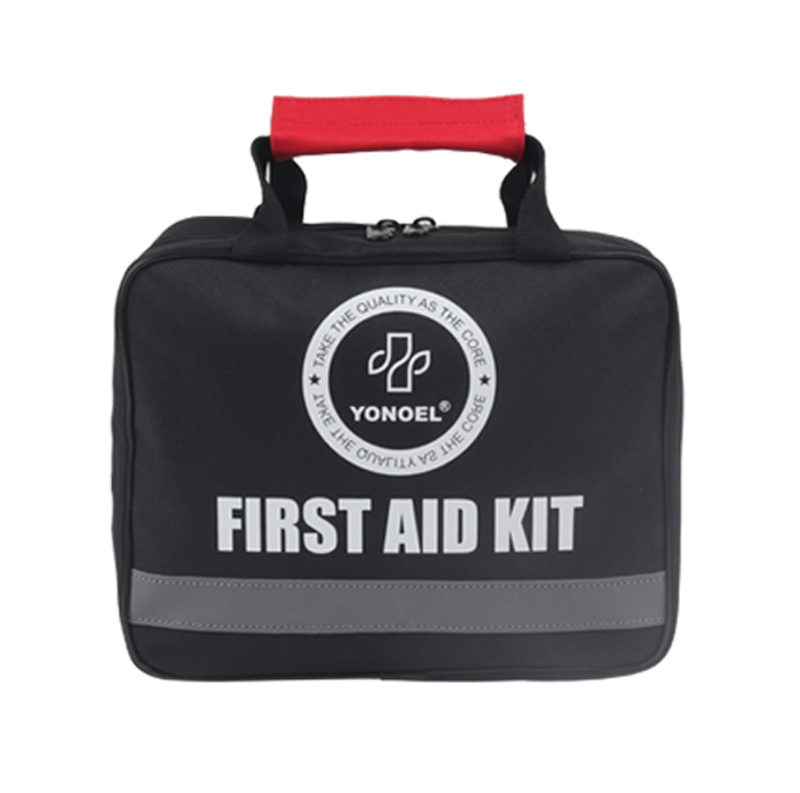
Open a current DIN 13164 bag and you see order. Everything has its marked pocket, nothing rattles loose, and you can lay your hand on a pressure dressing in seconds.
Typical contents (2022 version):
That's it. No tablets, no creams, no tweezers, no cold packs, no scissors with a hook for cutting clothes off a trapped casualty. Everything is there because it directly helps stop bleeding, cover wounds, or keep someone warm and calm.
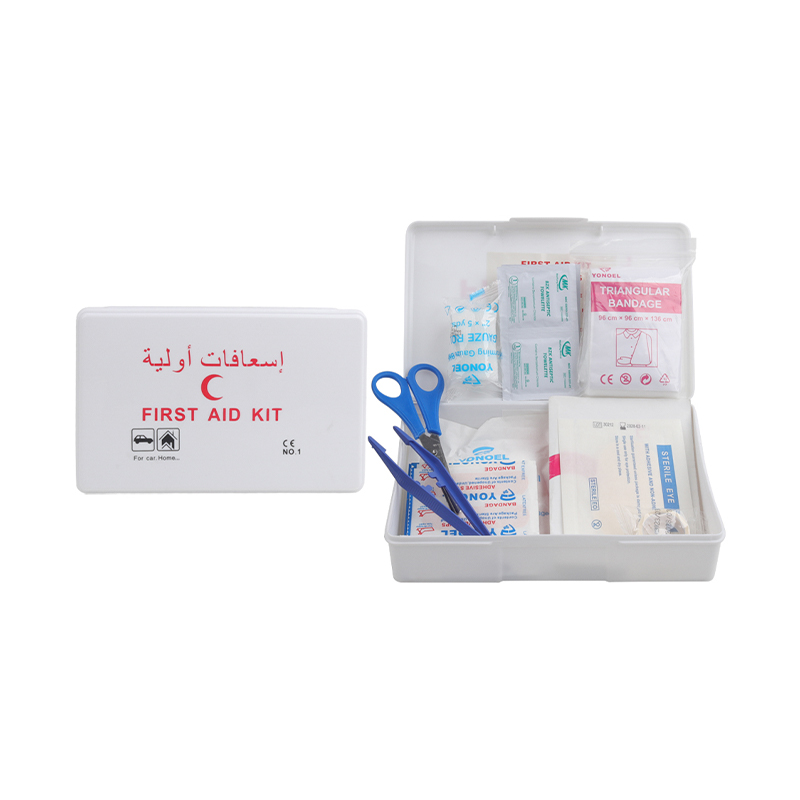
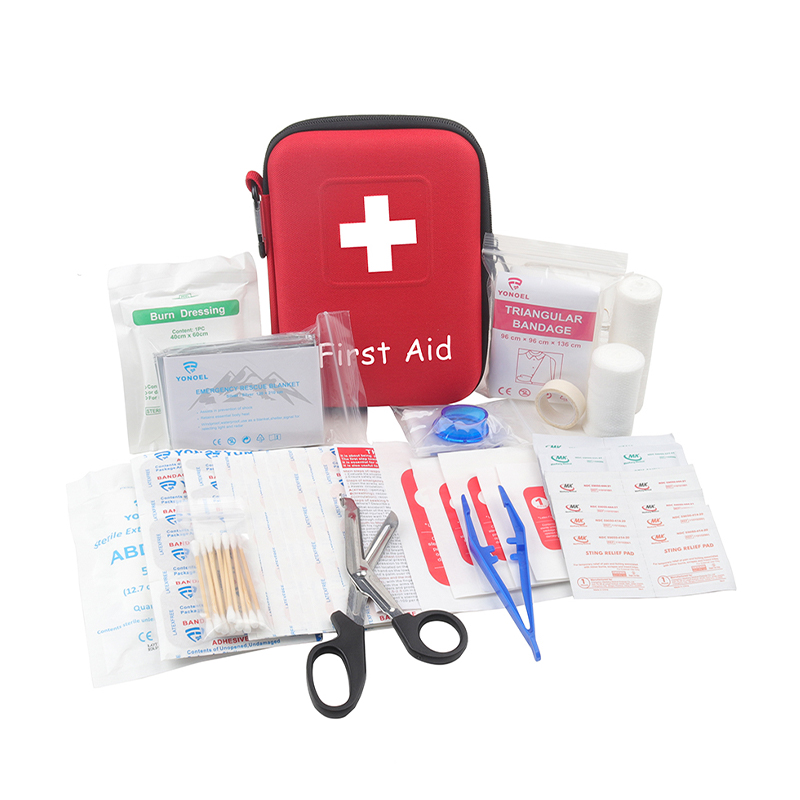
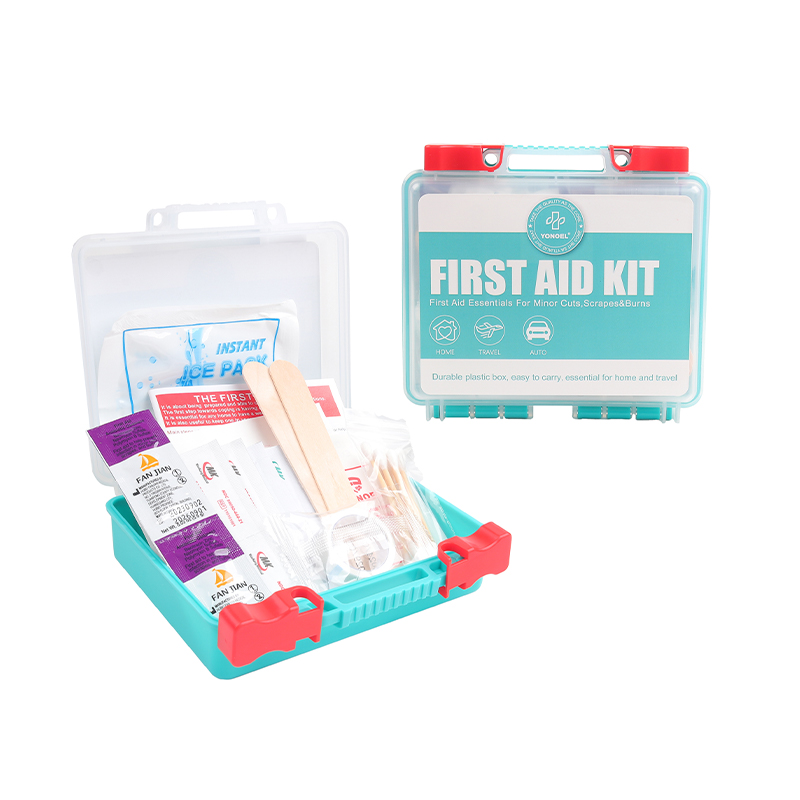
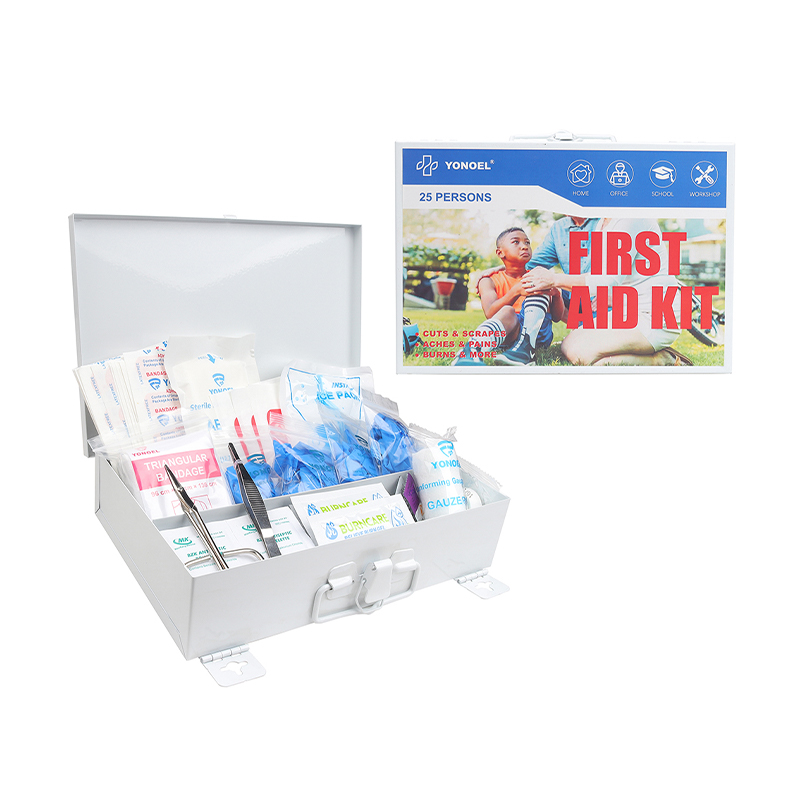
Now open a regular kit bought from a supermarket or outdoor store. You'll usually find:
It's a grab-bag designed for paper cuts in the office, sunburn on holiday, or a twisted ankle on a hike. Useful in its own environment, but noticeably bulkier and less focused when you compare it side-by-side with the DIN version.
Road accidents produce a very narrow range of injuries that kill or disable quickly: bleeding you can see, bleeding you can't see yet, and shock. The DIN kit is built around those three problems only. Everything else is left out on purpose.
A regular kit has to prepare for headaches, stomach bugs, blisters, insect bites, small burns in the kitchen, and a hundred other daily annoyances, so it spreads itself across all of those possibilities.
All in under two minutes, no hunting through twenty different packets.
With a regular kit you might spend those same two minutes looking for the right size plaster, discovering the burn gel instead of a proper pressure dressing, or realising the foil blanket is buried at the bottom under the insect repellent.
Those two minutes are the entire reason the DIN standard exists.
Even among genuine DIN 13164 kits there are differences. Cheap ones use thin fabric that tears after a year in the boot and zippers that stick. Better ones use reinforced nylon, waterproof coatings, strong zippers and clear inner pockets so you can see everything at a glance. The price difference is usually only a few euros, but the durability difference is night and day.
In half of Europe the DIN 13164 kit isn't optional. It's part of the vehicle itself, just like a warning triangle or a reflective vest.
Drive through Germany and the TÜV inspector will open your glovebox; if the correct red bag isn't there, the car fails the test on the spot. In Austria the police can pull you over and write a ticket the moment they see a regular household kit instead of the proper DIN version. Poland, Czech Republic, Croatia, Greece – the same story. The fine is usually modest, but the inconvenience of being sent to the next petrol station to buy the right one before you're allowed to continue is real. At some borders, especially when entering from non-EU countries, officers have been known to turn cars back for missing the exact kit.
A regular first-aid kit, no matter how well stocked, simply doesn't count. It has no legal standing on the road in those countries. At home or in the office it's fine – nobody is going to fine you for having painkillers and burn gel in the cupboard – but the moment you put it in the car in a country that demands DIN 13164, it becomes useless paperwork.
For company cars and vans the difference is even sharper. Fleet managers know that if an employee is injured and the vehicle carried the wrong kit, auditors and insurers will ask uncomfortable questions. A proper DIN 13164 (or the extended DIN 13167 for bigger trucks) is the easiest way to prove you took duty of care seriously.
The DIN 13164 kit is built for one environment: the side of the road, minutes after something has gone wrong. Its whole reason for existing is to let an ordinary driver do three things fast – stop obvious bleeding, keep the injured person warm, and protect wounds from dirt until the ambulance arrives. Everything in the bag supports those three jobs and nothing else.
A regular kit is built for the kitchen, the playground, the office drawer, the campsite. It has to cover headaches, blister plasters, sunburn cream, insect bites, and the thousand little annoyances of daily life. That makes it brilliant at home, but noticeably slower and more cluttered when you're kneeling on wet tarmac trying to find a pressure bandage among twenty different packets.
Case:on the A8 near Salzburg a car had spun into the barrier. The passenger had a nasty scalp cut that was pumping blood. The driver – an ordinary guy on his way to work – grabbed his glovebox DIN kit, slapped on a compress pad and a fixing bandage, and had the bleeding under control before the first police car arrived. Ten minutes later the paramedics took over and told him he had almost certainly prevented serious blood loss.
The same driver keeps a fuller regular kit in the boot for family holidays – painkillers for the kids, bite cream, cold packs – but he knows exactly which one he reaches for when metal has met metal.
The DIN kit wins on the road because it is single-minded. The regular kit wins everywhere else because it refuses to choose. Put each in its proper place and you're genuinely covered.
Driving in Europe (especially central and eastern Europe) → DIN 13164 or DIN 13164-B for motorcycles. Nothing else keeps you legal and genuinely useful.
At home, in the office, or on a hiking trip → a good regular kit with medication and extras makes perfect sense.
Both → many people keep a proper DIN kit in the car and a fuller regular kit in the boot for longer trips with children.
The DIN 13164 kit and a regular first-aid kit are not better or worse than each other – they were simply built for completely different jobs. One is a precision tool for the moments after a crash when every second counts. The other is a Swiss Army knife for everyday life. Put the right tool in the right place and you're genuinely prepared.
Yonoel produces DIN 13164 and DIN 13164-B kits that drivers across Europe rely on. Built with tough, road-proof materials and logical internal layout, they stay organised and ready year after year, whether carried in a private car, on a motorcycle, or in a company fleet.
With clear labelling, strong zippers and full compliance straight out of the box, Yonoel kits give motorists the confidence that comes from knowing the right equipment is exactly where it needs to be when the unexpected happens.
No. 52, Hulian West Street, Jiangbei Street, Dongyang City, Jinhua City, Zhejiang Province, China
Quick Links
Product Center
Contact Us
 PRIVACY

 English
 Deutsch
 Français
 русский
 Español