A Pet First Aid Kit Manufacturer usually works in a fairly practical corner of the pet product space. The focus is not on complex medical ideas, but on how pet owners actually deal with small problems when they happen in real situations.
In practice, pets move between home, outdoor walks, short trips, and sometimes longer travel. The way people respond to minor issues in those moments is not always structured. That gap between intention and real behavior is where product design decisions often start.
When something unexpected happens, most pet owners do not think in steps. The reaction is usually fast, sometimes a bit scattered.
What often becomes clear at that moment is:
A Pet First Aid Kit Manufacturer often has to think about this kind of behavior rather than ideal usage. The layout inside the kit matters as much as what is included.
Paw injuries outdoors are usually not complicated, but they happen in inconvenient places. Gravel, grass, sand, or uneven ground can all play a role.
In most cases, people end up using a small set of familiar items:
| Situation | What is usually used | Practical role |
|---|---|---|
| Small cut on paw | Cleaning material | Remove dirt or debris |
| Irritation from walking surface | Soft wrap | Reduce friction |
| Minor abrasion | Cover layer | Temporary protection |
For a Pet First Aid Kit Manufacturer, the challenge is not adding more items, but making the few necessary ones easy to find and use without confusion.
Even when a kit is already prepared, certain small items tend to be missing or ignored until they are actually needed.
These usually include things like:
In many cases, the issue is not awareness but organization. A Pet First Aid Kit Manufacturer often tries to reduce this gap by changing how items are grouped rather than increasing the total number of components.
Before short trips, pet owners usually shift into a more cautious mindset. Even if the travel is simple, the environment changes.
Some common reasons include:
A Pet First Aid Kit Manufacturer typically responds to this behavior with compact packaging and straightforward structure, so the kit does not feel complicated to carry or use during movement.
Camping and hiking usually place pets in environments that are less predictable. Ground conditions, weather changes, and distance from help all affect how small issues are handled.
In real use, what matters is not how complete a kit looks, but whether it can be used quickly when something happens during movement.
Typical expectations in these situations include:
A Pet First Aid Kit Manufacturer usually has to think about how the kit behaves when it is opened on the ground, inside a backpack, or used in low-light outdoor conditions. The structure often matters as much as the contents.
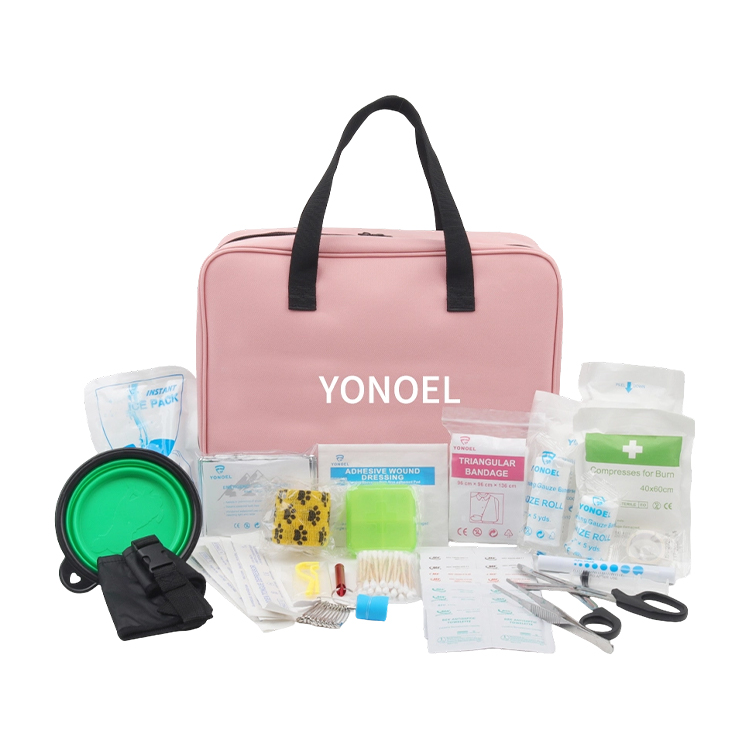
Different usage scenarios rarely require completely different products, but they do require different internal arrangements. In practice, design changes are often small but targeted.
The focus is usually on how the kit feels during actual handling, not just how it looks when closed.
| Usage scenario | Design focus | Practical adjustment |
|---|---|---|
| Home use | Simple storage | Clear internal grouping |
| Short outdoor walks | Quick access | Reduced layering |
| Travel by car | Stability during movement | Secured placement inside bag |
| Outdoor activity | Resistance to exposure | Protective outer structure |
A Pet First Aid Kit Manufacturer often adjusts layout, packaging, and item positioning rather than changing the overall concept of the kit.
Everyday travel with pets is usually not planned in detail. It involves short exits, quick movements, and frequent changes of location.
In that context, carrying a large or complex kit is often avoided because it slows down routine actions.
Common practical reasons include:
A Pet First Aid Kit Manufacturer typically reduces structural complexity in these designs so the kit behaves more like a normal daily item rather than something reserved for special situations.
Questions from pet owners usually come from real experience rather than theory. They are often connected to small incidents or uncertainty during routine care.
Common concerns include:
A Pet First Aid Kit Manufacturer often receives this type of feedback indirectly and uses it to adjust how items are grouped or how instructions are presented inside the kit.
No. 52, Hulian West Street, Jiangbei Street, Dongyang City, Jinhua City, Zhejiang Province, China
Quick Links
Product Center
Contact Us
 PRIVACY

 English
 Deutsch
 Français
 русский
 Español