First aid kits built to the DIN13164 standard are a common sight in European cars, especially in countries where carrying one is required by law or strongly recommended. They sit in the trunk, under a seat, or in the glove box, ready for the kinds of things that can happen on the road: a cut from broken glass after a fender-bender, a scraped knee from helping someone at the scene, or just a sudden nosebleed during a long drive. All models have to follow the same basic list of contents, but the way factories put them together creates noticeable differences. Some come in soft fabric pouches that fold flat, others in hard plastic boxes that don't crush. The quality of the fabric, the type of plastic, the way bandages are wrapped, even the small extras that creep in or get left out—all of these things change from one model to the next.
The DIN13164 standard itself is German in origin and was created to make sure every vehicle has at least the minimum supplies needed for first response in a traffic accident. It lists specific bandages, dressings, tools, and protective items that must be included. The goal is straightforward: give drivers something that lets them stop bleeding, support a sprain, clean a wound, or keep someone warm until professional help arrives. Because the standard is clear and fairly strict, the core contents look very similar across models. But producers have room to vary the container, the exact material grades, the packaging of individual items, and sometimes the small add-ons that don't violate the minimum requirements. That's where the real differences show up when you open the kit.
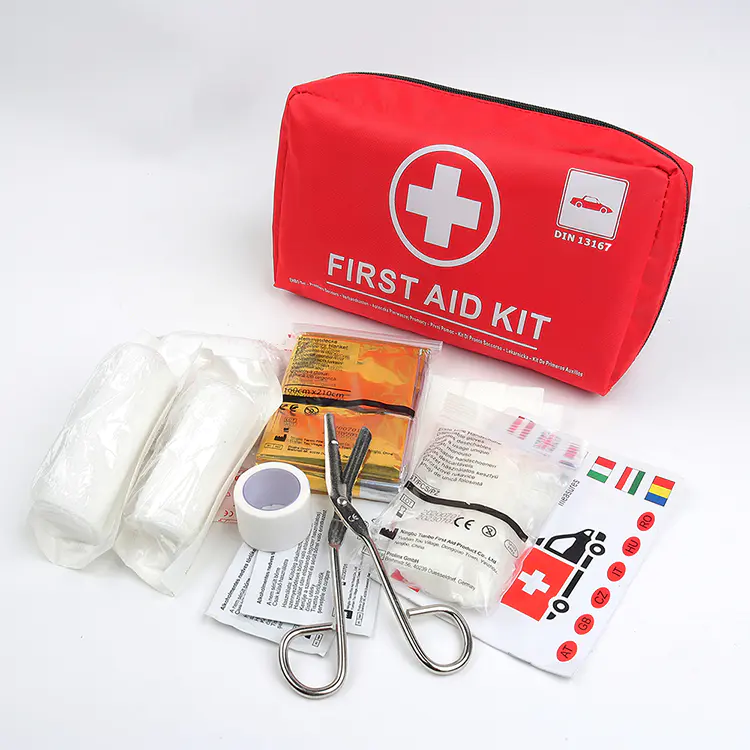
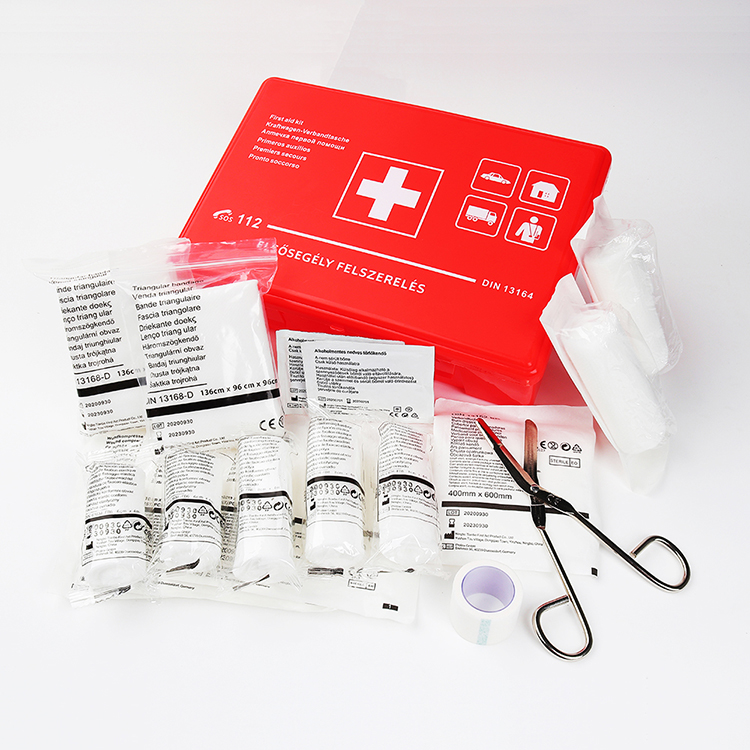
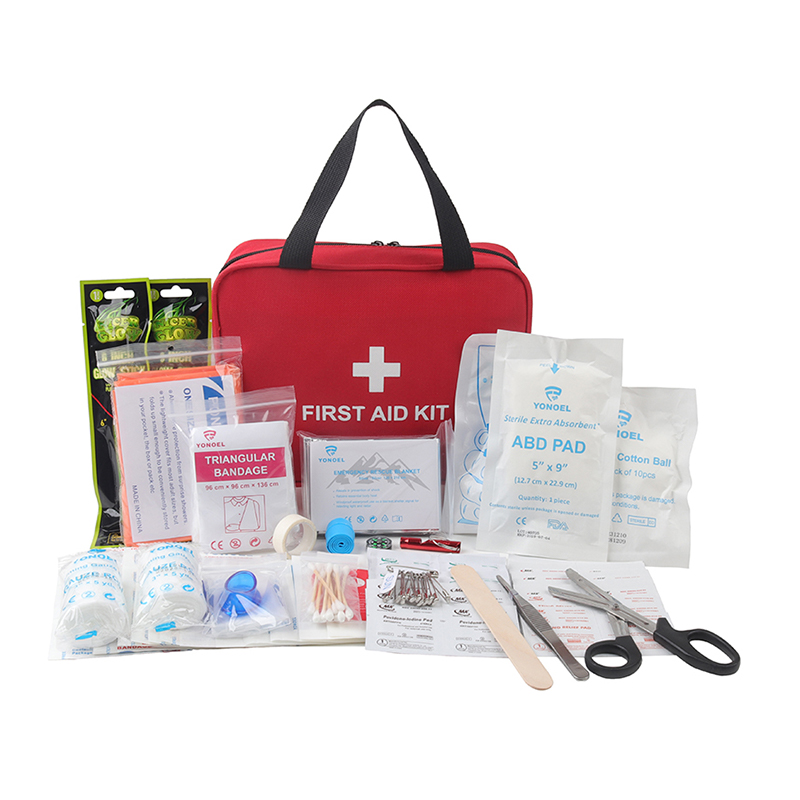
At its heart, the DIN13164 standard demands a kit with supplies focused on wound care and basic stabilization. You always find adhesive bandages in several sizes, sterile gauze compresses, compressive bandages to control heavier bleeding, elastic bandages for wrapping joints, a pair of scissors, disposable gloves, a foil rescue blanket, alcohol-free cleansing wipes, and a short instruction card. These items are chosen because they handle the injuries most likely to occur in or near a vehicle—cuts from metal edges, abrasions from falling on asphalt, strains from sudden movements, or shock from pain and blood loss.
The standard also sets rules for packaging: everything has to stay clean and usable, so individual items are sealed in sterile wrappers. The whole kit must be compact enough to store in a car without taking up too much space. Over the years the list has been adjusted a few times. Older versions had more triangular bandages (for making slings or pressure dressings) and smaller bandage cloths. Newer versions cut back on some of those to make room for face masks and keep the overall size reasonable. That single change creates one of the easiest ways to tell an older model from a current one just by looking inside.
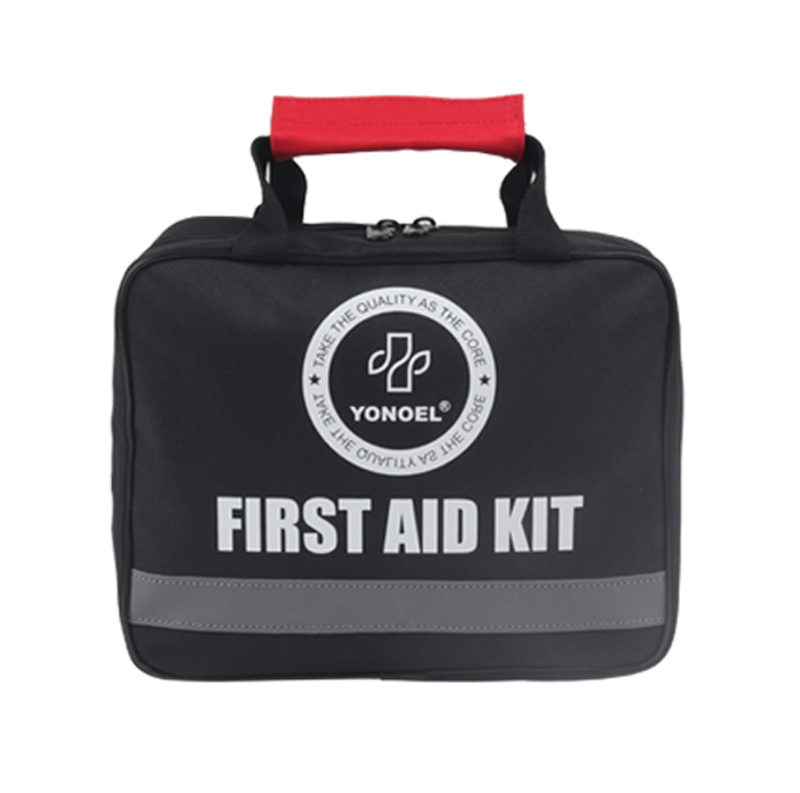
The container is usually the first thing you notice when comparing DIN13164 models. Soft fabric pouches are common in lighter, cheaper versions. They're made from nylon or polyester, often with a zipper that runs along three sides so the pouch opens wide. These fold flat when empty, which makes them easy to slide into a glove compartment or behind the spare tire. The fabric is usually red or orange so it stands out if you need to grab it quickly, and many have a carrying handle or loop for hanging.
Hard plastic boxes appear in mid-range and higher-end models. These are molded from impact-resistant plastic, often with a snap-shut lid and sometimes a small handle. The box shape protects contents better from being crushed under heavy luggage or during sudden stops. Inside, you usually see molded dividers or separate compartments so bandages don't mix with scissors and gloves. Some boxes have a transparent lid or clear sections so you can see the contents without opening them fully. Both styles meet the standard, but the choice depends on the vehicle: a small city car benefits from the slim pouch, while an SUV or van has room for a sturdy box.
Water resistance is another point where models diverge. Many pouch versions now use coated fabric that repels light moisture—handy if the trunk gets damp from rain or snow. Plastic boxes are naturally more resistant to water, though they're not fully waterproof unless the lid has a good seal. In practice, drivers in wetter climates often prefer the coated pouch or sealed box to keep supplies dry over months or years.
Material choices create some of the biggest practical differences between DIN13164 models. Basic pouches use thin nylon that works fine for light use but can tear if caught on something sharp. Better pouches switch to thicker, rip-stop fabric with reinforced seams and sometimes double stitching around stress points. The same goes for the bandages inside: entry-level models use standard cotton gauze, while others use non-woven fabrics that are more absorbent and less likely to stick to a wound.
Gloves are a good example of material variation. Some kits include thin vinyl gloves that are cheap and adequate for short-term use. Others provide nitrile gloves, which are more puncture-resistant and latex-free. Scissors follow a similar pattern: plastic-handled versions appear in budget models, while metal blades with ergonomic grips show up in sturdier ones. The rescue blanket is another spot where quality shows—thicker foil layers retain heat better and are less likely to tear when unfolded.
Even the way supplies are wrapped matters. In quality models, each bandage or wipe comes in a thicker, more durable foil or plastic wrapper that resists punctures from sharp tools inside the kit. Cheaper wrappers can sometimes split if the kit gets bounced around a lot.
The standard has been revised several times, and each update creates visible differences between older and newer models. In older kits you often find two triangular bandages and several smaller dressing cloths. Later revisions reduced the number of triangular bandages to one and replaced some small cloths with larger, more efficient compressive bandages. This made the kit slightly slimmer without losing capability.
Face masks were added in a more recent update to protect both the helper and the injured person during close contact. Older models don't have them, so if you open a kit and see masks, you know it's a post-update version. The instruction card also improved over time—newer ones use clearer diagrams, larger print, and sometimes icons that work even if the reader doesn't speak the language well.
These changes mean a kit bought five or ten years ago might still be legal in some places but won't match the current minimum. Drivers replacing an old kit usually go for the latest version to avoid any issues during vehicle inspections.
| Feature | Basic / Older Models | Mid-Range Models | Newer / Enhanced Models |
|---|---|---|---|
| Container | Thin nylon pouch | Reinforced pouch or basic plastic box | Coated fabric pouch or impact-resistant box |
| Bandages | Standard cotton gauze | Mix of adhesive and compressive | Absorbent non-woven + elastic |
| Gloves | Thin vinyl | Nitrile, single pair | Nitrile, multiple pairs |
| Scissors | Plastic handle | Basic metal | Ergonomic metal blade |
| Rescue Blanket | Thin foil | Standard foil | Thicker foil |
| Masks | None | Sometimes one | Included (post-update) |
| Extra Organization | Minimal | Simple compartments | Divided trays or pockets |
Portability is a big reason people choose one model over another. Pouch-style kits are slim and light, so they disappear into small glove boxes or side pockets without taking up space. They're the default for compact cars, city driving, or motorcycles where every centimeter counts.
Plastic box models are heavier and bulkier, but they stay put better when the car corners hard or hits bumps. They suit larger vehicles—SUVs, estates, vans—where trunk space isn't an issue. Some boxes have small feet or rubber pads on the bottom so they don't slide around, and a few even include mounting holes for fixing to a seat back or wall.
In practice, drivers often test how quickly they can grab and open the kit. A good pouch unzips smoothly with one hand; a well-designed box lid pops open without fumbling. That small difference can matter in a real emergency.
Maintenance needs also vary. Fabric pouches should be checked for tears or zipper failure every so often, especially if the car gets very hot or cold. Plastic boxes need occasional checks on hinges and latches to make sure they don't stick. In both cases, supplies like wipes, gloves, and any adhesive items have shelf lives, so owners should replace expired parts.
Models with better materials tend to need less frequent replacement of the container itself. A thick, coated pouch or solid plastic box can last many years in a vehicle, while a thin pouch might start showing wear after a couple of hot summers. Keeping the kit out of direct sun helps everything last longer.
Picking the right DIN13164 model comes down to a few questions: What kind of vehicle do you drive? How much space do you have? Do you want something that just meets the minimum or something built to last longer? A basic pouch works for most daily commuters who rarely open the kit. A sturdier box makes more sense for families, long-distance drivers, or anyone who wants extra protection for the contents.
All models give you the same core safety net required by the standard. The differences are mostly in convenience, durability, and how well the kit holds up to the realities of being stored in a car year after year.
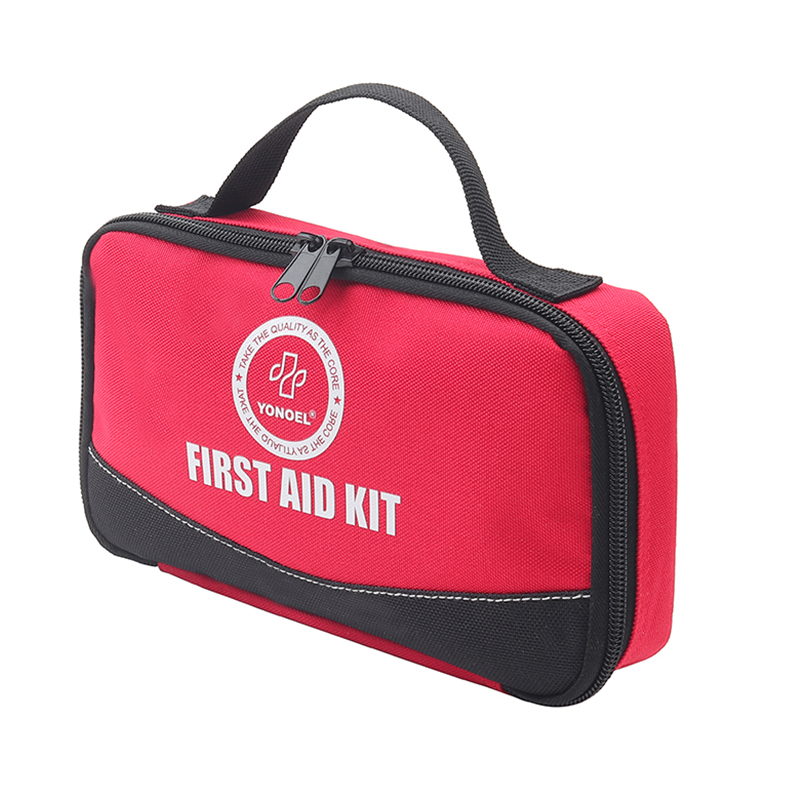
Factories such as Yonoel manufacture DIN13164-compliant first aid kits with a focus on practical design and consistent quality. Yonoel offers both pouch and box styles, using materials that handle typical vehicle conditions like temperature changes and vibration.
Yonoel pays attention to clear organization, secure packaging of supplies, and straightforward labeling so the kits are easy to use when needed. This makes Yonoel a dependable choice for drivers looking for reliable, standard-meeting first aid solutions.
.jpg)
No. 52, Hulian West Street, Jiangbei Street, Dongyang City, Jinhua City, Zhejiang Province, China
Quick Links
Product Center
Contact Us
 PRIVACY

 English
 Deutsch
 Français
 русский
 Español