Before a hiking trail, a camping route, or a long day outside, people usually think about the obvious things first. Water goes into the bag. A jacket gets added if the weather looks uncertain. A phone charger, a map, a snack, maybe a flashlight. The smaller items often come later, and that is where trouble can start.
Outdoor plans rarely fail because of one dramatic problem. More often, the issue is smaller: a scratch that stings longer than expected, a damp layer that never fully dries, a missing tool, a slow walk back in fading light, or a delay that changes the whole pace of the day. Preparation matters because outdoor conditions do not always stay polite. They shift. They test habits. They expose gaps.
That is where an Outdoor Emergency Kit earns its place. It is not about carrying a pile of random gear. It is about keeping a useful set of supplies together in a format that fits real outdoor use. For some people, it sits in a backpack. For others, it attaches to a larger setup. For many, it becomes part of the routine before every trip. The point is simple: when something small goes wrong outdoors, the response is calmer when the needed items are already packed and easy to reach.
A well-arranged kit also affects how people think before the trip starts. Instead of packing in a hurry, they begin to notice what the outing actually requires. A short walk and an overnight camp do not ask for the same setup. A family outing does not call for the same arrangement as a solo trek. Good preparation starts with that kind of thinking.
The contents depend on the activity, but there is a common pattern. People usually need a few basic groups of items rather than a large number of loose tools. That is one reason a compact layout works well. It keeps the focus on function.
For hiking and camping, a practical setup often includes:
A hiking trip may call for lighter packing because the bag stays on the body for long periods. Camping can allow a little more room, since the gear may stay near a base area. The right balance depends on how far a person plans to go and how much help may be available nearby.
A useful Outdoor Emergency Kit does not need to look crowded. In fact, too much inside can become a problem of its own. People often think "more" means safer, but in outdoor packing, "more" can also mean slower access and greater weight. A bag that is arranged with care usually feels more useful than one that is simply full.
This is where manufacturers often spend time on structure. Dividers, pouches, elastic loops, and outer compartments all change the way the user experiences the kit. When someone reaches for one item, they should not have to pull out three unrelated pieces first.
Outdoor trouble rarely announces itself. A clear morning can turn into a wet afternoon. A smooth trail can take longer than expected. A comfortable walk can become less comfortable after a shoe rubs the wrong spot. None of this sounds dramatic, but each one changes the pace of the day.
An Outdoor Emergency Kit helps because it closes the gap between the problem and the response. Instead of improvising with whatever happens to be nearby, the user has a small set of organized supplies already in place. That matters when attention is low, weather is changing, or a person simply wants to keep moving.
A few common situations make the point clear:
In each case, preparation changes the mood of the situation. It does not remove the issue, but it makes the response more orderly. That alone has value.
There is also a mental side to it. People often feel more settled when they know they have packed with some care. Outdoor activities already ask for attention. Routes, weather, timing, rest, and carrying comfort all compete for space in the mind. When supplies are prepared in advance, one part of that load is already handled.
The useful thing is not the size of the kit. It is the clarity it gives. A small setup with a good layout can do more for preparation than a large, messy one.
People often compare outdoor gear by looking at how it appears on the outside, but the real value usually shows up in daily use. A well-made pouch or pack should make the user's life easier, not more complicated.
Several features matter more than surface appearance.
Storage layout
A clear layout helps users separate supplies by purpose. If everything is mixed together, the kit may still look complete, but it slows down the moment it is needed.
Carrying comfort
Outdoor gear has to move with the body. If the kit feels awkward when attached or packed, people tend to leave it behind. A workable design fits into the rest of the setup without becoming a burden.
Material feel
Outdoor environments are not gentle. Dust, friction, moisture, and rough handling are common. The material should hold up to that kind of use without becoming fragile after a short time.
Access rhythm
Some kits are easy to pack but hard to use. Others are easy to use but awkward to store. The better choice is the one that keeps the rhythm smooth. Open, reach, replace, close. That cycle should feel simple.
Adaptability
Not every trip looks the same. A good setup leaves room for adjustment. Users may want to change the contents for hiking, travel, or overnight camping without rebuilding the whole thing.
These features matter because people do not use emergency gear in a showroom. They use it while standing, walking, waiting, or dealing with weather. The design should respect that reality.
Organization is one of those details people often ignore until they need something fast. Then it becomes obvious.
A useful system starts with grouping. Items that serve the same purpose should stay together. This keeps the layout easy to remember and helps reduce wasted motion when time matters. A person should not have to empty half the bag to find one small item.
| Supply Group | Why People Carry It | What To Check |
|---|---|---|
| Basic care items | For small outdoor injuries | Easy reach, clear placement |
| Support tools | For practical use during the trip | Secure storage, no loose pieces |
| Comfort items | For changing conditions | Protection from moisture and dirt |
| Backup accessories | For rare but useful needs | Visible location, not buried |
A few habits make the layout work better:
The goal is not to create a complicated system. The goal is to avoid confusion when the bag is opened in a hurry. A neat layout saves time, but more importantly, it keeps the user from feeling scattered.
Some people like to repack after every trip. Others wait until the next outing is close. Either can work, as long as the arrangement stays consistent. Once a person knows where things are, the kit becomes much easier to trust.
Not everyone wants to store emergency gear in the same place. Some prefer it inside a backpack. Others want it attached outside for easier reach. That is why modular carrying options matter.
A MOLLE-style setup gives users more room to arrange their gear in a way that fits their habits. The benefit is not just attachment. It is flexibility. Users can place the pouch where it makes sense for the trip and the rest of their equipment.
That can be useful in several ways:
For some outdoor users, this kind of arrangement makes the kit feel less like a separate item and more like part of the whole setup. That matters because gear tends to get used more when it fits naturally into the routine.
From a manufacturing point of view, modular design also gives room for different preferences. Some users want compact setups. Others want more separation between items. A flexible structure can work for both without forcing one fixed pattern on everyone.
The first mistake is usually overpacking. People add too many things because they do not want to forget anything. The result is often a heavy kit filled with items that never get used. Once the bag becomes annoying to carry, it stops being part of the regular routine.
The second mistake is poor sorting. If everything is tossed into one space, the kit may look complete, but it does not behave like a useful tool. When a person has to search through mixed items, the whole point of preparation weakens.
Other common problems include:
There is also a tendency to prepare for an imagined event rather than actual use. Outdoor plans are usually shaped by distance, weather, group size, and time away from help. A kit that ignores those factors may look impressive but feel awkward in practice.
It helps to think in terms of use, not just ownership. What will actually be reached for? What needs to stay visible? What can stay packed until later? Those questions lead to a more realistic setup.
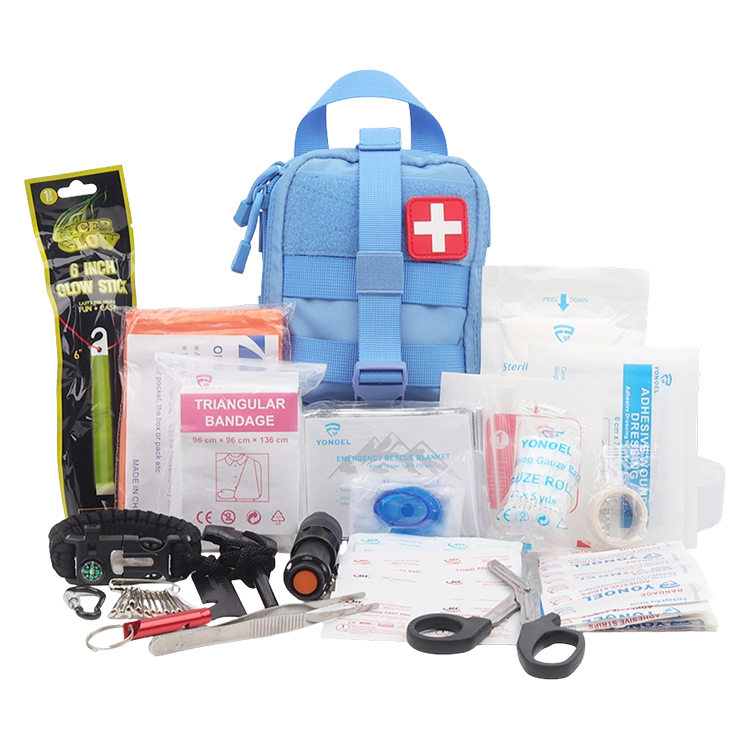
A long walk, a family camping trip, and a solo outdoor journey do not require the same arrangement. That sounds obvious, but many people still use one fixed setup for every activity. The result is either too much or too little.
Customizing the kit begins with the outing itself. A person should ask what kind of day is ahead, how long the trip will last, and what kind of support is likely to be available. Once that is clear, the contents can be adjusted with more precision.
For hiking, lighter carry weight may matter more. For camping, longer use and storage convenience can take priority. For travel, compact packing often becomes the main concern. For family outings, organization matters because several people may need access to the same kit.
Customization does not need to be complicated. It can be as simple as changing a few items, shifting the order of storage, or using a different carrying position. What matters is that the setup fits the trip instead of forcing the trip to fit the setup.
People who spend time outdoors regularly often adjust their gear over time without thinking much about it. A pouch gets repacked. A section gets moved. One item is added because it was useful last time. Another is removed because it never left its place. That quiet process is part of good preparation.
An Outdoor Emergency Kit works well when it feels like a living part of outdoor planning, not a box that stays untouched until a problem appears. That is usually what separates a simple packed bag from equipment that genuinely supports the way people move outdoors.
No. 52, Hulian West Street, Jiangbei Street, Dongyang City, Jinhua City, Zhejiang Province, China
Quick Links
Product Center
Contact Us
 PRIVACY

 English
 Deutsch
 Français
 русский
 Español