When people carry emergency supplies, the real problem is often not space alone. It is the way items shift, overlap, and become harder to locate after a bag has been opened and closed many times. A pouch can look neat at the start, then turn awkward once the contents begin to change. That is usually where organization matters more than appearance.
A MOLLE Trauma Kit is built around that problem. The format gives users a way to separate supplies, assign a place to each item, and keep the kit attached in a position that makes sense for the rest of the gear. In daily use, that means less rummaging and fewer small frustrations.
For outdoor trips, travel storage, or vehicle carry, the value of a setup like this is fairly practical. A user can keep related items together, change the layout when the contents change, and avoid turning one pouch into a loose storage dump. The idea is simple, but the effect becomes clear once the pouch is actually being used.
From a manufacturing point of view, organization is not just about adding pockets. It is about reducing confusion. The layout has to match how people reach for items, how often they check them, and how much room they are willing to give up in a bag or on a pack.
A regular medical pouch often focuses on containment. It holds items in one place and keeps them from falling out. That is useful, but it does not always help when the contents need to be sorted, checked, or reached quickly.
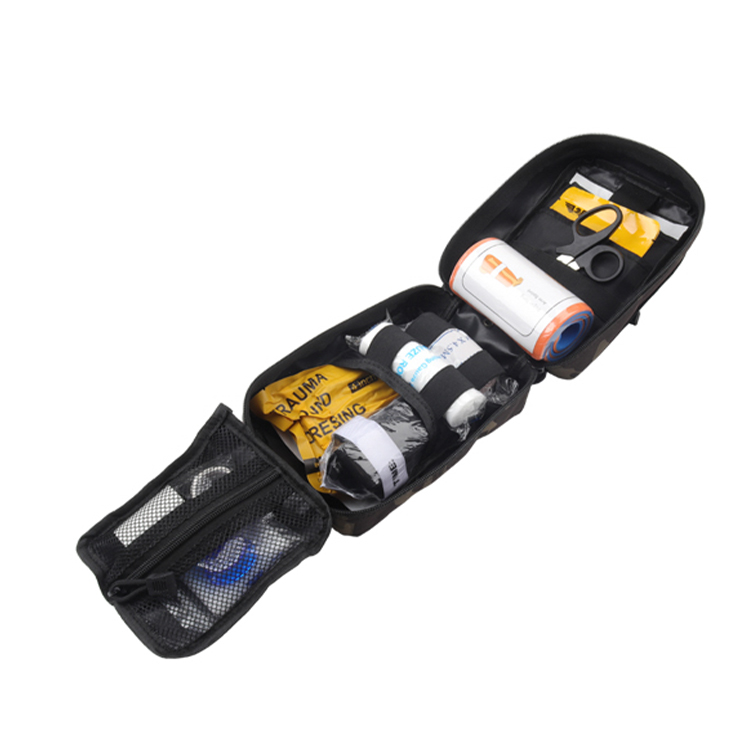
A MOLLE Trauma Kit usually follows a different idea. The exterior attachment style lets it connect with compatible gear, while the inside is arranged with more intention. Instead of one large space, users often get a structure that helps separate supplies by type or frequency of use.
That difference becomes more noticeable in outdoor settings. A person on a trail may carry water, tools, and other equipment in the same bag. In that situation, a pouch with a clearer layout reduces the chance of mixing unrelated items together.
There is also a matter of habit. Some users always pack the same way. Others change the contents depending on where they are going. A modular pouch gives room for that kind of variation without forcing a fixed arrangement.
| Feature | Regular Medical Pouch | Modular Pouch Style |
|---|---|---|
| Storage layout | One basic compartment | Multiple spaces for sorting |
| Attachment | Often carried inside a larger bag | Can connect with compatible gear |
| Repacking | May shift items around | Easier to keep a consistent layout |
| Use pattern | General storage | More controlled organization |
The difference is not dramatic in theory, but in use it can be enough to decide whether a pouch feels convenient or clumsy.
When small items are stored together, they tend to move. That is normal. The problem begins when movement creates confusion. A bandage, a wrap, a pair of gloves, or other small pieces can end up buried under softer items and take longer to reach.
A well-arranged pouch reduces that problem by giving items a predictable place. Some users prefer to group similar items together. Others arrange by how often something is used. Both approaches can work, as long as the layout stays consistent.
A practical setup often includes a few simple ideas:
The key point is not complexity. In fact, too much structure can create its own problems. If a pouch has many small areas but no clear logic, users may spend extra time remembering where each item went. Good organization should make the contents easier to read at a glance.
Another small advantage shows up during routine checks. When the layout is stable, it becomes easier to see what has been used, moved, or needs to be replaced. That kind of visibility matters as much as quick access.
The way the interior is divided shapes how the kit behaves in normal use. A flat space may hold a lot, but it often creates a loose pile. A more deliberate layout creates order without asking the user to think about every item from scratch each time.
This is one reason internal structure matters. A pouch that gives a clear place to thin items, thicker pieces, and small accessories is easier to keep under control. It also makes repacking less tiring. Instead of shifting everything around after use, the user can return items to familiar spots.
A useful layout usually does a few things well:
The better layouts do not try to impress. They simply reduce friction during use. For a manufacturer, that often means thinking less about decoration and more about how the pouch behaves once real gear is inside it.
The arrangement also affects memory. People remember a setup more easily when the placement makes sense. Once a user has packed the pouch a few times, reaching for an item becomes more automatic. That ease is part of organization too.
Different environments place different demands on storage. On a hike, carrying weight matters. During camping, items may be handled more often and repacked more than once. In a vehicle, space can be awkward, and gear often gets mixed with unrelated objects.
That is why a modular carry setup has become appealing in several settings. It can move with the user, stay attached to compatible gear, or remain stored in a fixed place without changing the layout each time.
For outdoor use, the main concern is often convenience. A pouch should be easy to reach without opening an entire pack. For vehicle storage, the concern is more about keeping things in one place without letting them spread out across the cabin or trunk.
| Storage Situation | What Users Usually Care About |
|---|---|
| Hiking | Less clutter and easier carrying |
| Camping | Clear placement and repeated access |
| Vehicle storage | Keeping equipment together |
| Daily preparedness | Simple checks and stable layout |
The appeal comes from flexibility. One pouch can serve different roles depending on where it is placed and what is stored inside it. That makes it easier for users to maintain a consistent storage habit across different situations.
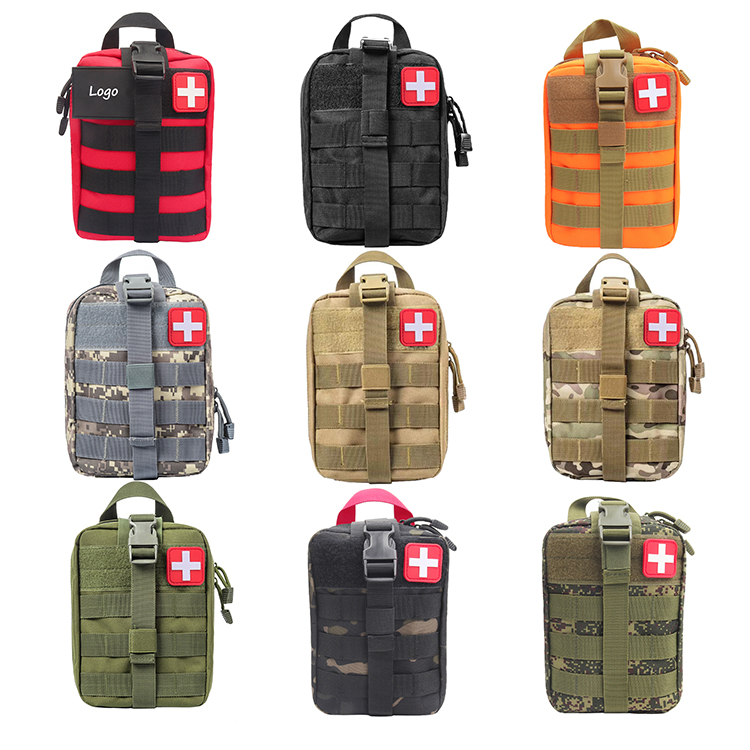
Placement changes the way any pouch feels in use. A location that works well in one setup may become awkward in another. That is why mounting choice matters as much as the pouch itself.
Some users place the kit on a backpack where it stays close at hand. Others attach it to gear they use often, while some keep it in a vehicle where it is available but not in the way. The right position depends on how the rest of the equipment is arranged.
A few questions usually help narrow the choice:
Daily use is rarely about one perfect position. It is about reducing small interruptions. A pouch that is too low, too buried, or too loose becomes harder to live with. A pouch placed with care is simply less noticeable, which is often the point.
For people who carry gear regularly, the goal is to make access feel natural. If the pouch location matches the rest of the setup, checking and repacking become part of routine rather than a separate chore.
Small construction choices shape how a pouch behaves over time. Some details may not seem important at a glance, but they influence handling, stability, and long-term use.
The fabric, stitching, zipper action, and attachment method all work together. If one part feels weak or awkward, the user notices it quickly. A pouch that opens poorly or shifts too much can interrupt the entire storage system.
| Design Area | What It Affects |
|---|---|
| Fabric | Handling and day-to-day wear |
| Stitching | Stability during regular use |
| Zippers | Ease of opening and closing |
| Attachment system | How the pouch stays in place |
It also helps to think about how the pouch will be packed. A design that looks neat when empty may behave differently once it is filled. Some interiors are better at holding shape, while others feel more relaxed and open. Neither is wrong. The useful choice depends on what the user expects to carry.
A manufacturer usually has to balance structure and flexibility. Too rigid, and the pouch becomes awkward to fill. Too loose, and the contents lose order. The middle ground is where the design starts to feel practical.
Size is not only about capacity. It also affects weight, placement, and how often the pouch is actually used. A larger pouch may sound useful, but if it creates bulk or takes up too much room, it may not suit the setup.
A smaller pouch can be easier to carry and easier to place on a pack or inside a vehicle. A larger one may work better when the contents need more room to stay separated. The right choice depends on how the user wants the gear to behave in daily life.
The main questions are usually simple:
A pouch that fits the use case tends to feel more natural. That is often more important than trying to maximize storage. People usually notice the difference when they begin using it regularly.
Customization is where the storage system becomes personal. Two users may carry similar items, yet arrange them in very different ways. That is normal, because carrying habits are not the same.
Some people prefer a tighter layout with items grouped closely. Others want more open spacing so they can see what is inside at once. Either approach can work if the layout matches the way the user thinks about the contents.
A practical setup often starts with a few basic habits:
The advantage of a modular setup is that it can change. A user may begin with one arrangement and later adjust it after noticing what feels awkward. That flexibility is useful because real use often reveals things that planning alone does not.
In a manufacturing context, this is where design choices matter most. A pouch should not force one rigid pattern. It should give enough structure to stay organized while still allowing the user to arrange things in a way that makes sense for the gear they actually carry.
The same idea applies whether the pouch is used on a backpack, in a vehicle, or as part of a larger carry system. Good organization is not about packing more into less space. It is about making the space work in a way that stays manageable over time.
No. 52, Hulian West Street, Jiangbei Street, Dongyang City, Jinhua City, Zhejiang Province, China
Quick Links
Product Center
Contact Us
 PRIVACY

 English
 Deutsch
 Français
 русский
 Español