Combat first aid kits aren't fancy gear—they're the things that sit quietly in a vest pocket or ruck until someone's bleeding out in the dirt. When that moment comes, the kit better not have a zipper jammed with sand, a seam ripped open from dragging through brush, or contents rattling around like loose change because the dividers gave up. Everything about these kits comes down to surviving the same punishment the soldier does: long patrols in 120-degree heat, river crossings in monsoon rain, getting slammed against rocks during a slide down a hillside, or just the daily grind of being stuffed in and out of packs a dozen times a day. The materials and the way the kit is put together have to match that reality, or the whole thing becomes dead weight.
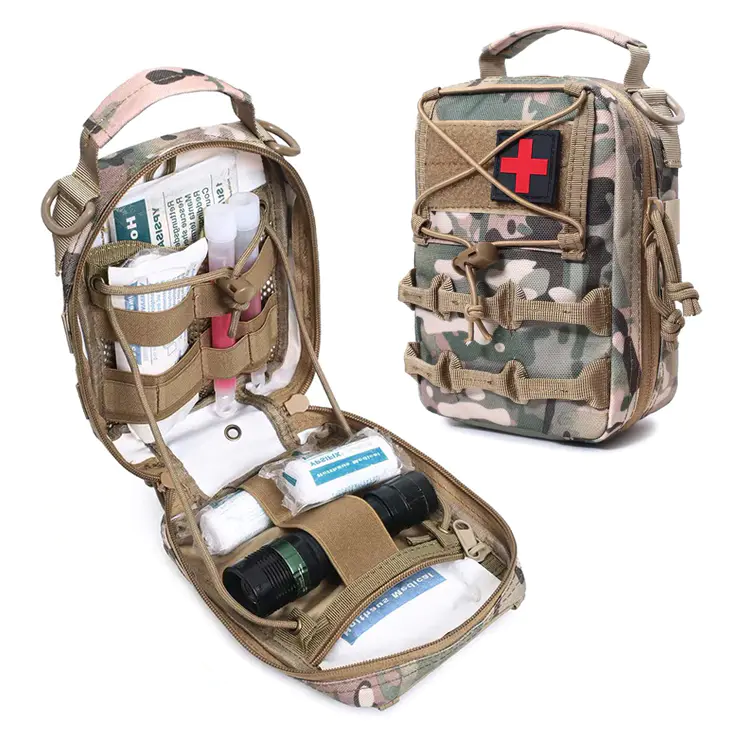
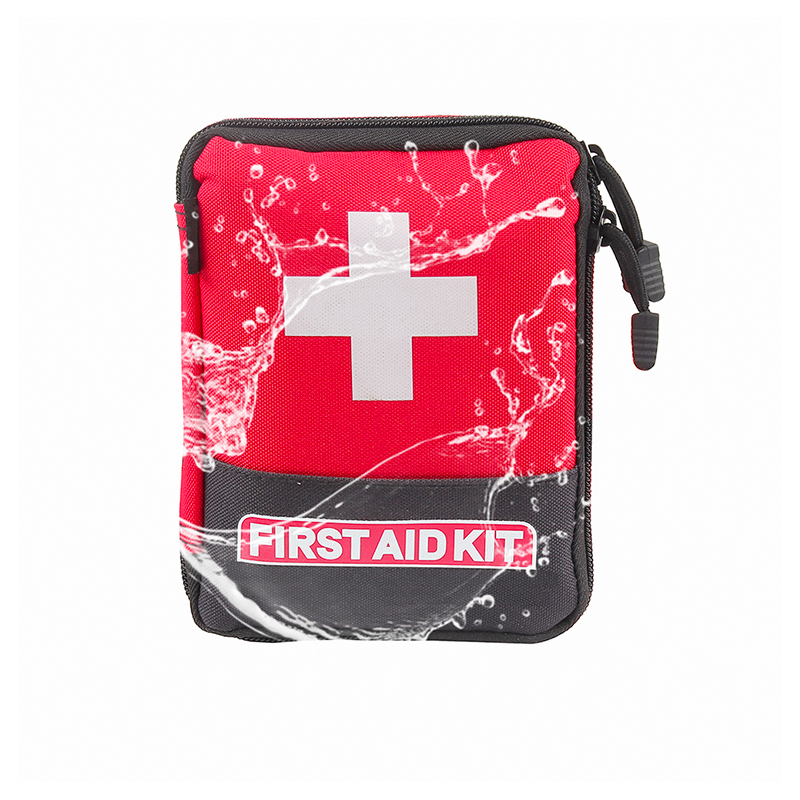
Most kits start with a heavy nylon or polyester outer shell. These fabrics get woven with a ripstop grid—tiny squares that stop small tears from running like they would on regular cloth. A nick from barbed wire or a sharp rock stays small instead of turning the pouch into a flapping mess. On top of that, manufacturers add a durable water-repellent finish so rain beads up and rolls off rather than soaking through and turning sterile gauze into a soggy lump or making pills dissolve into nothing. The coating isn't perfect—after enough abuse it wears thin—but it buys a lot of time in wet environments.
Straps and carry handles use the same webbing, usually 1-inch or wider military-spec type that won't stretch or fray easily. They get bartack stitching at every stress point so they don't pull loose when the kit is yanked off a vest in a hurry. Some designs add padded sections on the back panel so the kit doesn't dig into your ribs when worn against body armor for hours.
| Material | What It Does Well | Where It Usually Goes |
|---|---|---|
| Ripstop Nylon/Poly | Stops tears from spreading | Main body, straps, flaps |
| Heavy Webbing | Carries weight without stretching | Handles, attachment straps |
| Polymer Plastics | Flexes but doesn't shatter | Buckles, stiffeners, trays |
| Open-Cell Foam | Absorbs shocks, cushions contents | Padding around fragile items |
| Mesh Fabric | Lets you see inside, some airflow | Visibility pockets |
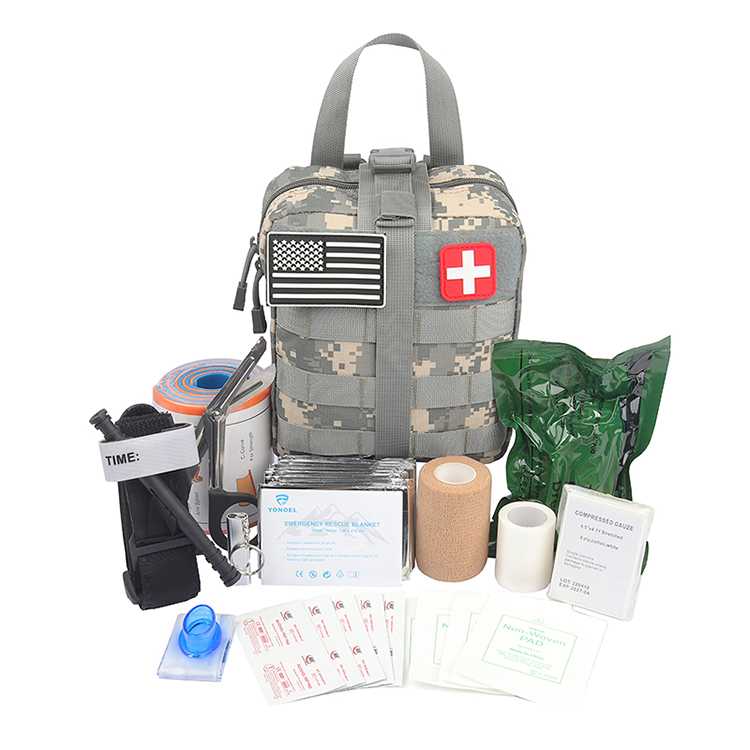
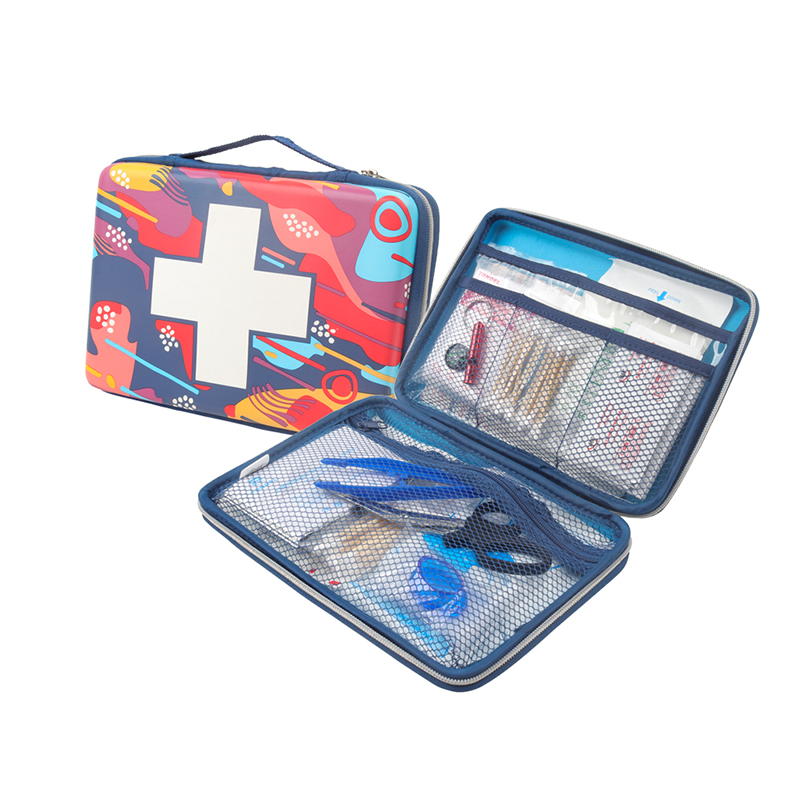
Inside, organization matters more than people realize until they're trying to find a tourniquet with one hand while the other is pressing on a wound. Good kits divide the space into clear zones. Bleeding control gear—tourniquets, pressure dressings, hemostatic gauze—goes in one big, easy-to-reach pocket, often with a bright red pull tab or color-coded flap so you spot it instantly. Airway stuff like nasopharyngeal airways or chest seals sits in another section. Pain meds, antibiotics, and burn dressings get their own spots to avoid mix-ups under stress.
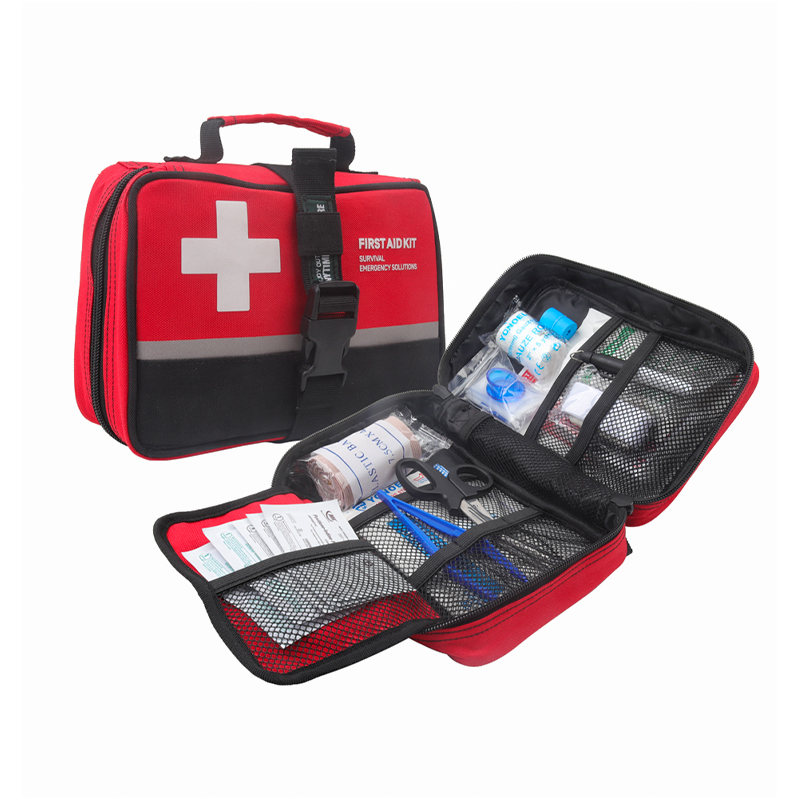
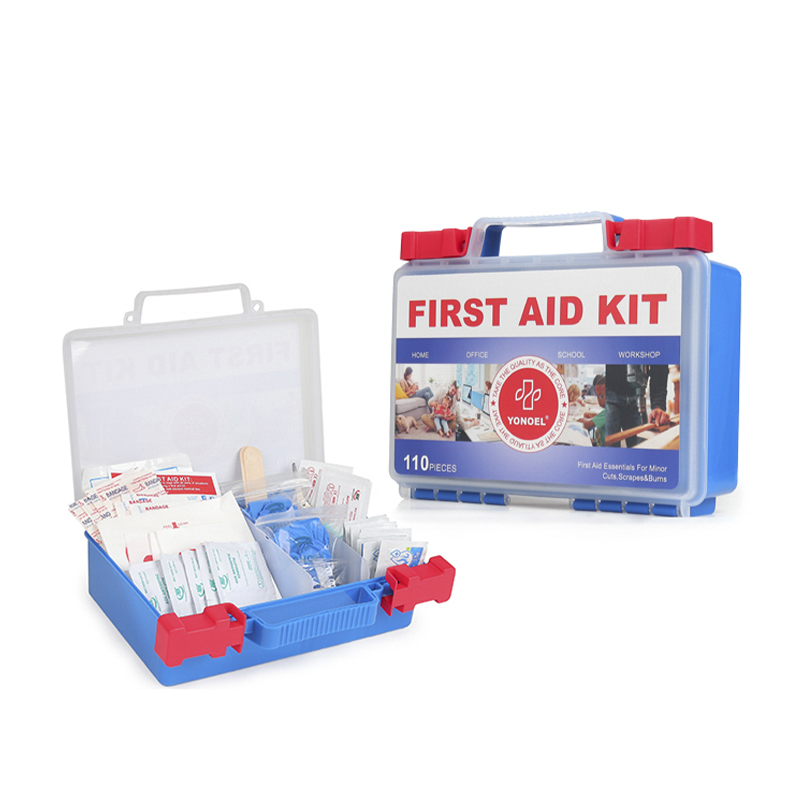
Pockets use elastic loops or shock cord to hold tools like trauma shears, markers, or gloves without letting them flop around. Mesh windows on some flaps let you see what's inside without unzipping everything, which saves precious seconds. Solid fabric flaps keep dust and grit out of the main compartments. Plastic stiffeners or thin polymer sheets in the walls give the pouch shape so it doesn't collapse when you open it, making it easier to dig through contents one-handed.
| Design Choice | Why It's There | Real Benefit in Use |
|---|---|---|
| MOLLE Clips/Straps | Attaches to gear anywhere | Always within reach |
| Zoned Pockets | Separates supplies by purpose | Find what you need fast |
| Oversized Pull Tabs | Works with gloves or bloody hands | No fumbling when it counts |
| Waterproof Seals | Keeps water out of contents | Supplies stay dry and usable |
| Balanced Layout | No heavy swinging during movement | Less fatigue on long patrols |
Closures get a lot of attention because nothing kills usability faster than a stuck zipper or velcro that's clogged with mud. Heavy-duty coil zippers with oversized pull tabs work even when fingers are cold, gloved, or bloody. Some kits use large hook-and-loop panels instead—they're quieter for stealth ops and easier to open with gloves—but they collect lint and dirt over time, so designers add protective flaps or use aggressive, high-cycle velcro. A few designs mix both: zippers for main access, velcro for quick side pockets.
Portability and Carry in Real Movement
Portability is built in from the start. Most kits are sized to fit standard IFAK pouches on plate carriers—roughly 6×8 inches when flat—or larger squad-level trauma bags. MOLLE-compatible straps or clips let you attach the kit wherever it makes sense: front of the vest for medics, side for riflemen, high on the back for drivers. Balanced weight distribution keeps the pouch from swinging wildly when you sprint or drop to prone. Rounded corners and no sharp edges prevent snags on webbing, branches, or clothing.
Padded backs show up on kits meant for longer carries. They reduce hot spots against skin or armor and add a little extra cushion if the kit takes a direct hit. Some designs include drain holes in the bottom so water doesn't pool if the kit gets submerged.
These features don't come from a catalog—they come from soldiers and medics saying what breaks in the field. Early kits had tiny pockets that wouldn't hold modern tourniquets, zippers that jammed with fine desert sand, or fabrics that tore after a few weeks of patrol. Feedback loops forced changes: bigger tabs, tougher weaves, better drainage, modular attachments. The result is gear that feels like it was built by people who've actually carried it through patrols, not just drawn it on a screen.
A kit that lasts through a full deployment means fewer replacements, which matters when you're operating out of austere forward bases. Strong materials keep contents protected—gauze stays sterile, tourniquets don't get crushed, meds don't get crushed or exposed to moisture. In training, troops can run realistic drills without the kit disintegrating halfway through, building muscle memory that carries over to real fights.
For squad or platoon medics carrying shared gear, tough construction means the kit survives multiple users without falling apart. Compartments stay organized, straps don't loosen, and the whole thing cleans up reasonably well after messy use.
Moisture is a constant enemy—sweat, rain, river water. Even with good coatings, prolonged exposure can get inside. Some designs add small vents or use semi-breathable fabrics to let humidity escape without letting water in. Impact damage from falls or blasts can bend plastic inserts or crack stiffeners, which is why reinforced corners and shock-absorbing foam layers help spread the force.
Overpacking is another issue. Soldiers want to carry everything, but too much weight makes the kit bulky and hard to access. Smart designs use removable internal pouches or expandable sections so you can tailor the load—light for short missions, heavy for longer ones.
Infantry IFAKs stay compact and low-profile to avoid interfering with movement or weapon handling. Vehicle crews often mount larger versions inside cabs with extra padding against rough roads. Aircrews and pilots carry slim, low-bulk kits that fit survival vests or ejection seat packs. Special operations teams like modular designs where they can swap out sections for mission-specific needs—more hemorrhage control for direct action, more environmental meds for long-range recon.
After every patrol or range day, unzip and shake out sand or debris. Wipe the exterior with a damp cloth to remove mud or blood. Check zippers for grit—brush it out, add a drop of silicone lube if they start sticking. Inspect seams for loose threads; a quick stitch now prevents a big rip later. Store the kit open in a dry, shaded spot so air circulates and mildew doesn't start.
In the field, simple habits matter: don't cram extra junk into pockets meant for specific tools, don't leave the kit sitting in direct sun for days, don't use it as a seat or footrest. Treat it like loaded ammo—handle with care because when you need it, there's no backup.
When the materials are chosen right and the design is thought through, the kit fades into the background—exactly where you want it until the moment it's needed. It doesn't need to look impressive on a shelf; it just needs to work when the shooting starts and keep working until the mission ends.
For units or organizations looking for first aid kits built around those same practical priorities—tough fabrics that don't quit, layouts that make sense under stress, and construction that survives real use—Yonoel runs a factory dedicated to making exactly that kind of gear. They focus on the details that show up in after-action reports: reliable closures, smart organization, and materials that take a beating without failing.
Yonoel produces kits suited to different roles and environments, keeping things straightforward and durable so the focus stays on the mission, not on broken equipment. If your team needs first aid solutions that hold together when it matters most, reaching out to Yonoel can get you gear designed with field realities in mind.
No. 52, Hulian West Street, Jiangbei Street, Dongyang City, Jinhua City, Zhejiang Province, China
Quick Links
Product Center
Contact Us
 PRIVACY

 English
 Deutsch
 Français
 русский
 Español