A Din13164 First Aid Kit is often mentioned in road safety discussions, especially in places where vehicles are expected to carry basic emergency supplies. Most people recognize the name, but when it comes to what is actually inside, things can feel a bit unclear.
Road travel is unpredictable in small ways. Nothing dramatic most of the time, but little things happen more often than people expect. A small cut while loading luggage, a scrape during a stop, or a minor irritation after long driving hours.
A structured kit is simply there to handle those moments. It does not try to replace medical help. It just gives you something ready to use when timing matters.
The main point is convenience. Everything is gathered in one place instead of scattered items in glove compartments or bags.
Although different suppliers may arrange things slightly differently, the core idea stays similar. The contents are grouped so users can react quickly without searching too long.
Here is a simple breakdown.
General Content Groups
Each group has a clear purpose. Nothing is random. Everything is there for a reason tied to everyday road situations.
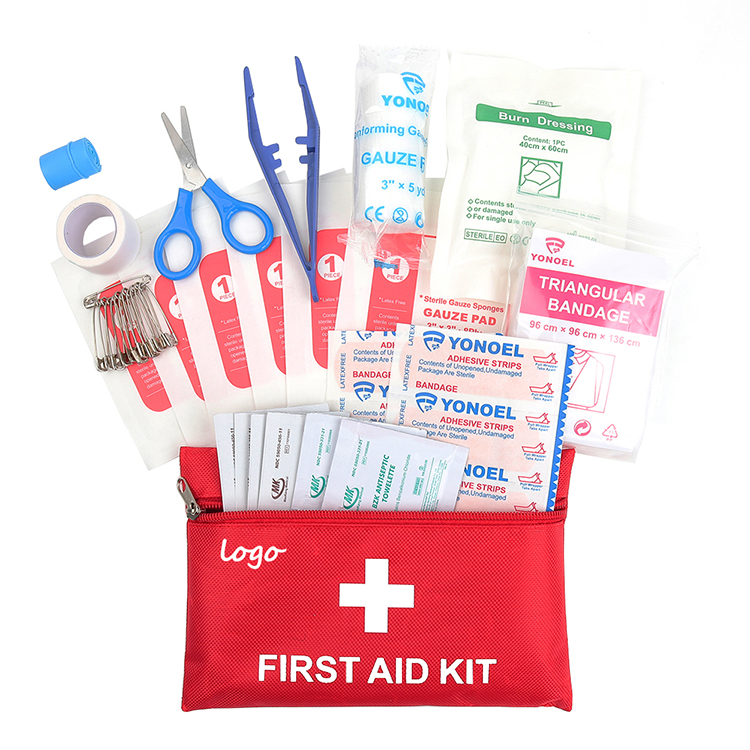
| Category | What You Might See | What It Helps With |
|---|---|---|
| Cleaning | Wipes or pads | Cleaning minor skin injuries |
| Covering | Gauze or dressings | Protecting small wounds |
| Fixing | Adhesive strips | Holding dressings in place |
| Support | Bandage materials | Light wrapping or support |
| Protection | Disposable gloves | Keeping contact cleaner |
| Tools | Scissors | Cutting materials when needed |
| Tools | Tweezers | Handling small particles |
| Fixing aid | Medical tape | Securing dressings |
This kind of layout is meant to keep things easy to understand even when someone is stressed or in a hurry.
Instead of thinking of the kit as a list, it helps to imagine how it is actually used.
Cleaning Items
These usually come first into play. Roads are not the cleanest environment, so small injuries often need a quick wipe before anything else is done. It is not about treatment, just basic cleaning so things don't get worse.
Covering Materials
Once cleaned, the next step is usually protection. These items help keep the area covered so dust or friction does not interfere.
Support Pieces
Bandages and tapes help hold everything in place. They are simple but useful when movement is involved, especially during travel.
Small Tools
Scissors or tweezers are not used often, but when needed, they make handling easier. Cutting a bandage or removing a tiny particle becomes less awkward.
Protective Gear
Gloves are included for a basic reason: keeping things more hygienic when helping someone else or handling injuries.
At first glance, a kit is just a box. But the way it is arranged actually makes a difference.
In real situations, nobody wants to dig through loose items. A good layout usually focuses on:
When everything stays in place, response becomes smoother and less stressful.
Most people don't think about these kits until something happens. And usually, it is not anything serious.
Small Cuts During Travel
Handling luggage, tools, or car parts can sometimes lead to minor cuts. A simple wipe and cover is often enough.
Light Scrapes
Getting in and out of tight spaces or dealing with roadside stops can lead to small scrapes.
Dust or Irritation
Long drives or outdoor stops sometimes cause mild skin irritation. Basic cleaning materials help in those moments.
Unexpected Minor Incidents
Nothing major, just everyday travel situations where having something nearby makes things easier.
If you are sourcing or comparing options, it is not just about what is listed on paper. A few practical points matter more in real use.
Clear Structure
Items should be grouped in a way that makes sense when opened quickly.
Easy Identification
Labels or sections help avoid confusion.
Packaging Strength
Since it stays in vehicles, it should handle movement and temperature changes without falling apart.
Practical Contents
Everything inside should have a clear use. No unnecessary clutter.
A few things are easy to overlook when selecting or reviewing kits.
Thinking All Kits Are the Same
Even if names look similar, internal setup can vary quite a bit.
Focusing Only on Quantity
More items does not always mean better usability.
Ignoring Real Usage Conditions
A kit in a vehicle faces heat, vibration, and movement. Not every design handles that well.
Not Checking Layout
If things are not easy to find, it defeats the purpose during urgent moments.
From a production point of view, the goal is not complexity. It is consistency and usability.
Most designs focus on:
Companies like Yonoel First Aid often build around these practical needs rather than adding unnecessary complexity.
Not every region or buyer uses the same setup in exactly the same way.
Some may prefer:
The core idea stays the same, but small changes help match real-world usage better.
Most people rarely open their kit. That is actually the point. It sits there quietly until needed.
For fleets, it helps keep vehicles consistent in readiness. For personal use, it adds a small layer of preparedness without much effort.
It is one of those things you hope you do not need, but still feel better having.
A road-use emergency kit is not complicated when broken down. It is just a set of simple tools grouped in a way that makes sense during small, unexpected moments.
Understanding what is inside helps people choose more carefully, especially when sourcing or supplying. Instead of focusing on appearance or naming, the real value is in how practical and accessible the contents feel when they are actually needed.
No. 52, Hulian West Street, Jiangbei Street, Dongyang City, Jinhua City, Zhejiang Province, China
Quick Links
Product Center
Contact Us
 PRIVACY

 English
 Deutsch
 Français
 русский
 Español